![Modern log cabins versus traditional log cabins]()
by Mark Bailey | Jul 30, 2014 | GardenLife Magazine
Modern log cabin DIY kits take traditional timber designs and make them easier, cheaper and more convenient
 Friends in the US sometimes talk about their plans to build a traditional log cabin, either as their main home or a holiday home. It seems to be part of the American dream – along with owning land and a great pick-up truck.
The cabins my friends in the States hanker after usually look like something out of Huckleberry Finn or Little House on the Prairie, with whole logs and maybe a wooden stoop or a covered porch. And, impressively, they plan to build them from scratch – sometimes even sourcing the logs themselves.
It’s admirable but quite an undertaking. It requires not only huge DIY skill and ambition, but also extensive amounts of workspace – not something we have in the average British garden.
Traditional log cabin style
The practical and visual attractions of traditional log cabins are indisputable. With good-quality timber, they’re warm, well-insulated and robust. And treated with preservatives and maintained properly, they’re highly durable.
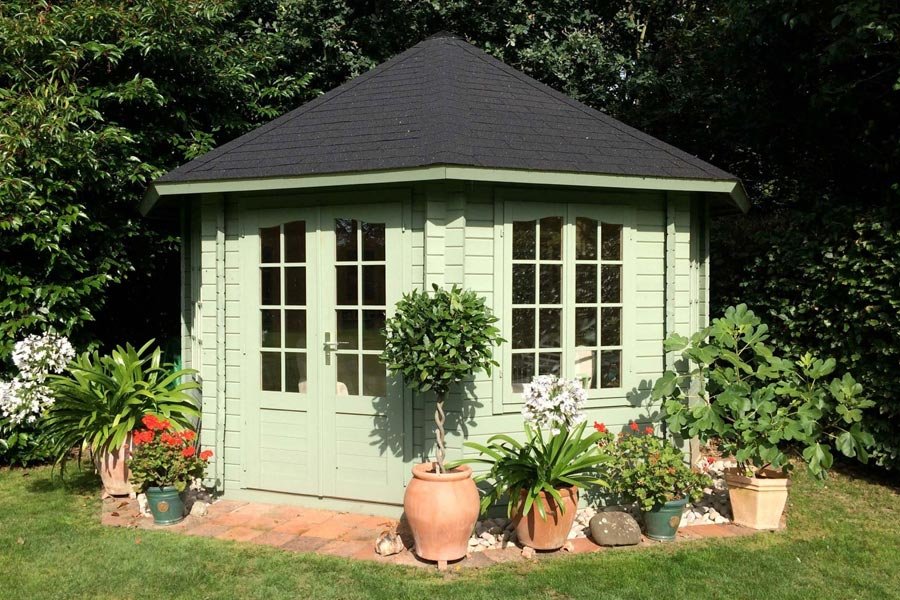
A ‘traditional log cabin’ can take many forms. It could be a sturdy US-style log cabin – somewhere to grill steaks or mess around with fishing equipment. Or an Alpine chalet with steeply-pitched roof to prevent snow build-up. Or a Nordic-style barbecue hut with an internal grill and sauna-style benches round the edge. The designs may originate overseas, but they travel well: they all look great in a British garden.
Modern log cabin construction
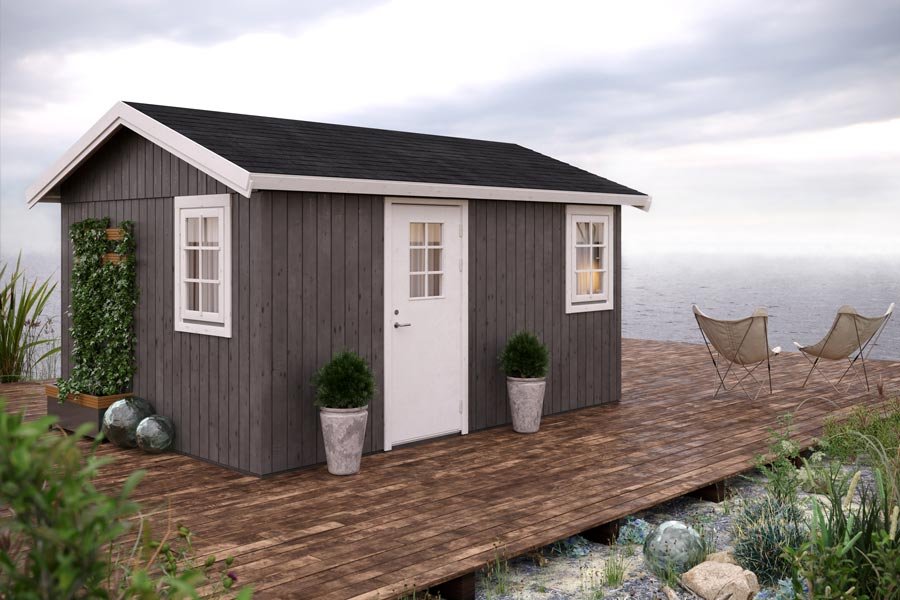
 Modern log cabins add some state-of the-art convenience to the tried-and-tested appeal of traditional cabin designs, especially when they are supplied as a DIY kit. I’m sure Pa from Little House on the Prairie would have welcomed the weatherproofing that comes from laminated door frames or rubber window seals. Or the convenience of tilt-turn window mechanisms and 3D door hinges.
I’m equally certain the Saami reindeer herders in Finland who ‘invented’ the barbecue hut (or kota) centuries ago would have leapt at the chance of some double-glazing, or an extractor that stops the build-up of smoke from the barbecue grill.
And developments such as wifi have extended the uses of the modern log cabin. For example, a traditional log cabin design can now accommodate a very twenty-first century digital business or home office.
Modern log cabin DIY kits with traditional style
 The other great advantage of modern log cabins is ease of construction. I’ve seen various books and courses about designing your own traditional log cabin or garden building, and what always strikes me is the overwhelming range of choices you have to make, right down to what sort of screws to use. These choices are as off-putting as the amount of time and DIY expertise required.
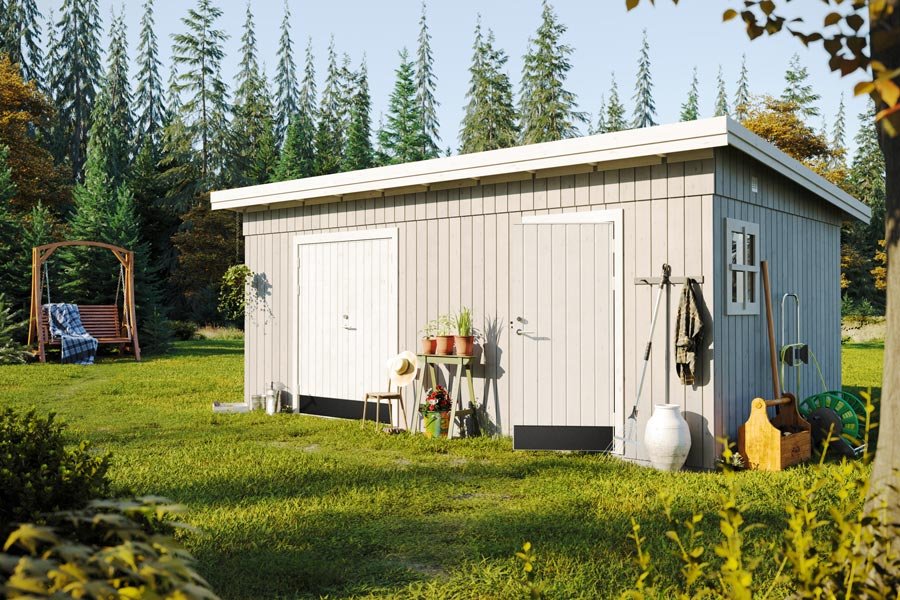
Modern log cabins take all the best ideas from traditional cabin building, such as using real timber, but then they strip away the obstacles. If you buy a GardenLife log cabin DIY kit, (including the popular log cabin style garages) all the fixings and components are supplied, so there is no need to spend days in hardware stores, trying to source the right screws, bolts, latches, locks, shingles, floor beading or other elements required to build a cabin in your own back garden.
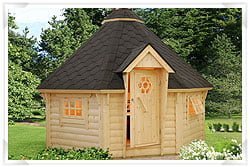 Moreover, with modern log cabin DIY kits, all parts are pre-cut and fit together with perfect accuracy. So, the cabin just takes a day or two to build, rather than eating up a few months’ or even years’ worth of weekends. It’s an altogether easier, cheaper and more practical way to achieve the daydream of building your own log cabin – whether you want designs like Tyne, Whiteadder or Erne, which wouldn’t look out of place in the backwoods of North America, or something like the Scandinavian style Kim or Greta barbecue huts.
Traditional log cabin construction photo credit: http://www.outdoors.org (photo taken by by Gary Dethlefsen)
by Mark Bailey | Jul 22, 2014 | How to guide, Timber building videos
Timber summer house construction video
Planning to build your own timber summer house or garden room this year? This helpful video from GardenLife shows time-lapse footage of how the Wye clockhouse style summer house was built by our construction crew. The first stage requires laying out all the individual parts of the summer house; timber wall logs, windows and frames, doors and door frames, roof purlins, roof boards, floor boards, shingles and fixings.
GardenLife summer houses come with clear instructions, and the installation process (once the base is fixed in place and level) is similar to building with Lego, with tongue and groove timbers simply slotting into each each other. The door frame can be assembled and slotted into place when the walls are about 60cm or two feet hight, and when the timber walls reach about half the total height, the window frames slot in, the windows slide onto the hinges and the walls can be completed.
In the timber summer house construction video purlins are added to the roof next – these may require a little trim to ensure the top of the purlin is level with the roof line. Once the purlins are in place, the roof boards go on, again slotting together in the pre-cut grooves. Shingles are added from the bottom of the roof line upwards, and there’s a handy trick to ensure that you end up with a professional tile-effect finish on the roof.
When adding the floor boards leave a 5mm gap around the edge of the floor (to allow for natural movement and swelling in the timber), then cut and position the supplied edging strip to cover the gap. At this stage in proceedings your summer house will nearly be complete, and you will just need to add window latches and drill a couple of holes for the door bolts.
Don’t forget, as soon as the weather looks like it will be dry for a good few days, it’s time to get some timber treatment on. Good quality wood preserver that stops rot, insects and fungus is essential, and once this has had time to try (or even a second coat), you can then think about applying a couple of coats of trade quality exterior paint or log cabin oil. GardenLife are happy to provide advice on the best types of summer house timber treatment, and can also recommend eco-friendly timber treatments too.
![Bespoke timber office building]()
by Mark Bailey | Jul 10, 2014 | Bespoke garden buildings
We’ve put together some more notes and photos on a GardenLife bespoke office build (following the launch of our bespoke garden building design service).
 Project Name: Bespoke timber office building
Project Location: Dalkeith, Scottish Borders
Client Brief: Design and build a log cabin suitable for all year round office use for 2-3 persons, large enough to allow for desk space, filing and storage space, featuring a separate internal room and a terrace with a roof overhang.
Technical Specifications: This timber office was designed and built using 88mm thick laminated timber. This type of timber (as opposed to thinner log thickness’s) provides living house quality, as well as excellent insulation qualities and a robust finish that will last for years. The windows and doors that GardenLife used were also living house quality. Building designs, plans and 3D renderings can be viewed in this PDF [3.7MB].
Completion Time: The office was designed, built, insulated and occupied within three months of the start date.
Concluding Notes: The client was very happy with their new timber office building, and given their small company it provided a great environment within which to work. The office is both cool in summer and snug in Winter, due to floor and ceiling insulation that’s designed to keep temperatures regulated.
Thinking about designing your own timber office or garden building? GardenLife’s bespoke timber building design service could be perfect for you. Feel free to get in touch with your plans and questions and we’d be happy to help.
by Mark Bailey | Jul 2, 2014 | GardenLife Magazine
Most of us in the real world want to keep the price down when we buy a garden building. And because many timber garden buildings look more or less similar in website pictures, it’s tempting to think they’ll be similar once they’re built. But it’s important not to confuse a short term saving with long term good value.
Why are cheap garden buildings false economy?
Once you take delivery of a garden building, the difference between good and poor quality quickly becomes apparent. And as the months and years pass, that difference becomes even more conspicuous. An apparent bargain can quickly fall prey to leaks, rot and warping. Shaving too much off the price of your summer house or garden log cabin may reduce its durability and usability , and in time, repair costs and heating bills will all add up.
Why is timber wall thickness important in a garden building?
Log thickness is a major determinant of quality, insulation and robustness, so you should avoid purchasing any timber building with walls thinner than 16mm (although 18mm is better, and 28mm or higher is recommended if you intend to use the building through spring, summer and autumn). Thinner timbers rot, warp, distort and appear to age much faster than thicker timber walls too. You may initially save money on a thin walled summer house, but it’s unlikely to last long, and will require much more in the way of upkeep, maintenance and repairs.
Wood density is also a mark of quality, and denser woods therefore cost more, but last longer. Trees grown slowly in cold climates develop a closer, denser grain than trees in warmer Mediterranean countries. By seeking out timber grown near the Arctic circle – in countries such as Estonia (where all GardenLife’s timber is sourced) – you should end up with a much warmer garden building, and a stronger, longer-lasting one.
Low-quality timber is more likely to suffer from distortion over time – perhaps because corners have been cut during the drying process. As a result, you may find that walls or ceilings begin to bow or sag; door and window frames twist; or doors and windows become increasingly difficult to open or shut. Such problems can be avoided by using slow-grown, kiln-dried timber.
How can I check the quality of the timber in a garden building?
To check the density of the timber and general sturdiness of a garden building, Which magazine recommends that you stand inside it, jump in the centre of the floor, and push against the side and roof panels: “You should feel firm resistance rather than flexing”.
Once you’ve recovered your breath from the jumping, you could carry out a second test: if you look up at the roof purlins (the horizontal beams which support the roof) there should ideally be thicker purlins running from apex to apex. This should make the building more solid, durable and resistant to the British weather.
Why should I pay extra for a pressure-treated base?
Any untreated timber that comes into contact with the ground is vulnerable to rot and decay caused by moisture seeping into the wood. GardenLife garden buildings use pressure-treated wood for the foundation joists and base, lengthening the life of the building. You can save money buying a cheap summer house or log cabin without a floor, but the building will have a far shorter lifespan as a consequence.
Another vulnerable area of any timber garden building are door frames, which can take a battering from rain and weather. So too can the support posts on timber gazebos and carports. Using laminated timber for door frames and support posts can prevent problems with warping, twisting and rot. It may add a few pounds to the price, but will assure you a more attractive and durable structure that is likely to last much longer and require far less maintenance and upkeep.
Why should I opt for a garden building with a roof overhang?
In a rainy climate, leaks are the bane of many a shed-owner’s life – they can come from anywhere: through the roof; via warped door frames or windows; from water seeping through ill-fitting timber. The best way to avoid leaks is to seek out better-quality timber and construction. For example, laminated door frames are less likely to warp. Another tip is to look at the roof overhang – well-built garden buildings, especially log cabins, will have an overhang of at least 5cm or more. Smaller than this and rainwater will simply run down the sides of the walls, making it more likely to gain entry inside! Again, you can save money and buy a cheap building with no overhang, but the walls will require far more maintenance to ensure they do not rot.
Why should I consider garden building security?
If you use a garden room or workshop to store garden equipment, tools, bikes and the like, it’s likely you have hundreds of pound worth of kit in there – the average garden shed contents are worth around £1,000 (a lot more than people often think). A flimsy, insecure garden building is an open invitation to the light-fingered, and also a false economy. Better to look for a building with a combination of robust wood; well fitting door and windows; and sturdy cylinder locks – all of which are standard on GardenLife buildings. The extra cost will probably be less than the excess on an insurance policy, and certainly less than the cost of replacing stolen equipment. It will also help protect against the stress of dealing with a break-in.
Buy a cheap garden building or invest in affordable quality?
So, if you are browsing “bargains” online and think you see a high quality garden building that is also cheap, you now know which pitfalls to watch out for (especially if you expect long term value from a low price purchase). As with everything in life, you get what you pay for, so if you would like to enjoy your summer house, garden room, log cabin, garage or workshop for decades to come, consider the above pointers before making your purchase.
![Barbecue all year round with a garden BBQ hut and grill]()
by Mark Bailey | Jun 26, 2014 | GardenLife Magazine
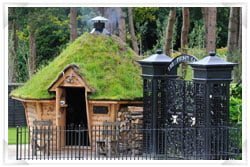 Next to the extraordinary Poison Garden at Alnwick Gardens in Northumberland is a quaint timber cabin. With its rustic logs and octagonal shape, it’s out of a story by the Brothers Grimm – one of the more sinister ones, judging by the skull-and-crossbones on the locked gates of the adjacent garden.
Adding to the silvan atmosphere is the evocative smell of woodsmoke drifting from the cabin. The centrepiece of the cabin is a raised indoor log fire. As well as being a wonderful focal point, it can be used as an indoor barbecue.
Everything at Alnwick Gardens is done on a grand scale (if you’re in doubt about this, take a look at the Harry Potter style treehouse). But, unlike most of their ideas, the BBQ house can actually be replicated in a back garden, and with the unpredictable UK weather, that means you can barbecue all year round.
 If you like the cabin at Alnwick Garden, and you’re an avid barbecue cook, then you’ll be delighted to discover that GardenLife sell BBQ huts with an almost identical design – octagonal shape, Nordic-style doorway, picturesque chimney, and an optional internal BBQ grill and smoke extractor hood. As GardenLife cater for different garden sizes, these barbecue huts are available in two different sizes; Kim (with a 3.2m diameter) and the larger, slightly taller Greta (3.8m in diameter).
BBQ huts – also sold as barbecue lodges or even Arctic grill houses and smoke houses – derive from the huts (called ‘kota’) used by Saami reindeer herders in the Far North of Finland. Originally covered with reindeer skins, they usually have bench-style seating around the edge, used for sleeping as well as sitting.
The popularity of BBQ huts is soaring in the UK because they allow the Brits to extend their passion to barbecue all year round. With a barbecue hut, it’s possible to barbecue whatever the weather – on a sunny bank holiday weekend, you can enjoy wasp-free burgers inside the cabin, with door and windows thrown open to let in the breeze. In rain, snow and mist, you can enjoy ‘outdoor living’ indoors, still enjoying the unbeatable taste of a great barbecued steak, and swapping the Pimms for a good red wine.
Barbecue houses can also double as quaint sleepover huts (simply use cushions and sleeping bags on the benches), or a snug (the ideal place to make and enjoy some home brew).
The Arctic origins of BBQ huts lead many people to decorate them Nordic-style, with reindeer skins, sheepskins or (fake) furs on the benches or floor, and Nordic accessories like wooden tableware. Finnish Marimmeko fabrics give a more modern Nordic feel, whilst children may like a Moomin theme (using this for tableware or cushions is more easily reversible when their tastes change).
Another option is to look across the Atlantic for your design inspiration. Search terms like ‘Mexican’, ‘Santa Fe’, ‘hacienda’ or ‘TexMex’ style produce some great affordable design ideas, including:
- fabrics in vibrant and exuberant red, terracotta and ochre shades
- handpainted Mexican pottery
- Mexican tiles (either in blue/white or red patterns) as mats
- woven Mexican wall hangings
- brightly coloured or plain woven baskets for storage
- even a cactus!
All these are easy to source wherever you live in the UK. The look works brilliantly with the wooden beams of a timber cabin, and makes a great backdrop for an indoor barbecue grill.
 If you don’t want to go the whole hog and buy a BBQ lodge, a gazebo gives meteorological flexibility and protection, providing shelter from too much sun or too much rain. Gazebos such as GardenLife’s Dove, Calder, Leven and Foss models are also a great idea if you have small children – keeping the barbecue in a safe, enclosed area whilst the kids run around the rest of the garden.
A summer house provides somewhere dry and draught-proof to enjoy your burgers if the sky suddenly blackens mid-barbecue. It can also act as a windbreak – especially if you buy a model with a sizeable roof overhang – making it easier to get your charcoal lit in the first place.
Do watch out if you’re barbecuing near a timber building, though. And never be tempted to move an outdoor barbecue indoors – it’s not just fire that’s a risk, but carbon monoxide poisoning too. Only barbecue indoors if you’re using a specially designed indoor BBQ grill and smoke extractor like the ones we offer with Greta or Kim.
Alnwick Garden photo credit: http://paradisexpress.blogspot.co.uk/2012/11/alnwick-garden.html
![How to set up a home office on a budget]()
by Mark Bailey | Jun 16, 2014 | GardenLife Magazine
At the end of 2013 over 4 million people in the UK were self-employed – and the numbers keep on rising. Not all of these people are working at home, of course – the 4 million includes contractors, freelancers and trades people who work on-site for customers and clients. But with more people working for themselves, more of us need space at home to do our jobs.
 The classic solution is the spare room or the garage – or worse, a PC and desk squeezed into the corner of the bedroom, or a laptop on the sofa. But talk to any home-workers and they’ll give you a list of drawbacks: interruptions by family, no space to store papers or supplies, nowhere professional to meet customers, the difficulty of switching off from work …. What they need is an office, but setting up a home office isn’t as easy, or cheap, as it may seem.
If you’re an empty-nester, you could easily convert a bedroom into something more ‘professional’. But what if you’re already bursting at the seams? Extensions and attic conversions are expensive, disruptive and can take many months (or years) to finalise. So, how to set up a home office on a budget? Well, a garden office or workroom could be the perfect solution.
Not only are garden offices cheaper than extensions and loft conversions, they can be completed in the space of a few days, and won’t render your house uninhabitable while they’re being constructed. And if you tire of working for yourself, they can quickly transform into a home gym, games room, spare bedroom or workshop, and if you move house, you can take a timber garden office with you!
As the idea of the garden office has become mainstream, the choice of designs has proliferated (as a browse around the GardenLife website will illustrate). When deciding on a style, it may help to run through the following questions:
- What sort of building design would match the image of your business – a traditional garden room design, a more spacious log cabin, or something sleeker and contemporary in appearance, such as our Nith or Esk designs?
- Do you want the office to double up for other purposes – summerhouse or workshop, and which designs would offer the greater scope to do this?
- Do you hope to take on staff in the future, and will they need their own deskspace?
- Do you need substantial space to store supplies or finished products?
- Will you need some sort of ‘reception’ area – for example, if you need a waiting area whilst you deal with several clients?
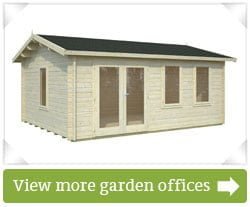 All these questions will help determine the style, size and layout of the garden office you choose, as well as solving the problem of how to set up a home office on a budget. For example, in the GardenLife range, some of the larger models like Arun, Medina, Usk, Yar and Lodden have more than one room, creating options for store rooms, meeting space, reception area or private offices.
One final point to guide your choice is the question of warmth. GardenLife recommend that you look for timber garden rooms with a wall thickness of at least 44mm, especially if you want to use a garden office all year round. Thinner than that, and even the densest timber won’t have sufficient insulation properties to keep your home office warm enough for four-seasons use (without landing you with high heating bills). Similarly, we recommend garden rooms with double-glazed windows if you plan to use your office for long stretches or throughout the year.
![Bespoke log cabin in the woods!]()
by Mark Bailey | Jun 9, 2014 | Bespoke garden buildings
Following on from last months’ post announcing GardenLife’s new bespoke garden building design service, we’ve pulled together a few notes and photos on another bespoke project we undertook not long back down in the Borders.
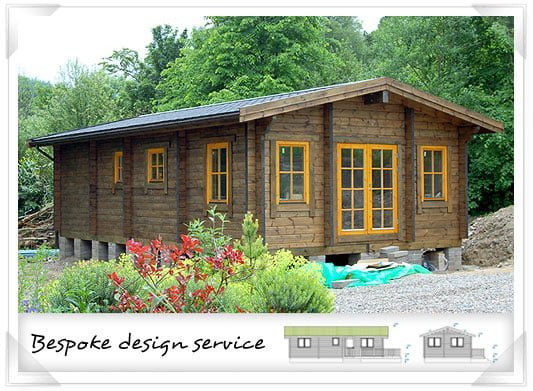
Project Name: Bespoke Holiday Log Cabin
Location: Peebles, Scottish Borders
Client Brief: GardenLife Log Cabins were tasked to design and build a substantial log cabin for year round holiday use with five internal rooms, including a bathroom and open plan lounge. The log cabin was to be open and light to take in the amazing views of the surrounding woods and hills, but also warm enough to accommodate holiday makers in the depths of a Scottish winter!
Technical Specification: The log cabin was built with dense 88mm laminated timber (much thicker than standard designs of 44mm or 70mm) and was insulated throughout to ensure it remained warm even in winter. If you’re interested, ground plans, cross sections and 3D renderings can be viewed in this PDF [1.2MB].
Completion Time: Including the time spent on planning and building regulation, as well as the usual applications and approvals, it took GardenLife eight months to complete the entire project (from initial consultation to watertight construction).
Concluding Notes: This project allowed GardenLife to design and build a great log cabin to act as a perfect holiday retreat in a beautiful and secluded area. When the bespoke log cabin is not in use by the client it is hired out to tourists (which helps with the running costs and upkeep).

If you’d like more details about GardenLife’s bespoke timber building design service, or if you have your own plans for a holiday cabin in the woods, all you need do is contact us with your plans and questions.
![What’s the best eco-friendly timber treatment?]()
by Mark Bailey | May 30, 2014 | GardenLife Magazine, How to guide
 If you’ve ever browsed eco gardening forums or bee-keeping websites, you’ll have come across debates about the use of wood treatments and paints. The debates focus on fears that conventional oil-based treatments, when used on beehives, planters or raised beds, harm bees and could contaminate the veg.
These concerns are sometimes applied to other garden buildings too – GardenLife customers occasionally ask us whether conventional wood treatments are safe for children, pets, wildlife and plants. Is it possible, they want to know, to buy alternative timber treatments that are environmentally-friendly, pet-friendly, children-friendly and bee-friendly, and also, of course, effective at preserving the timber?
The trouble with looking for advice online is that most debates about environmentally friendly wood treatment products are a confusing mixture of passionate opinion and highly technical information about chemicals. They also give tips that are unfeasible for most of us. For example, one common recommendation is to use timber such as cedar, which has innate insect-repelling properties. But a cedar garden house or home office is far beyond the budget of most of us, and not a viable proposition.
Therefore, instead of getting simple answers and advice from these green advice forums and eco-friendly websites, you often end up more confused – and anxious – than before. So, what are your options if you don’t want to use petroleum-based and metals-based preservatives, but still want to protect your wood against rot, insects and weather? What’s the best eco-friendly timber treatment?
Linseed oil is mentioned regularly as a natural wood protection, with good preservative properties and water resistance. On the other hand, critics point out that it is highly flammable, very slow-drying and sticky, and doesn’t protect wood from UV sunlight or mildew.
We’ve also seen other natural wood preservatives recommended such as salt, soy, vinegar, alcohol and tannins. They’re safe for humans and do provide some protection against various forms of attack. However opinions differ as to just how much protection they provide for a garden building, especially one in a dampBritish climate.
 More effective (and easier to source and apply) are a number of commercial, eco-friendly timber treatment solutions that are water-based. Valhalla Wood Preservatives makes a popular treatment called LifeTime® Wood Treatment, which has long been used in Canada and is now available internationally. The product is non-toxic and ‘friendly to plants, animals and people’, and also low-maintenance. Since it does not leach residue into soil, it’s useful for garden planters too.
Naturally, with a successful product like LifeTime® Wood Treatment, the ingredients are a close kept family secret. However, the treatment is made up of naturally occurring plant and mineral substances which soak into and penetrate wood fibres. Independent laboratory testing confirms that LifeTime® creates no harmful residue in soil or water, which is also reassuring
Conventional wood treatment products that are on the market are more health-friendly than previously, but if you have concerns about noxious chemicals and their environmental and health effects, then LifeTime® Wood Treatment is something that you should look for when it comes to preserving your summerhouse, log cabin or raised beds.
by Mark Bailey | May 19, 2014 | GardenLife Magazine
As more people become fed up with commuting and opt to work at home, we’re hearing more and more about the home office, particular the timber garden office. The design of garden buildings has developed accordingly – alongside summerhouses and traditional sheds, you can now find specially designed garden offices and work studios.
The designs and choice have evolved, but garden working is not so new. There’s a long line of great authors who have used a timber garden office as their writing den – the perfect place to be creative and escape the distractions of everyday life.
Probably the author best-known for writing in the garden was Roald Dahl, who wrote books such as Matilda and Charlie and the Chocolate Factory in his ‘writing hut’ in Buckinghamshire. It’s even been preserved in a gallery at the Roald Dahl Museum and Story Centre. Dahl had a weird and wonderful selection of mementoes in his hut, including his own hip bone and a ball made of chocolate foil wrappers.
Philip Pullman has also used his shed to produce wonderful children’s books. He told interviewer David Frost in 2002, “It’s a good place to work, it’s away from the house, it’s quiet, it’s cool in the summer and warm in winter and it works.” Pullman also said that he never tidied the shed when he was in the middle of a book: “I have my little superstitions … let the cobwebs grow while I’m writing the book and I tidy it up afterwards.”
Authors Virginia Woolf and Dylan Thomas were also garden writers. Virginia Woolf wrote in a converted wooden too lshed in the garden of their home, Monk’s House, in Sussex. However, it was so cold in winter that she couldn’t hold her pen, and had to retreat indoors. Later, she had a ‘writing lodge’ built at the bottom of their garden. Monk’s House is now owned by the National Trust, so it’s possible to visit the house and the writing room.
Dylan Thomas wrote in a former garage at his home in Laugharne, Wales. Earlier this year a replica of the shed went on tour around the UK to celebrate the centenary of his birth!
Writer George Bernard Shaw had a wooden cabin built on a turntable so he could rotate the building to follow the sun (nowadays, perhaps it would be easier to install windows facing all round, or a window in the roof). He also had a bed and a telephone in his cabin.
 Some of the world’s most successful businesses began life in the garden (or being American, in the yard). Many dotcoms and social media brands spent their early years in various garages around the US – not as picturesque as a timber garden office, but probably better suited for business. Amazon started out in Jeff Bezos’ garage in Washington; and Larry Page and Sergey Brin worked out of a California garage in the early days of Google.
But don’t think that starting a global business out of a garage or shed is just a 1990s thing. The first Harley-Davidson motorbike was built in a wooden cabin in Milwaukee in 1901-3, and Bill Hewlett and Dave Packard founded Hewlett-Packard in Packard’s garage in 1939.
There are dozens more examples, of course – writers, business empires, artists, musicians, and many more. The comedian Vic Reeves apparently has five different garden sheds, where he writes, thinks and generally escapes from life. And that’s the point – a timber garden office is a place to escape from family, housework, noise, TV, and anything else distracting or restrictive. And once you have that extra space, you have a blank slate for doing exactly as you wish – it could be having a nap, or it could be writing a best-selling novel or starting a business. That’s what’s so great about garden living!

by Mark Bailey | May 12, 2014 | Bespoke garden buildings
This year GardenLife Log Cabins launched a new bespoke garden building design service in order to allow people to customise our existing cabin designs, or to provide us with their own plans for an innovative timber building design. Over the coming months we’ll be showcasing some of our previous bespoke builds by way of a project brief and some related photos. First up, the Waterwheel Café Building in Selkirk:
Project Name: Waterwheel Café Building, Selkirk, Scotland
Location: Scottish Borders
Client Brief: GardenLife Log Cabins were asked to design and build a café with a capacity to take 40 customers. The café was built to accommodate tourists visiting the nearby salmon viewing centre. Our client asked for a light airy space that visitors would want to spend time in (as well as money)! The L shaped design of the timber building allowed for the kitchens to be offset to the main seating area.
Technical Specifications: This timber building was designed and constructed with 300mm laminated timber logs with a bright spacious interior, a separate kitchen was required as were toilets. The building design accommodated all necessary plumbing and electrical requirements.
Completion Time: The project was first discussed in January 2006 and completed in October the same year. Full planning and building regulation applications were undertaken by the clients architects.
Concluding Notes: The client was extremely pleased with the café building which is now a feature in the local area that attracts visitors from near and far. The building was also nominated for a competition for innovative timber building design too!

For more information about GardenLife’s bespoke garden building design service just get in touch with your questions or plans.