![The best gardens to visit this summer?]()
by Mark Bailey | May 17, 2018 | GardenLife Magazine

The best gardens to visit this summer?
With the summer finally underway, the great outdoors has definitely become more enticing than in this year’s snowy spring. And in the long days of early summer, gardens across the country are often at their best.
Whether you’re looking for inspiration for your own garden, a day out, or somewhere to occupy children or visitors, here are some choices for the best gardens to visit this summer.
Great gardens in the South East

Think of an English garden in early summer and you’ll probably think of roses. In June, you’re spoilt for choice.
In Kent, Chartwell, the family home of Sir Winston Churchill, provides a textbook English combination of roses and history. The gardens include the Golden Rose Walk, a golden wedding anniversary to the Churchills from their grandchildren, with 32 varieties of yellow rose. Chartwell has to be considered one of the best gardens to visit if you’re into traditional garden design.
if you want to play at being a grandee for an afternoon, you can also hire out the Churchills’ croquet lawn.
More details about the house, gardens, and ticket prices are available on the National Trust website.
One of the best gardens to visit in the North East

If you’re looking for more northerly roses, try Alnwick in Northumberland.
There’s a rose garden with around 3,000 roses and a cherry orchard which is swamped with pretty blossom during the spring and summer months.
And thanks to its Harry Potter connections, its ‘poison garden’ (the only one in the UK), bamboo labyrinth and treehouse (Europe’s biggest), Alnwick is perfect for keeping younger visitors occupied.
More mature visitors can look at cascading water features and an ornamental garden once they’ve done with the roses, so it’s definitely an all-day trip.
It’s open daily from March until October and you can book tickets on its website, with various family concessions. Alnwick has to be one of the best gardens to visit if you’re in the north east.
Away from the crowds in Lincolnshire

The ‘big names’ like Chartwell and Alnwick do tend to get crowded, but Britain is blessed with dozens of lesser-known but equally inspiring gardens (often missed off lists of “the best gardens to visit this summer”).
In rural Lincolnshire, for example, nestled deep in the countryside, the Grimsthorpe estate and gardens are far from the country cottage garden you might imagine.
Surrounding a thirteenth-century castle, these formal gardens boast immaculately-kept, topiary-laden lawns with intricate parterre landscaping.
And if you’re thinking about growing fruit, there’s an apple and pear garden where the trees are ‘espalier-ed’ onto wooden ladders, and also a collection of quince and medlar trees.
Grimsthorpe is open five days a week in June until September (or twice a week in April through May) along with the adjacent castle and park. Well worth a visit in summer.
Heading west towards Wales

Let’s head west now to the Welsh Borders.
A very manageable two acres of ornamental garden and two acres of woodland, Veddw House Garden is less grandiose than other formal gardens on this list.
But it has enjoyed much attention and praise in recent years from publications such as ‘The Good Garden Guide’ and from Alan Titchmarsh. and features an idyllic meadow and water features.
Any serious gardener heading for Wales would do well to visit the National Botanic Garden of Wales, near Llanarthne in Carmarthenshire. There’s inspiration for everyone here – a Japanese garden with cherry trees and tea house; a fuchsia collection, and if you were interested in our last month’s blog about encouraging pollinators in your garden, you should certainly visit the bee garden.
The best gardens to visit in Scotland this summer?
Now we go north to Scotland, where we recommend the Threave estate near Castle Douglas, in southwest Scotland.
There are 64 acres of sprawling gardens divided into distinct ‘rooms’. They include a rose garden, rockery, and a walled garden whose produce is available to the public. There’s a shop selling rare local plants and, if you’re looking for ideas for a water feature, you’ll certainly get new ideas you can take home.
What’s more, Threave is a paradise for wildlife enthusiasts – you’ll find Scotland’s only bat reserve, along with peregrine falcons, waders, kingfishers and ospreys on the neighboring nature reserve which makes up the wider Threave estate. Definitely one of the best gardens to visit this summer.

If ever you thought of Scotland as being too cold for serious gardening, take a look at Inverewe, way up north in the Scottish Highlands. Thanks to the Gulf Stream (and some brilliant garden design using walls to provide shelter from the wind), you have rare species you’d never expect to find in Scotland, including amazing Californian redwoods.
The gardens are designed to be attractive all year round, but summer is the best time to visit from the point of view of getting some decent weather. And though Californian redwoods may not be ideal for your own garden, Inverewe is a lesson in ambition, resourcefulness and thinking differently.
The best free gardens to visit in summer?
The cost of visiting these gardens and houses add up – especially when you’re likely to spend in their cafes and shops as well.
So it’s always good to have a list of great gardens that are free to visit.
Two favourite examples are in London and Edinburgh.
Regent’s Park

The chances are you’ve heard of Regent’s Park, but not as a place of horticultural inspiration. But it’s worth taking a look at the park’s Queen Mary Garden with more than 12,000 roses; the quintessentially Victorian Avenue gardens; and scores of allotments by a community garden.
The park spans 410 acres, so you’re unlikely to get bored in this refreshingly serene patch of green in the Big Smoke, and it’s certainly a rest for your wallet compared to other activities in the capital.
Botanic gardens
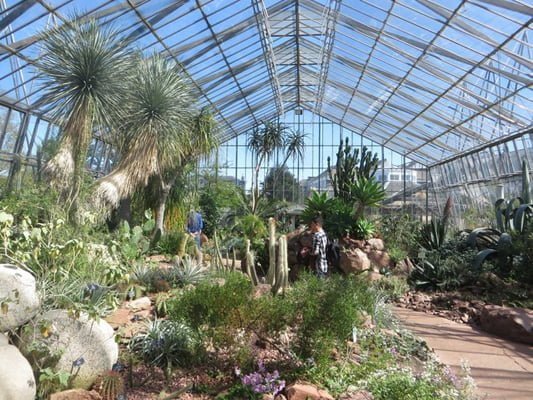
Another wonderful free garden is the Royal Botanic Garden in Edinburgh. There’s something to see all year round, but its summer highlights include splendid herbaceous borders, rock gardens, and amazing water lilies in the ponds in the glasshouses (some with leaves over 1.5m in diameter).
If you’re looking for other ideas for inspirational gardens to visit all around the UK, you’ll find some ideas at:
There truly are a vast number of gardens to visit in the UK, but hopefully our list of some of the best gardens to visit this summer should help narrow the choice!
![Gardening for bees; use your own garden to tackle global food security]()
by Mark Bailey | Apr 18, 2018 | GardenLife Magazine, How to guide

Gardening for bees and planting for pollinators
Would you like an excuse for a few weeds and untidy areas in your garden? Well you have a brilliant one; bees.
Or rather pollinators – because contrary to popular belief, it’s not just bees that pollinate our gardens, but various flies, beetles, butterflies, ladybugs and moths as well.
Basically, any insect that flies from flower to flower to feed themselves or their larvae is helping your garden grow.
It’s well known that bees are having a hard time at the moment – hives are under attack from parasites and disease, and pesticides can harm them (and other pollinators) – hence the EU banning the use of neonicotinoid insecticides.
So, what can garden owners do to save our bees and other insects? And why does it matter that we do this?
To start with the final question, it matters because without bees or pollinators, most of us would struggle to get the food we need. About one-third of the food on our plates is dependent on pollination (there’s more about this – and about what pollination actually is – on a good BBC website article about whether we’d starve without bees).
If you’d like to do your own bit to safeguard the UK’s crucial pollinators, what can you do in your own back garden?
Here are six steps covering gardening for bees, planting for pollinators and other ways to help butterflies and insects to their thing.
1. If you’re looking for a great hobby, you could keep bees yourself

The British Beekeepers Association offers advice and training courses all around the UK, if you’d like to have your own hives and honey sources.
But for most of us keeping our own bee hives is a step too far. And anyway, not all bees and pollinators are hive-based. The habitats of solitary bees, hoverflies and other insects are under threat not just from changes in agriculture, but from people making their gardens too manicured or – even worse – covering them with low-maintenance gravel or decking. Therefore you could consider gardening for bees and…
2. Make your garden bee-friendly with plenty of pollinator nest sites

Good habitats for pollinators include dead wood, ponds, and bare ground. This is a great excuse for a touch of neglect or organised chaos, and with more pollinators around, the other parts of your garden are more likely to thrive.
Some types of solitary bee nest in hollow stems, such as bamboo, or herbaceous plant stems, so incorporate these into your bee garden design too. You could drill holes in fence posts or logs, or make (or buy) your own bee hotel with bamboo canes or cardboard tubes.

Whether you buy a bee hotel, or make your own, be sure to position it somewhere sunny.
The RSPB has a good guide to building your own, and there are plenty of ready-made designs on websites like notonthehighstreet.com (and they make excellent gifts for gardeners who have everything).
3. Planting for pollinators; choose nectar and pollen-rich plants

We all know pollinators like flowers, but there are some finer points to note here.
Firstly, go for diversity in your planting. One threat to pollinators has been the move towards monoculture – so gardeners can counter this by planting a rich array of different flowers, and also letting some wildflowers grow.
Secondly, bees generally prefer open-flowered varieties of plants to fancier, double-flowered ones, because the latter tend to prefer less pollen and nectar.
Thirdly, according to Gardeners World magazine, bees see purple more clearly than other plants. This makes lavender, alliums, buddleia and catmint great bets for pulling in the pollinators.
If you want to know more about different bee-friendly flower varieties, take a look at a great gardening guide from Defra (Dept for Environment, Food and Rural Affairs) which even tells you which flowers appeal to long-tongued and short-tongued bees respectively!
4. Gardening for bees goes beyond the summer months

Another way to do your bit is to plant early and late-flowering plants. This will also make your garden look better for longer.
Early-flowering plants could include fruit trees, hawthorn, forget-me-nots, hellebores and crocuses. And this may be anathema to those who have battled dandelions for years, but they too (along with white deadnettles) can be good early sources of pollen and nectar.

When it comes to gardening for bees and planting for pollinators good late-flowering plants include dahlias, fuchsias, sedums, Michaelmas daisies, sedums and marigolds – all of them easy to grow.
And remember, “a weed is just a flower growing in the wrong place”, so maybe a few dandelions, daisies and buttercups could go ignored the next time you consider getting the weed killer out.

For a more encyclopedic guide to planting for bees and pollinators, take a look at the RHS Perfect for Pollinators lists of garden plants and wildflowers.
5. Yes to gardening for bees means no to using pesticides

The arguments rage about the effects of pesticides on bees and other pollinators. But basically, if you can avoid them, do so, and use other methods as far as you are able – for example, organic products or biological methods. Hoverflies and ladybugs are both pollinators, but they also feed on aphids )a common pest that most gardeners try to get rid of).
If you must get out the pesticide sprays, avoid spraying on open flowers, and follow label instructions carefully.
6. Pollination can be thirsty work

Bees and other pollinations will often need to drink in summer, so the RHS recommends using a shallow dish filled with stones or marbles and water as a safe water source for them. The shallow edge of a pond can also be a good water source.
So, there we are, gardening for bees and planting for pollinators in six really easy steps. These suggestions can improve your own garden, but they’ll also help with global food security and biodiversity as well. That surely must be on your gardening to-do list for 2018.
![Unusual timber buildings – truly novel living spaces]()
by Mark Bailey | Mar 16, 2018 | GardenLife Magazine
The phrase ‘timber buildings’ doesn’t usually evoke thoughts of unconventional and impressive architecture – generally people will think of a log cabin or garden shed. But there’s a huge variety of inspirational and unusual timber buildings which push the boundaries of design. We thought we’d show you some examples so you can weigh up whether they’re worth investing in, or would work in your garden (or intriguingly on a lake or river)!
A tiny timber house that floats

First up in our collection of unusual timber buildings is a tiny off-grid house with a twist – it floats. Despite being clad in blue tinted aluminium, giving it a modern Scandinavian aesthetic, it’s made of laminated timber and insulated with dense foam for warmth; it’s also powers itself via solar panel meaning there’s no need for pesky wiring (difficult anyway when you’re off-grid).
It’s far from large though, with a floor space of 16 square metres making it spare bedroom sized, though there’s a deck with pontoons for access. Being prefabricated, this would relatively easy to build or buy if you have the money and somewhere to float it. Although we’ve never tried it ourselves, you could from buy a timber building from GardenLife and erect it on a floating platform!
And another floating timber living space
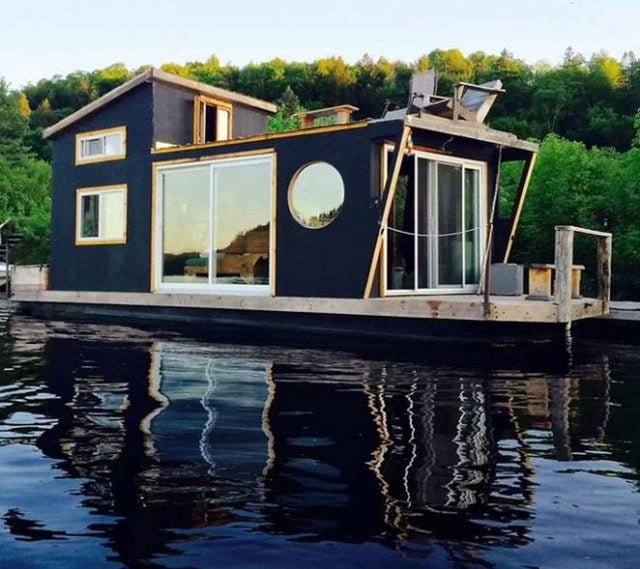
Continuing with the theme of buoyancy – and definitely a contender for winner of the “unusual timber buildings that float” prize – our next unusual timber building is a wooden houseboat complete with roof terrace.
Slightly more spacious, at 23 square metres, it too is fully insulated and even available on Airbnb complete with a video from its creator. The rooftop makes it perfect for sun lounging (subject to weather!) as long as you have access to the money, time and location for a timber building of this type.
Truly one-off unusual timber buildings
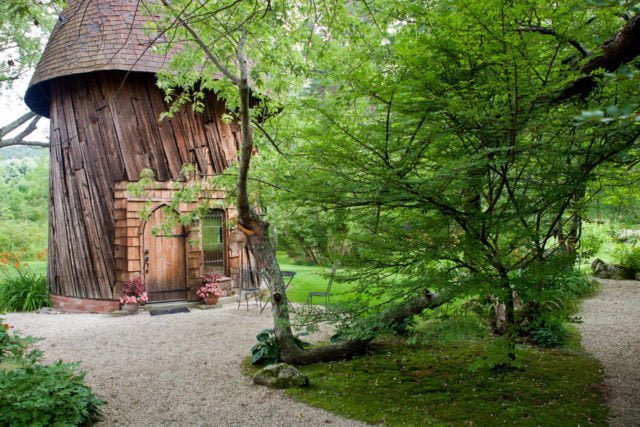
Next on our honour roll of amazing wooden buildings is this remarkable ‘silo cottage’. It’s very much a one-off, with its cone shaped roof reaching nearly 40 feet. You can rent it on Airbnb and experience for yourself its intricate timber-latticed staircase and cosy wooden stove.
Although it’s an enviable design, unusual timber buildings involving such unconventional shapes are certainly a bit much for anyone considering themselves less than an expert in construction and woodworking. A cheaper, simpler and quicker option would be a GardenLife Quick Fit self assembly garden room.
An unusual timber garden home
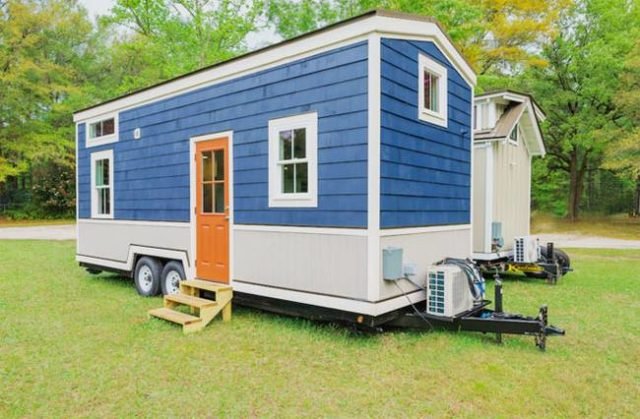
Simpler to achieve is this timber family home, which has two bedrooms (one of which doubles as an office-space with fold-away bed). The structure itself isn’t unusual – it’s basically a trailer – but it shows how creative use of colour and paint can turn a conventional timber cabin into a real-life version of a Playmobil house. Young children would love it as an extra living space or holiday home.
An unusual timber building that only engineers would think of
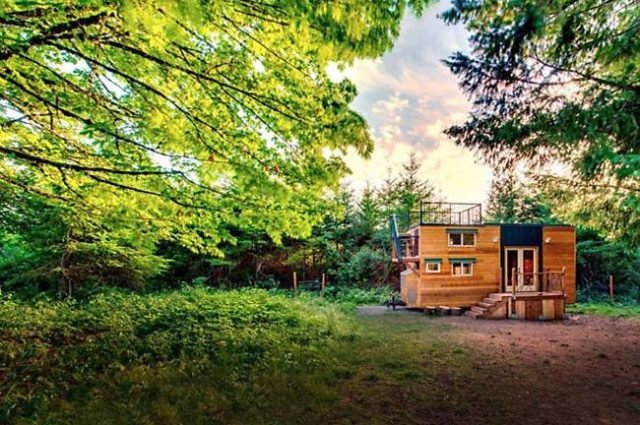
More unusual and architectural is this inventive home-cum-storage unit with two floors and even a rooftop deck. Raised off the ground to prevent damp, it was built (perhaps unsurprisingly) by two engineers and even features a second loft bedroom and compact living and storage space.
Accordingly, the design is perfect for space-starved gardens though you could probably live in it full-time as it’s as equipped as timber buildings come. Planning permission might have to be considered though, considering its height.
An unusual wooden building-and-greenhouse
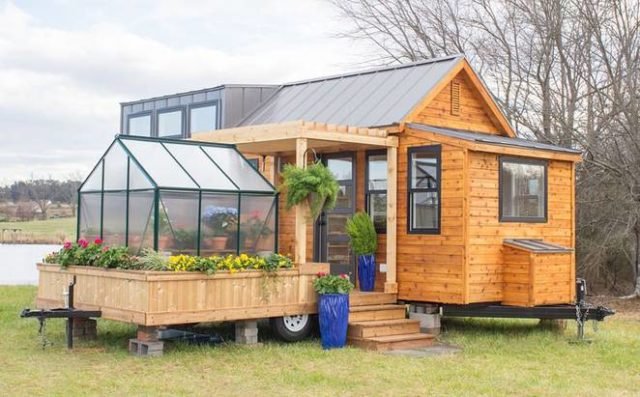
Next is a pocket-sized timber country home, with its own greenhouse/self-contained garden. A roomy 30 square metres, it’s essentially an enormous trailer clad in timber and steel.
With air conditioning and fancy kitchen appliances, it probably belongs more in the category of ‘home’ than garden building. And the trailer design won’t be to everyone’s taste, but the raised flower beds and greenhouse are perfect for keen gardeners though.
A recycled timber hideaway
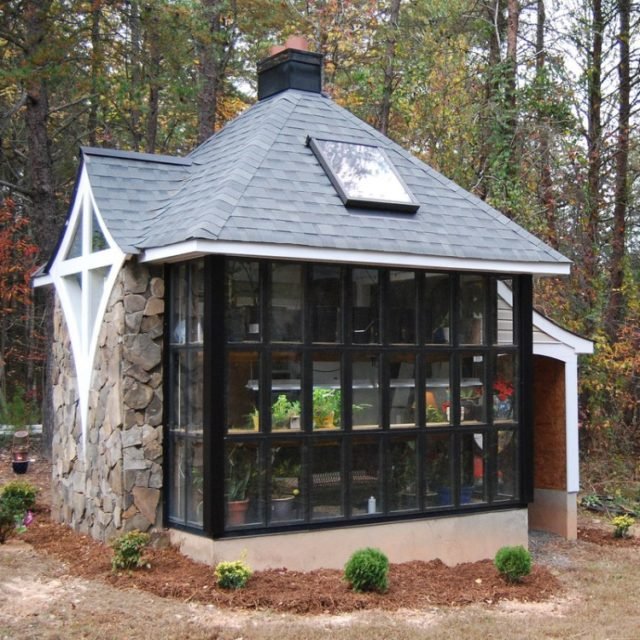
Perhaps a more realistic example of what can be built without help from a designer or architect is this timber cabin/greenhouse built of wood and recycled windows which create a shop window-style display of the plants within.
The space is tiny and it’s never going to appear on Grand Designs, but it’s a wonderful example of what you can achieve with a tight budget and a spirit of enterprise. It would make a unusual timber gardening retreat, guest-room or children’s playhouse. Definitely one of our favourite unusual timber buildings.
A wooden eco-building for cold climates

Ideal for those in less forgiving climates, this trailer-style eco-house comes complete with a drawbridge porch. It’s cold-proof, designed for off-grid living, and is also more flexible than some of our other unusual timber buildings because it’s easily towable. The interior is tidily organised for maximum floor space. Along with a few others, this belongs in the “transportable unusual timber buildings” section.
A timber cabin in the woods

Very different in style is this Hobbit-style Geodesic dome cabin built with reclaimed timber and natural plaster, to create a nature-centric, hideaway
This is certainly the most DIY, and escapist, structure in this list and although it’s not exactly spacious, it does fit a wood stove, a bed platform and a desk. Not perhaps somewhere to relocate to permanently, but definitely a beautiful weekend retreat.
Despite the diversity of their design, there is one thing all of these unusual timber buildings have in common – they’re quite significant undertakings. If you don’t have the necessary time, effort or expertise you might want to think again and browse the GardenLife website, where all the hard stuff is done for you.
Photographs from www.goodshomedesign.com
![Your rain garden guide – construction, location, plants and more]()
by Mark Bailey | Feb 14, 2018 | GardenLife Magazine

Your rain garden guide – construction, location, plants and more
We’ve talked about climate change and garden design on this blog before, and given pointers on how it might impact your garden. So now we’re going to continue on the theme, and discuss how we (or our gardens) could deal with a whole lot more rain.
For some of us, it will come into the form of heat and drought during the summers and torrentially wet winters with storms and flooding. For others, it will mean warmer, wetter weather all year round.
Either way, gardeners, wildlife watchers, water companies, and others are adopting the idea of the rain garden as a solution to all this excess water.
What is a rain garden?
Put simply, rain gardens are a sunken dip with plants and vegetation which collect run-off water, from your roof, patio, other hard surfaces, or overflow pipes. Crucially, they do this before the run-off water overwhelms your local drainage systems and leads to flooding.
They basically mimic the ups and downs of the natural landscape (before we covered it over with paving, roads, patios, car parks, patios!) and have plants that don’t mind their roots being waterlogged for a few days at a time.
The advantages of having a rain garden?

As you trudge through your boggy garden after a week of rain, you may feel you already have a rain garden. But planning a rain garden could transform a mudbath into something wonderful – a view to savour from your home or a garden room.
The great thing about a rain gardens is, they’re relatively easy to plant, and even easier to maintain. And in both respects, they’re a simple alternative to installing a garden pond (though it’s not actually a case of either/or, as they can look brilliant in combination).
Rain gardens can absorb up to 30% more water than a lawn, and don’t need mowing. And by reducing the risk of flooding, they also reduce the pollution risks associated with flooding (because run-off washes oil, metals and pollutants from roads etc into watercourses).
They can also be used to harvest rainwater, helping to reduce the effects of drought and cut down on the need for watering (another way in which they cut down on labour).
And, last but not least, it turns out there’s a huge choice of herbaceous and perennial plants that love to have a soggy bottom (see below). And also that many of these rain-tolerant plants are attractive to birds, butterflies, bees and other wildlife. So add biodiversity to the list of benefits.
What’s the best location for a rain garden?
Before you start digging a rain garden into a lawn or flowerbed, it’s important you know if and where any subterranean cables or pipes for gas and electricity etc. are in your garden. It’s best to avoid digging into them!
Secondly, it’s recommended not to site a rain garden within (3m) 10ft of a property – you don’t want water to do awful things to your foundations.
Rain gardens are not recommended for slopes with an incline of more than 10%. And don’t put one too close to a garden room or office in case there is overflow into the base area for the building.
Other than that, the main advice for positioning a rain garden is that it should be in full or partial sunlight (otherwise you may just end up with a swamp). And if you already have a natural dip in your garden, that could be a good starting point.
For more detailed advice about location and construction have a look through this user-friendly guide.
What’s the best soil for a rain garden?

The Royal Horticultural Society recommends a simple test to find out if your soil is suitable for a rain garden.
You dig a hole about 25cm (10 in) deep and fill it with water. Wait for it to drain away, then fill it up again, and watch how long it takes to drain. The RHS say an ideal rain garden site drains at a minimum of 1.25cm (0.5in) an hour. It should also be fine with absorption rates of up to 5cm (2in) an hour.
If it takes longer, your soil is not suitable – you might have a heavy clay soil, for example, or a high water table.
There are other variations on this test online, but the general idea is similar.
How big should a rain garden be?
It depends on the size of your garden overall, the level of drainage, climate, and the size of your run-off point (likely your roof).
The general rule of thumb is ‘the bigger the better’, especially since smaller ones are more prone to water logging and less able to prevent large run-off into drains etc. Again, the RHS website has some practical advice.
What plants are recommended for a rain garden?

There’s a surprisingly wide choice of easy-to-maintain plants – herbaceous perennials, in particular – that thrive in wet ground. Generally, you want to plant a broad variety of species with strong and dense roots to ensure absorption of water.
The main plants to avoid are Mediterranean species such as lavender whose roots are water-averse, or plants such as azalea which are prone to root rot.
The London Wetland Centre website has some excellent ideas for planting, and there are extensive lists of plant recommendations on the RHS website.
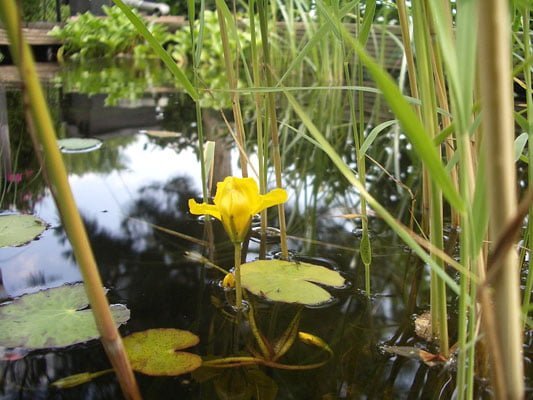
Wildflowers can also grow well around the edge of rain garden, and can help attract wildlife. There are some good ideas for wet soil wildflowers available here.
With these lists in hand, you’re well on the way to a climate-adapted garden that will not only be better for the environment than flooded hard surfaces or a boggy lawn, it will also be less stressful and look better – whether you’re enjoying the view from your kitchen window or relaxing in a garden room.
Too much rain? Not a problem. For the gardener at least.
![Hygge garden design? The lagom garden concept? Transform your garden in 2018]()
by Mark Bailey | Jan 10, 2018 | GardenLife Magazine

Hygge garden design? The lagom garden concept? Transform your garden in 2018
No, they’re not names of shrubs, but Scandinavian lifestyle trends. Hygge’s probably the best known but forecasters say that lagom, ikigai or even còsagach could well displace it in 2018.
Because each word encompasses a concept that crosses over anything from wellbeing to design, to eating and drinking, to how you spend your free time, they really could transform your life as well as your home or garden.
So, we’ll do a whistle-stop guide to what each concept means, and then we’ll give you ideas for incorporating them into your own garden.
Hygge garden design?
Hygge is Danish, and it’s all about the idea of coziness, conviviality and being comfortable in the moment. It’s opened a way for a range of self-indulgences, from drinking hot chocolate with friends, to homes filled with cashmere throws and a wardrobe to match. Being Scandinavian, there’s a sense of moderation and good taste around it, though – think contentment rather than mad-for-it hedonism.

Hygge’s easy to visualise inside a café or country pub, but do you get hygge into a British garden – particularly as the chill winds of winter blast through the gaps in your fence?
Think garden buildings. Natural timber, well-insulated from storms and winds, a snug space away from household chores and the stresses of work – a timber cabin could be the perfect hygge addition to your life.
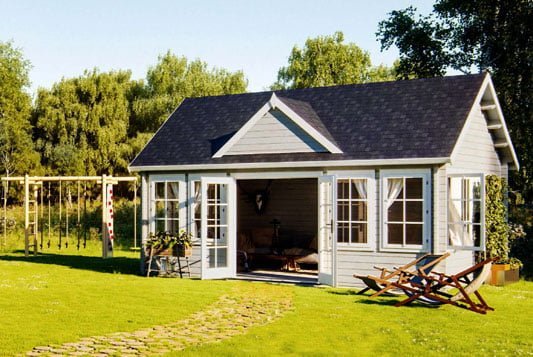
A great example of hygge cabins, on an affordable budget, is our Claudia pavilion – with windows on three sides to let in natural light; dense Nordic timber to keep out the chills; and a space that’s cozy without being claustrophobic.

Another perfect retreat is Melanie – a clever shape that fits into a corner in your garden, with light coming in on three sides – but not Arctic-style draughts, thanks to double glazing. It comes in a choice of two sizes, so you can choose how many people who want to get hygge with. The larger version of Melanie (9.6 sq m) has 44mm wall timbers – idea for keep cosy whatever the winter weather.
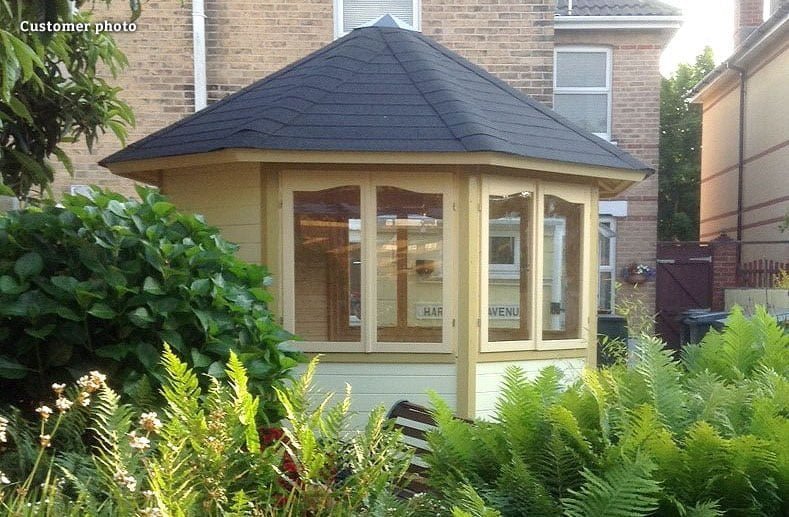
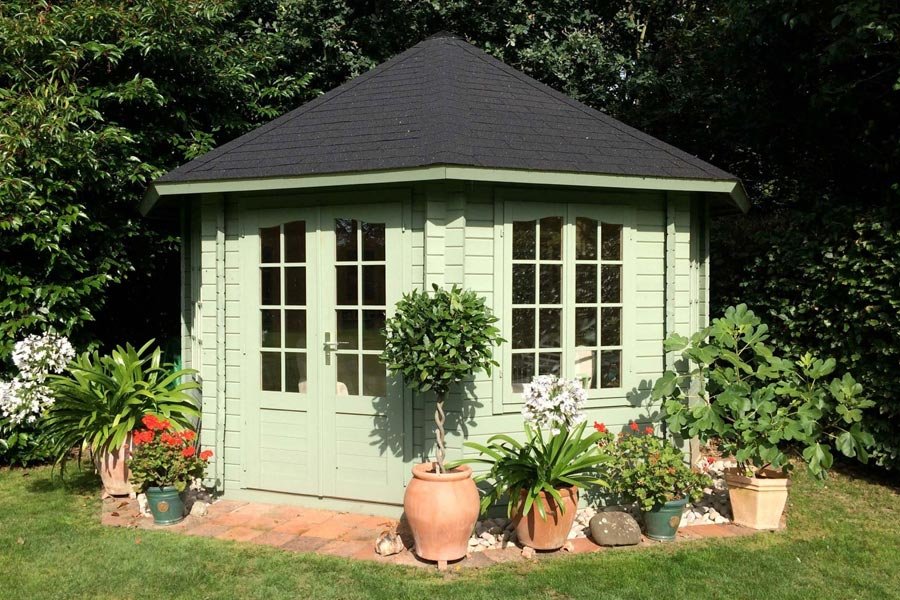
And then there’s Veronica. With an octagonal design, it is reminiscent of a sauna hut, but the double windows allow in more light – giving you a connection to the outdoors, and making it great for summer use as well as a space to hide away in during winter. Like Claudia, it’s compact, so it won’t eat up too much of your lawn or borders, but with 6.7 sq m of space, you’re still have space to lounge over your fika (Swedish for a coffee with a cake or pastry and preferably a chat as well).
If you want to go full tilt for the sauna vibe, how about a Scandinavian barbecue hut like our Eva design (customer photo just below), with bench seating around the edge, a BBQ grill and smoke extraction hood, and 44mm insulated walls to help keep everyone toasty all year-round?
The lagom garden concept?
Before getting too wholeheartedly into a daily fika habit, it’s worth thinking about lagom, another lifestyle trend for 2018. Lagom is used in many different contexts, from eating to ways of doing business to eating to lifestyle choices, so there’s not one-translation-fits-all. The general idea is “everything in moderation”, avoiding excess in anything from work to play to diet to being too ‘Me, me, me”.
So, how does this translate into garden design and garden buildings? Rather than letting work, commuting or retail consume your 2018, how about finding a garden refuge where you can be healthy, happy and content – whether spending more time with family or friends or taking up a new hobby?

Another element of lagom to incorporate in your garden is the design aesthetic. For example, the classic stripped-back Scandinavian colour palette of chalky matte paint, milky whites, blue-greys, and stone, spiced up with small splashes of dark red, brick or yellow, is very lagom, and would work beautifully with any of these garden buildings – both exterior and interior.
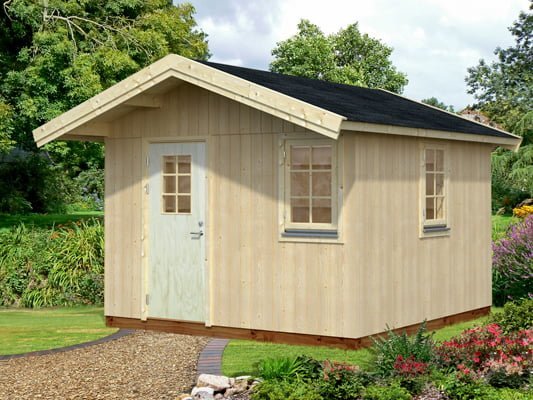
We also sell a selection of easy-to-build models whose design is Nordic-influenced. Hedwig is a Quick Fit design inspired by Swedish summer houses – simple, sturdily built, pastoral. Add some red paint on the exterior and you could be in a Scandinavian forest or island.
For a more urban and contemporary aesthetic, take a look at Ly. Spacious (with 10.2 sqm of floor space, or 13.6 sqm of space if you go for the largest model) but still Nordic-influenced in its functionality, comfort and pared-back aesthetic. It makes a great office or workroom – the placement of the windows means you get plenty of light without being on display.
An ikigai garden?
Another trend for 2018 is the Japanese idea of ikigai. This is less about interior design, more about how you live your-life. As with lagom, it’s difficult to find a direct translation, but suggestions range from ‘self-realisation’ to ‘what gets you out of bed in the morning’. It’s about what gives meaning to your life, and according to the Wikipedia guide to ikigai, this could be anything from work to having children to hobbies.
To our minds, there’s no doubt about it: ikigai means having a shed. Or man/woman-den, garden building, workroom – call it what you will. You could use it as creative studio, gym, brewing shed, games room, or a garden office to start the business you’ve long daydreamed about.

A timber cabin like Ines can be perfect here – it’s an elegant design, with clean lines and no over-the-top design details, and we’ve heard of people using it as anything from an extra living room or breakfast room, to a garden gym or yoga retreat. With 44mm walls and double doors that open wide, it can be as snug or airy as you wish.
Getting “còsagach” in your garden?
Our final word for 2018 is còsagach. Announcing it as a lifestyle trend for the year, VisitScotland translated it as snug or sheltered, and encouraged businesses to create environments that “induce a feeling of warmth or cosiness”.

Unfortunately, the choice of còsagach also reminded us of the dangers of adopting hard-to-translate foreign-language words as lifestyle themes. VisitScotland’s advice aroused a backlash from Gaelic speakers who said còsagach in fact means ‘a damp mossy place’ or ‘a wee nook or hole such as very small creatures might live in’ – one person mentioned woodlice.
Not something to aim for when you’re choosing a garden building; best stick with hygge garden design or the lagom garden concept!