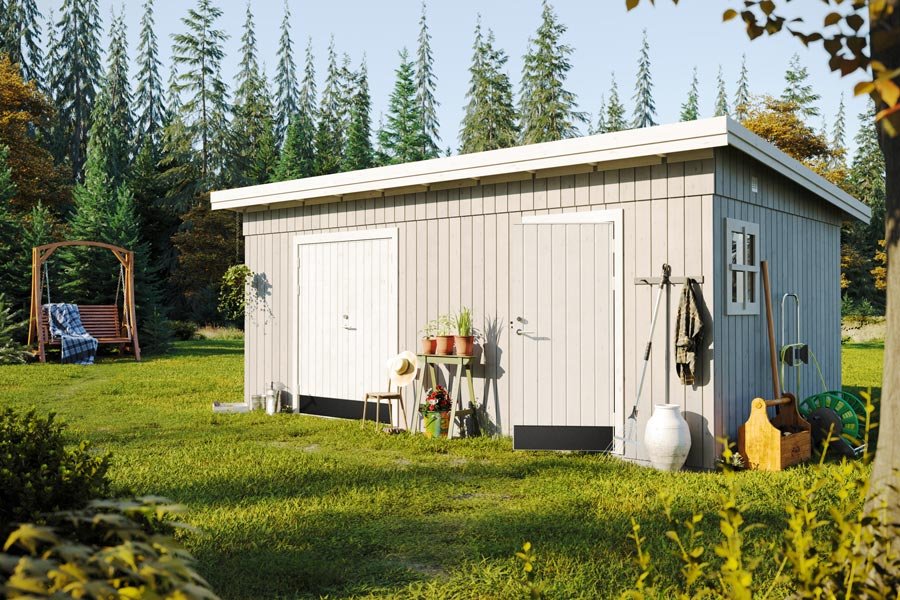
Have you noticed how people are talking about gardening, therapy and mental health recently? ‘Horticulture therapy’, as some people call it, is an increasingly popular prescription for everything from depression and anxiety to loneliness and lack of purpose.
In one recent survey, four out of five people said gardening has a better impact on mental health than hitting the gym. The Metro newspaper quoted a psychotherapist saying, ‘Gardening is a brilliant de-stressor. Hacking down shrubs, mowing the lawn, digging in bulbs, even just weeding and planting can lower blood pressure and create a healthy mindful state.’
According to the report, the combination of fresh air, exercise, natural light and Vitamin D can help fend off depression and low moods.
Gardening; therapy for modern life
You don’t just have to take Metro’s word for it. There’s a growing (no pun intended) number of organisations using gardening and farming to help people with disabilities, health or mental issues.
There’s Thrive, for example, a charity that ‘uses gardening to change lives’. It helps people with disabilities or mental health issues to garden, and it runs a wonderfully practical website with tips on gardening after a stroke, in a wheelchair, with one arm, or other conditions. It has a nice leaflet you can download giving advice on using gardening to improve your emotional wellbeing. It’s called Gardening: The feel good factor.
Meanwhile, the Royal Horticultural Society (RHS) is funding a pilot scheme for GPs to refer patients with a variety of ailments to ‘therapy gardens’ – there’s an interesting article about it here.
But you don’t have to be clinically depressed or ravaged by stress to get the benefits of horticulture – anyone can give themselves a wellbeing boost by getting out the gardening gloves. In fact, when it comes to gardening, therapy and mental health, you don’t even need your own garden!
No garden, no problem
When you think about what gardening actually is, it’s really not surprising that it’s a powerful destressing mechanism. As long as you leave your mobile behind, being outside, surrounded by nature, away from the pressure of the office and free from nagging email inboxes and notifications, what better setting to relieve tension and promote calm in our hectic lives?
If you aren’t lucky enough to have your own garden, then spending some downtime in a city park or strolling out of town through fields or woods can be just as effective.
Scientists have actually found that as humans, we instinctively relax when we’re in a natural setting – one Stanford University study found spending time outdoors decreased activity in areas of the brain responsible for depression and negative emotions, as well as lowering levels of stress hormones. It’s in our DNA: we like to be outdoors, and when we are, our bodies and minds thank us for it.
Breaking a sweat to beat the blues
When considering gardening, therapy and mental health, it’s worth considering getting active outdoors. While perhaps not akin to Olympic weightlifting or marathon running, gardening certainly counts as exercise. You can burn almost 400 calories from an hour of lawn-mowing, according to Saga.
Just like running or weightlifting, gardening releases the feel-good hormones known as endorphins, along with a whole host of others including the so-called ‘happy chemical’ serotonin. Regular endorphin release has been shown to reduce stress and anxiety and improve sleep and even self-esteem.
And, there’s one benefit that running and weightlifting certainly can’t offer – if you use your garden to grow some fruit and veg, you’ll get a further health boost from all the vitamins and other nutrients they’ll bring to your diet. You don’t get that from 10 minutes on the treadmill.
How to reap the rewards
You don’t have to be gardening to relax or destress, but it does give you an incentive to spend time outdoors, keep moving and do something life-affirming.
Apparently, designing your garden to be a ‘myriad of greens’, rather than a riot of colour, is particularly restorative. And having a design that forces you to move slowly – with winding paths and stepping stones etc – is also suggested to be therapeutic and an aid to mental health. It’s based on the mindfulness concept.
On the other hand, you may prefer bright colours and geometric patterns – we each have own feel-good preferences.
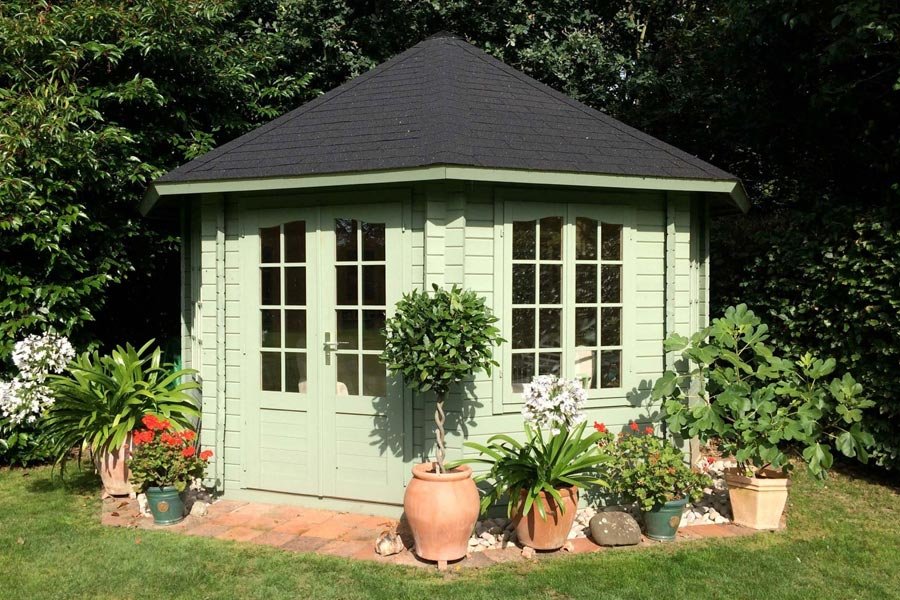
You could also think about creating a separate ‘you’ space in your patch, such as a summer house or other garden building, which can create a peaceful sanctuary – a safe space, if you will, that adds a layer of protection between you and the worries of your daily life.
At some point, most of us will be hit by feelings of isolation or loneliness – it seems like a 21st-century pandemic. This too is something gardening therapy can help with.
Many of us garden alone, but social gardening is also very much a thing. It’s a great way to connect with people you wouldn’t otherwise have met, alongside reaping all the health benefits we’ve already covered.
Thanks to organisations like Farm Garden, you should be able to find gardening groups and initiatives in your local area. The RHS also has some good community gardening webpages, where you can find local groups or get ideas for setting one up. Groundwork is another great example of a nationwide community gardening initiative.
Gardening with a goal
As humans, we seem to be hardwired to work towards a goal, and gardening gives us one – be it a grand flower garden worthy of the Chelsea Flower Show, a community project or just a mini herb garden in a couple of window boxes.
Of course, when considering the crossover of gardening, therapy and mental health, gardening alone isn’t an instant cure-all for modern life’s ills. The process of creating a garden is a slow one, and plants don’t always thrive like you want them to. But the commitment you put in is always well-rewarded – not necessarily with a bumper crop of carrots, with a sense of purpose, a stake in the future, and something to care for. Doesn’t that sound like just what the doctor ordered?
Cheap or quality? Pop-up or permanent? Metal or timber?
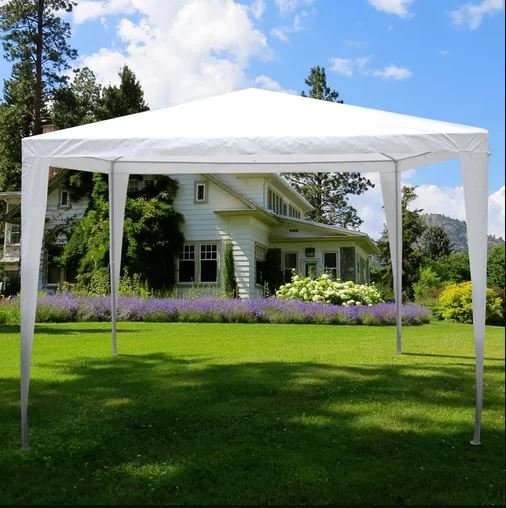
Thinking of buying a garden gazebo in the UK? If you live somewhere windy, where rain regularly comes at you diagonally, a wooden garden gazebo may not be for you. But if you live anywhere else, it could be your ideal solution for garden living.
The Americans love gazebos because they provide shade from the sun. In the UK, we love them because they shelter us from rain as well.
They also offer a degree of privacy, without you having to go the whole hog and buy a summer house. That’s why gazebos are so popular for garden hot tubs and barbecues. But we’re getting ahead of ourselves here. First, let’s go back to basics and say what they actually are.
The short answer is that a gazebo is an open-sided garden structure with a roof – a pavilion or summer house without walls. If you want to know the precise difference between gazebos, pergolas, pavilions and the like, there are more detailed descriptions on The Spruce website. But to our minds, there are more important questions to think about:
How can a gazebo help you get more from your garden?
How should you go about choosing a garden gazebo?
Gazebos and garden living
So, let’s look at the first question, how could a gazebo help you get more from your garden. We’ve already said a gazebo could protect you against sun, rain, and curious eyes. You could use it to do yoga, lounge with a good book, shelter a barbecue, sitting or dining area, or provide a covered play area for the kids (that’s if the hot tub has not got there first).
In other words, it can turn your garden into an extra living space.
A gazebo can also be a focal point for a garden design – the eye is drawn towards it, but the open sides allow you to see beyond to the rest of the garden as well.
How to choose a gazebo for the weather in the UK
Old-fashioned gazebos were permanent structures, built of wood, brick and/or cast iron. But that all changed with the advent of the ‘party gazebo’ – lightweight, pop-up gazebos that are now a staple of parties, school sports days, fun runs and anything else that takes place in the open air in the British Isles.
Prices for these start from about £20, though that will likely get you something flimsy that won’t survive more than a gust of wind that’s typical in a UK summer.
There are also more upmarket and robust versions of the temporary gazebo, with design styles modelled on marquees, safari camps or vintage garden fetes. These tend to cost from £100 upwards, depending on size and sturdiness.
Then you get semi-permanent models – with sturdy aluminium, steel or cast iron supports, and available in contemporary designs as well as traditional. These work well on patios as well as lawns, and may run into hundreds of pounds.
What if you want something more robust and longer-lasting, a gazebo that won’t blow away or buckle if the wind blows?
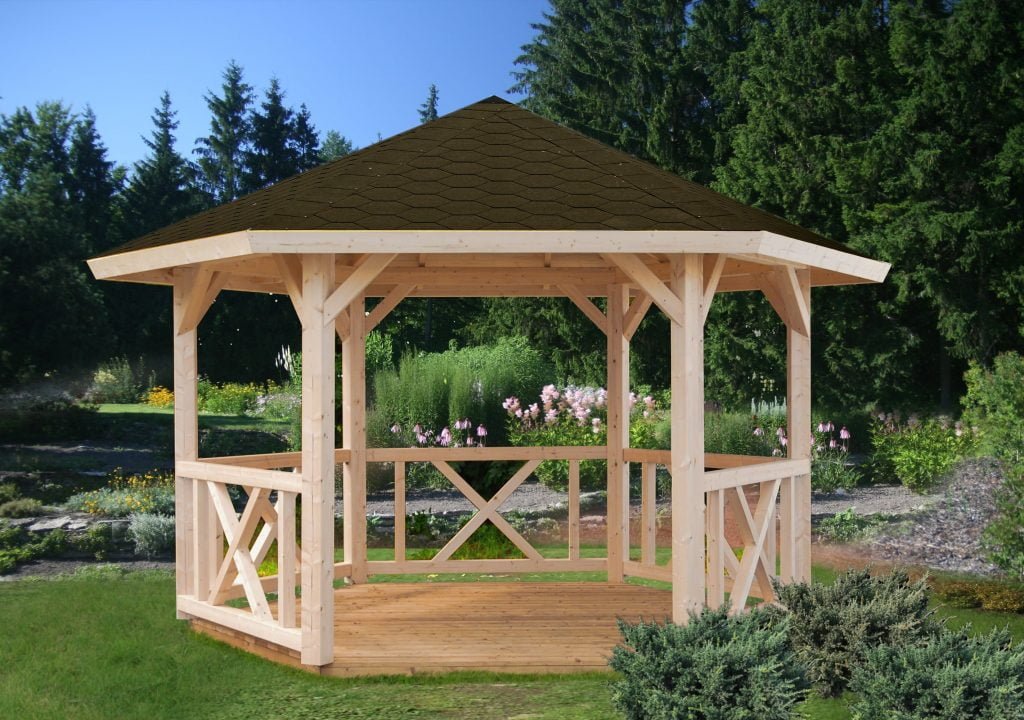
If you really want permanence, you’ll be looking at bricks and cast iron – like a Victorian bandstand. More feasible for most of us, though, is a high-quality timber gazebo, built to withstand the damp English, Scottish or Welsh climate. Below we look at a few of the factors to think about when buying a garden gazebo.
What you’re going to use it for: do you want a completely flexible open space, where you can sit with deckchair or book one day, or lay out a table of party food another day? Or do you want it as a shelter for a hot tub? If you’re planning a hot tub, GardenLife sell a gazebo with a back wall that provides extra privacy and shelter from the wind.
Whether you want a floor: the answer to the above will help you decide this; so will your budget. On some models, the floor comes as optional, so you’re free to decide which would suit your plans and price range.
How much space you want: you’ll want to balance flexibility vs aesthetics vs budget. And you don’t want too big a structure to over-dominate a garden. And your kids won’t thank you if you ruin their back-garden football games with a gazebo plonked in the middle of the lawn (though technically the open sides mean it shouldn’t stand in the way of a curling free kick).
The best shape for your garden: a simple four-sided gazebo is cost-effective and practical but it can look quite plain and functional. A hexagonal gazebo or octagonal shape will look softer and make an attractive centrepoint. If you take a look at GardenLife’s Betty gazebo, you’ll see for yourself how the same design takes on a very different character depending on which shape you go for.
Traditional vs contemporary: the usual advice is that the gazebo should reflect the style of your home – so a period home gets a period-style gazebo. But don’t feel trapped by that – you could set up a good contrast in the same way that a contemporary bathroom style can work well in a period home. However, it’s still a good idea to have colour and roof shape blend with the house or other garden buildings. You’re looking for a centrepiece not an eyesore.
Whatever style you choose, you’ll want it to be as low maintenance as possible. On a timber model, that means looking out for:
slow-grown timber; this has a denser grain than fast-grown timber, so the gazebo will be sturdier and less likely to warp
laminated timber support posts – lamination helps protect against damp, and the warping and swelling it can cause
pressure-treated flooring that’s resistant against rot and decay.
When it comes to buying a garden gazebo in the UK, touches like these can make all the difference in terms of finding a durable, long-lasting gazebo that can withstand British winters.
Our advice on why you need a water butt, and which water butt to choose
We live in a mild, rainy climate in Britain, so water shortages are not really high on our radar. But as recent summers and unseasonal dry spells have proved, hosepipe bans and the need to conserve water are likely to become more of a thing.
So, we’d all do well to think how to keep our gardens green without just turning on the taps.
The answer is a good old-fashioned one – a garden water butt connected to the guttering of your house, garden room or shed. Even without the prospect of hosepipe bans, they’re a good idea for anyone with a garden:
If you’ve got a water meter, a garden water butt will save you money
Water butts are good for the environment – even in a country where water is plentiful, the processes involved in getting clean water to our taps use a lot of energy resources
Your plants will thank you – rainwater is free from chlorine and treating agents found in tap water
But with some garden water butts stretching into £1000-plus territory, your wallet won’t necessarily thank you if you make a rash purchase. So, when it comes to choosing the best garden water butt, here’s our guide to making an informed and cost effective decision.
Your rainwater butt options
There’s a huge range to choose from when it comes to picking the right rainwater butt. Water capacities can range from 100 to 1000+ litres, and even more with some multi-tank systems. You can choose from simple plastic garden water butts to terracotta designs with fancy brass taps and built-in planters. Here’s a look at some of your choices for the best garden water butts.
Cheap garden water butts
Your cheapest and simplest option is going to be a plastic barrel-style garden water butt. For £25 to £40, you’ll get a durable tank with roughly 200-litre capacity and a built-in plastic tap. They’re not especially pretty, but they’ll get the job done just fine.
Garden centres and DIY shops sell a good choice of rainwater butts, and some councils sell a limited range too. You’ll also find some good examples of budget-friendly water butts online at Evengreener.com and B&Q.
Things you may want to check, even if your budget is very tight, include whether:
the plastic is recycled
there is a child-proof lid
the tap is sturdy – the last thing you want is a flimsy, ill-fitted tap that lets the water leak out
If city-living has left you with a small plot and you’re tight on space, there are plenty of slimline water butts with unobtrusive designs. They’ll fit well into tight corners or restricted spaces, albeit at the cost of having smaller capacity. You’ll find some of the best garden water butts with a slimline design at Water Butts Direct and Homebase.
Rustic garden water butts
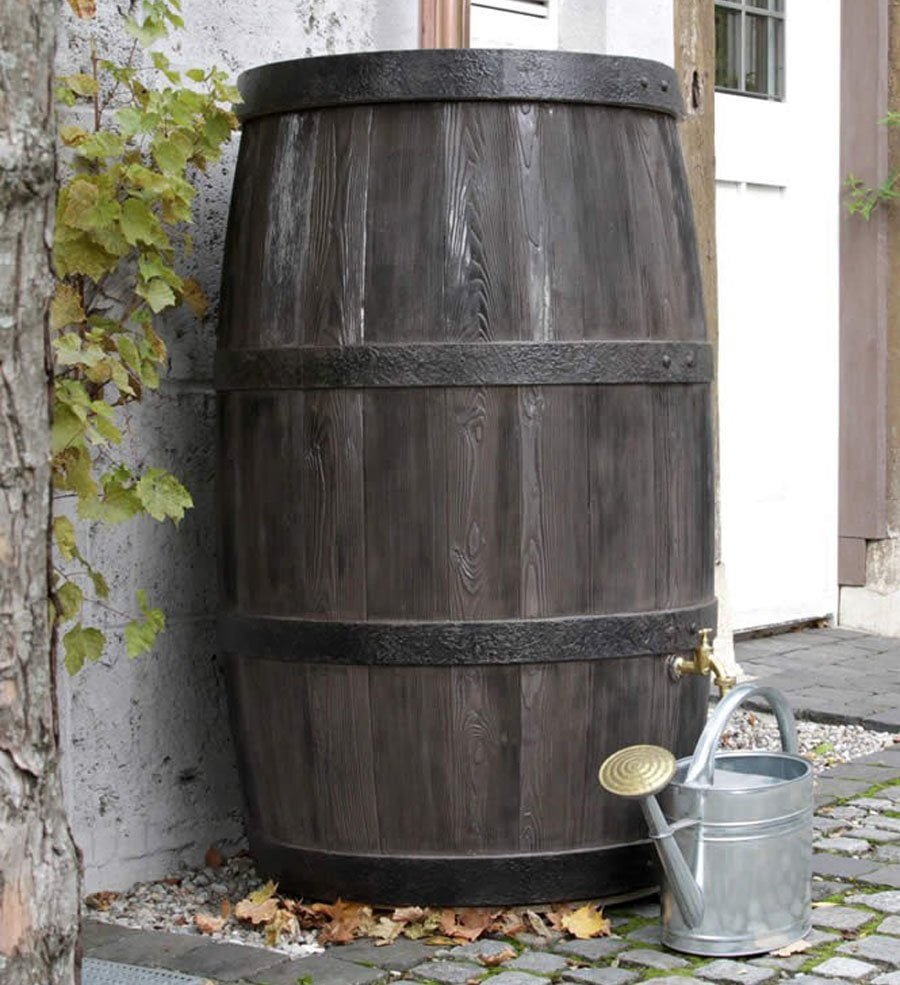
A plastic rainwater butt may look out of place by an old country cottage or in a rustic-style garden design. But don’t worry – a wooden (or ‘wood-effect’) water butt will blend in nicely. Smaller oak barrel style designs or huge 500-litre tanks are both functional and elegant.
You can even find garden water butts disguised as tree trunks. However, if you do want a water tank that looks like a sawn-off tree, expect to pay more – certainly upwards of £75, going all the way up to the hundreds.
Getting fancier – stone and terracotta water butts
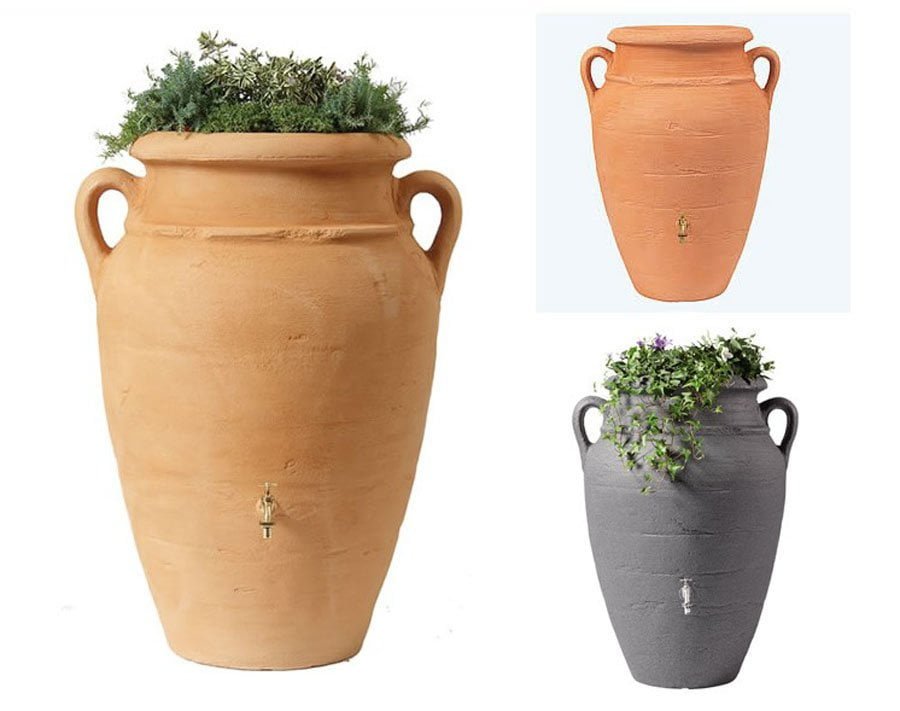
Here you were, thinking you’d never describe a garden water butt as classy – especially after looking at the fake tree trunk versions. Some of the best garden water butts have an antique-style or stone effect look, with a choice including terracotta, granite, sandstone – many with a distinctly Mediterranean style.
You’ll find tasteful brass taps galore, vase and amphora styles, and the option to have planters and bird baths on top of the butt. Prices can be hefty, and you’ll need to watch out for the cost of extras like downpipes and fittings (see the section below on installing a garden water butt). But they can be a distinctive or complementary part of a garden design, in which case the cost will be worth it.
Multi-tank garden water butts
Blessed (or cursed) with a huge plot? If you go through lots of water or just fancy the peace of mind from having more storage, single garden water butts are no match for multi-tank systems. You have a choice here of hundreds or thousands of litres capacity. And you don’t have to spend a fortune.
With any garden water butt, big or small, plastic or rustic, you need to work out how you’re going to gather rainwater.
Some smaller butts collect water by having no lid, but these are far from ideal as their surface area is not enough to gather a significant amount of rainfall (and the open lid allows for water loss by evaporation). Instead, most water butts attach to the downpipe from your gutters (be it home, summer house or shed) and gather the rainfall that the whole roof collects. Even a small 2m x 2m roof can collect over 3000 litres a year with average UK rainfall.
The best garden water butts come with a kit for you to connect the tank to the pipe. However, there could be complications. Most will work only for certain sizes of downpipe, and not for cast iron ones, so you may need to buy a different connector kit. You may also want to look at diverter kits, which take away excess water.
Filling up buckets or watering cans from a tap a few inches from the ground can range from tricky to impossible. The best garden water butts come with stands included, but with others it will be an optional extra, to be factored into your cost calculations.
There are also universal stands, but it’s still important to double-check if the stand is compatible with your tank size and weight.
Garden water butt maintenance
Keeping your water butt well covered will help to stop debris falling in, and reduce slime and algae forming. It will also avoid the water being used as a breeding ground for mosquitoes.
The best garden water butts come with secure lids, but even then you need to prevent algae and slime, so a splash of non-toxic rainwater treatment a few times a year will keep your water nice and clean.
There is a small risk of nasty Legionella bacteria breeding; you can fix this with an annual emptying and deep cleanse. Placing the water butt in the shade or painting it white (to reflect heat) can also help.
Although water butts are most likely fill up in autumn and winter, it is advisable to keep an eye out for extreme cold spells. If located in an exposed spot, or should persistent sub zero temperatures be forecast, it’s best to temporarily insulate the tank (and connecting pipe) or empty the butt altogether to stop the water from freezing and splitting the plastic.
Some people also use garden water butts to gather ‘grey’ water from baths, basins and the kitchen, but keeping this water clean and fresh will take a bit more work than simple rainwater. You also have the issue of the water containing detergents. There’s advice on re-using grey water available here.
Now’s the time…
When it comes to choosing the best garden water butt spring and early summer are the perfect time to get onto this. You’ll have a few damp weeks to collect rain before the summer and you’ll be well prepared if we get another ‘barbecue summer’ this year.
And if you do already have a water butt, it’s a good time to spring-clean it and make sure you’re all geared up to use it effectively and safely this summer.
What you should (and shouldn’t) plant in your garden
When picking out plants and trees for your garden, it’s easy to bypass native British trees and be seduced by exotic species. You go to a famous garden and see wonderful designs based on themes from Japanese formal gardens to Alpine meadows. However impressive they are, don’t let them blind you to the advantages of native British trees and plants.
Adding native species to your own garden can bring some real practical benefits, including:
improving soil quality
reducing erosion
better drainage
attracting wildlife to your garden
cutting down on maintenance
So whether you want to give the local wildlife a helping hand, or just improve the view from your summer house, let’s look at some native British trees in a little more detail. We’ll also offer some practical tips for choosing the right native trees for your garden, and advise why you shouldn’t plant certain species.
Why plant native British trees?
Strong roots and lower maintenance: It’s an obvious point when you think about it, but native British trees have evolved to flourish here. They’ve spent centuries adapting to the local climate and conditions, and are likely to grow strong roots. This in turn means soil is less likely to be washed away when the UK weather is at its wettest.
The fact they’re adapted to our climate means they need less protection against the British seasons – whether they bring sun, rain or frost. So that’s less work for you.
Improved soil condition: It is not commonly known, but some native British trees (mentioned below) actually have the ability to improve the soil around their roots. They help feed the plants around them and enrich poor quality soil (which is a big benefit if your garden soil is full of building rubble).
Wildlife: Again, it’s obvious once it’s pointed out, but native British wildlife and native British trees have evolved to live together. Native trees will provide homes, shelter and sustenance for native species of birds, small mammals, including hedgehogs, insects and other wildlife.
We’re not going to get into intense levels of scientific detail here, but it’s basically one that started growing ‘naturally’ in the British Isles from the Ice Age onwards.
Some quintessentially British-sounding trees, such as apple, cedar and chestnut, are actually foreign imports, and not ‘native’ at all (though some may fall into the category of ‘naturalised’).
If you’re looking for a true native, the Royal Horticultural Society (RHS)’s top five recommendations are:
field maple
silver birch
hazel
holly
rowan
But before you baulk about that being a limited choice, don’t worry: there are many more native British trees to choose from. And you certainly won’t have to miss out on colour or interest.
Planting native British trees in smaller gardens
If your space is limited, you want to look at trees that will peak at 5-8 metres when they’re fully mature. The RHS can be your guide here, with a good list of suggestions including some varieties of maple, hawthorn and blackthorn. The latter have really attractive white blossom and purple berries, which can be used to make sloe gin (though check that the variety you choose has edible berries).
Crab apples are another one to look at for smaller gardens (and larger ones too). They can thrive in many different soil types, and have beautiful pollen-rich, white blossom. Though you’ll certainly not want to eat a crab apple raw off the tree (far too sour), they’re brilliant for jellies and chutneys.
Also great for your store cupboard is elder. Admittedly, it’s not an especially attractive tree, but elderflowers make wonderful cordial (and it’s easy to make) and berries can be used for wine-making, among other things. Full height is around 6m, so again it’s feasible for a small garden. However, if this is going to be your only tree, opt for something more attractive…
…like a holly tree. As well as being glossy and green all year round, and great for Christmas decorations, they’re extremely wildlife-friendly. They grow best in the shade, where toads and hedgehogs often hibernate in the deep leaf litter beneath the plant.
Other good native species include yew or box, which can be kept clipped back to a manageable level and used as shrubs rather than full-blown trees.
Another good thing to read if you have a small garden is this article in Garden Design Journal on the best smaller trees. Not all its ideas are native species, but it will certainly convince you that every garden needs its own tree.
Buying native British trees for larger gardens
For those with more space, we’d still recommend all the native softwood trees we mentioned above. They can hold their own in any garden, and you can also use them for hedging or windbreaks. Planted in combination, they’ll support a whole array of wildlife.
But with more space, you have other choices too, including large hardwood trees. If it’s a ‘proper’ tree you’re after, you could look at an English oak, which could eventually reach around 30-35 metres.
If you live in the North of England or Scotland, your soil may be well suited to a the wych elm. These can reach 40 metres in height and hold the claim of being the only elm truly native to Britain. Caterpillars and birds especially are attracted to them.
For something prettier and slightly smaller (though still reaching up to 20 metres), consider a wild cherry tree, with beautiful purple bark and crimson cherries. The nectar and pollen-rich blossom is perfect for insects, but if you want the blossom to last more than a few hours or days, plant the tree somewhere sheltered from the worst of the winds.
The rowan (or mountain ash) is a good native British tree for medium-sized gardens, as it’s relatively slender and should stall at about 15 metres. Its berries turn a lovely orange-pinky colour in the summer, and are great recipe ingredients (they’re also very popular with thrushes and redwings). Traditionally, rowan trees were thought to ward off witches, so that could be another attraction.
Alder (which is known for loving poor and/or boggy sites) is a fast growing native British tree, but it also fixes nitrogen into the soil around its roots. This process is highly beneficial to nearby trees and plants, most of which are dependent on nitrogen for growth. Likewise, downy birch and silver birch both draw up nutrients from deep within the soil, again to the benefit of neighboring vegetation. Alder and birch trees effectively nourish and support the plants around them.
Again, the RHS guidance on native species are your friend and guide here, with a detailed list of trees and shrubs for larger gardens.
Another excellent source of information and inspiration is the Woodland Trust. Its website has user-friendly guides on how and where to plant native British trees and shrubs, and taking care of them once they’ve grown.
Why you shouldn’t plant some native British trees
There are plenty of benefits from planting native species in your garden, but do be aware of some of the pitfalls too.
It’s definitely worth remembering that, with the larger hardwood trees especially, they’re not a quick fix. Hardwood trees such as oak, beech and elm can take decades to reach maturity, and may need plenty of TLC and protection in the early years.
With larger trees, you’ll want to be very wary of roots, how far they grow, and the distance from your (and your neighbours) property. You should plant them well away from walls and buildings, and also check if any pipes or cables run underneath your garden. Although beneficial to the soil and wildlife, willow and alder are bad culprits for damaging old foundations and pipes, so you probably shouldn’t plant these trees in smaller gardens.
Finally, whilst berries of native British trees such as yew and holly are wonderful for various forms of wildlife to eat, they’re not so good for human consumption. Ideally you shouldn’t plant them if you have children who are still at the stage of eating anything that looks like it may be a sweet.
If we’ve not convinced you to plant one or more native British trees in your garden, the Woodland Trust website has an online shop where you can buy single trees or handy mixes/packs. There’s everything from a special pollinator tree pack to the ‘Scottish mix’.
Spring is a showpiece season for Britain’s gardens, and anyone looking for inspiration is really spoilt for choice. Formal or informal, classical or directional, it’s easy to get ideas or just a great day out, but what are the best gardens to visit in spring?
The main thing worth highlighting here – and we’re sorry if we’re pointing out the obvious – is that ‘spring’ arrives at different times depending on where you are in the UK. The gardens of the mild Cornish and Devon coast could be in their full spring glory weeks earlier than those in the North and East. So plan your visit accordingly.
Below we give you seven of the best gardens to visit in spring; there are dozens of other contenders across the UK too.
Cambo Estate, Fife
Think of this Scottish estate as the snowdrop mecca of the North. Cambo is famous for its 350 snowdrop varieties (also for sale on its website), and it runs a snowdrop festival starting at the beginning of February. Snowdrop collection tours are included free with the £5.50 ticket price.
There’s also a quaint walled garden and – thanks to its 70 acres of woodland and 2 miles of coastal trails – plenty of dog (or child!) walking territory. As well as this, there is B&B at Cambo House, glamping, a golf course, cafes and, for when the fresh air is getting a bit much, a distillery! If you love snowdrops then this is definitely one of the best gardens to visit in spring.
Cragside, Northumberland
Visit Cragside in the spring and you’ll find out why it won an award for Britain’s best garden for 2016. Contained in its 1000 acres are, among other things, a Victorian formal garden, a vast and rugged rockery, an orchard house (ie a greenhouse used for growing fruit), and a labyrinth cut into a rhododendron wood.
For horticulture aficionados, the inspiring thing about Cragside is it’s proof you don’t have to live in a mild climate to garden on a grand scale or plant an Italian-inspired terrace. For younger visitors, the play parks and statue-filled labyrinth should do nicely.
The house is interesting too – Lord Armstrong who designed the garden was also an inventor, so it’s crammed with gadgets he designed and it was the first house in the world to be powered by hydroelectricity.
Tickets are not cheap – £19 for an adult for the house, gardens and woodland – but entry is free if you’re a National Trust member.
Pashley Manor, Sussex-Kent border
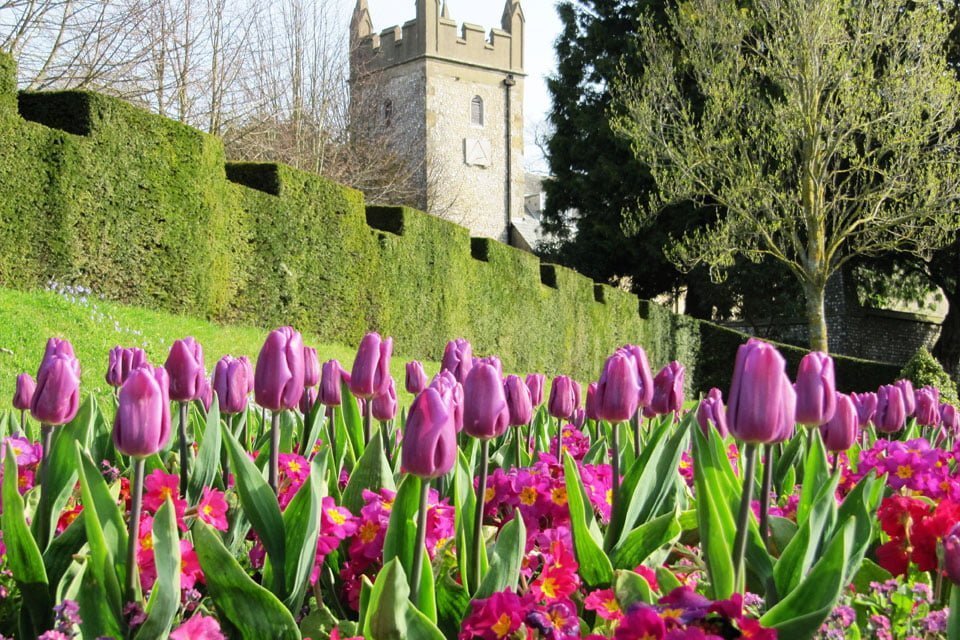
If it’s tulip fever you’re after, look no further than Pashley Manor. In fact, visit during the Tulip Festival which runs from Easter Monday until May and you’ll find 35,000 of them, beautifully arranged into different ‘rooms’ according to colour and species. In case of showers or tulip fatigue, there’s a nice café and gift shop.
In addition to the tulips, spring highlights at Pashley include a very pretty ‘Bluebell walk’ – all very ‘English’. You will have to leave the dogs at home though, and adult tickets cost from £11. The gardens close during winter, opening from the start of April. Definitely up there as one of the best gardens to visit in spring for admirers of bluebells and tulips.
West Dean Gardens, Surrey
Not too far from Pashley is West Dean, near Chichester – with attractions ranging from the 13 Victorian glasshouses to a sunken garden to a 300-ft long Edwardian pergola.
Particularly nice at this time of the year are the spring gardens and pond, with hidden walkways and benches and some good ideas for water features. Check out the restored Victorian summer house too – if you leave wanting your own garden retreat check out our summer house designs (a little smaller in scale and price).
And if you’re more interested in growing food than flowers, the walled kitchen garden is a place of joy. It’s planted on a four-course rotation of potatoes, brassicas, legumes and salads and root crops. If you want inspiration for an allotment, this alone could be worth the £9.50 ticket price. Children under 16 enter for free.
Caerhays Estate, Cornwall
While all the gardens we’ve mentioned are certainly impressive during the springtime, they’re not exclusively spring-focussed (apart from Pashley’s Tulip Festival).
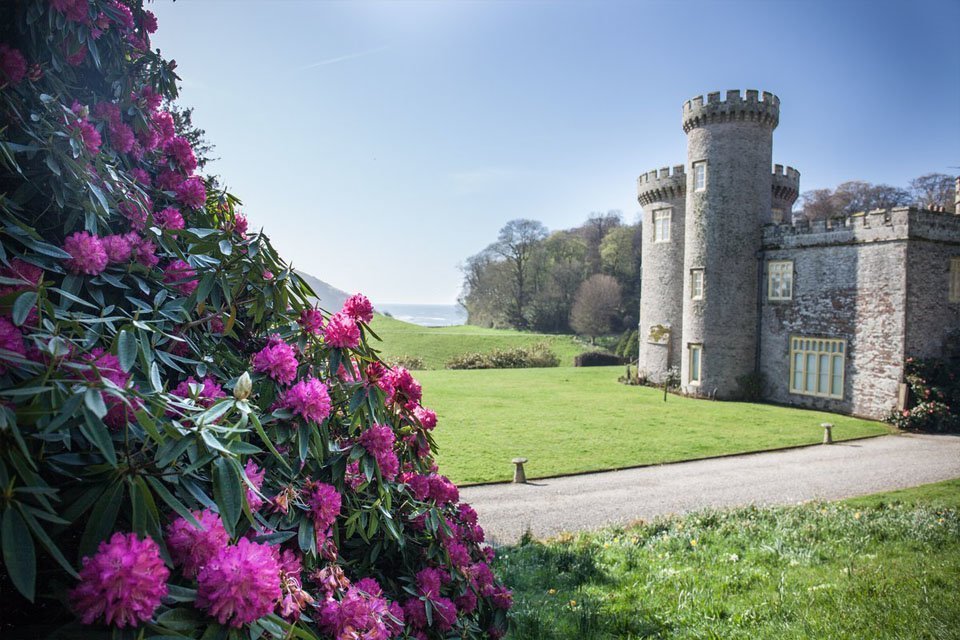
Caerhays, and its 140 acres of castle and gardens, is the exception: it is only open from February until June, by which time the 600-odd species of magnolias it’s known for are in their full majesty. Be warned that these gardens are not particularly manicured or landscaped, but that’s one reason for liking them – you could imagine doing some of this on a smaller scale in your own garden, if you have lots of space and a long timeframe.
Tickets are £9 for adults for the gardens (unguided, but you can arrange guided tours too), or £15 if you want to visit the castle as well. Children go half-price.
Caerhays Estate is not a stereotypical garden, but definitely on of the best gardens to visit in spring.
Killerton, Devon
‘Spectacular’ and ‘stunning’ are over-used words, but if anywhere deserves them, it’s Killerton, both the house and the 6400 acres of gardens. By the start of spring, expect blankets of daffodils, bluebells and cyclamen. on the website telling you the best places to find them.
There’s also an action-packed events calendar, photogenic grazing cattle in many of the fields, a good café and, if you’ve indulged inside said café a little too much, a grand chapel where you can seek absolution!
Adult tickets are £12, though family tickets are available for £18 – there’s plenty to do for kids and dogs, including a forest school for the former.
Brockhampton Estate, Herefordshire
As much as we like them, there’s a chance you’ve had enough of massive country houses with grand old gardens like some of the ones we’ve talked about. If you have, then you’re in luck with Brockhampton.
This medieval manor is both wildflower and wildlife focussed; there are dormice, frogspawn and ducklings in plentiful supply during the spring, and fields full of snowdrops and wild garlic instead of pristine flowerbeds. The six waymarked paths are great for dogs and kids, both of which the Estate welcomes, and access to all of this along with the orchards are included in the £9 adult ticket price.
We’re always hesitant to recommend straying from our own GardenLife blog and going in search of inspiration elsewhere. But we must admit that even our monthly offerings can’t cover the whole of garden design and gardening.
So just in case you want a change of scene or a second opinion, there are a wealth of other garden publications, print or online. You may have seen some of them on newsagent or supermarket shelves, but you’re probably missing out on others.
So here’s our list of the best gardening magazines, with a couple of blogs too, which are worth a browse and perhaps even a subscription.
The best high-end glossy gardening mag
Gardens Illustrated is not really about getting down to basics – you won’t find many nitty gritty soil guides here. Rather, it’s all about beautiful projects that will make you inspired and/or green with envy! It’s definitely material for a coffee table or very upmarket reception area.
There’s a practical element in each monthly issue, but the real substance is the gorgeous pieces on grand landscapes all over the world. Think Vogue, only for gardening instead of fashion. It’s probably the biggest gardening magazine in the world, and you can find details about online or print subscriptions here. Definitely top of our list for the best gardening magazines for inspiration.
The best gardening magazine for upmarket homes and gardens?
Another one which hits the shelves and digital newsstands monthly and will come in handy if you win the lottery is Conde Nast’s glossy House and Garden.
Each issue features both grand gardens and grand houses that will make your jaw drop. Expect double-page spreads of gorgeous interior and exterior designs and well-written pieces on entertaining.
If you’re after planting guides, budget gardening tips or other practical information, you may be better off elsewhere but this is definitely worth a browse for daydreaming purposes. Its website is also very good, and free!
Best gardening magazine for tips from TV gardeners
BBC Gardeners’ World magazine is made by the people behind the BBC TV show of the same name. It has an all-star cast of past and present hosts of the show (Alan Titchmarsh and Monty Don seem to be regulars – in fact, the latter is such a fixture that he just goes by his first name. If you have a spare £1750 plus, you could ‘Meet Monty in Provence’; but a Mississippi Cruise with Alan Titchmarsh will set you back a hefty £4995!)
Apart from being starstruck by Monty, Gardeners’ World has a more practical grounding than the likes of Gardens Illustrated. It’ll tell you anything from how to choose tools to how to build a pergola, and there are useful monthly checklists of tasks in your garden and greenhouse.
A subscription gets you access to the “secret garden”. Disappointingly, it’s not an actual place, just an online one, but it does grant access to exclusive articles and videos and so on. There’s an offer on right now which gets you the first 5 issues for £5. Definitely one of the best gardening magazines for down to earth advice.
Two great gardening magazines for practical advice
Garden Answers has a much more practical focus than the coffee-table glossies. There are pages upon pages of planting guides, allotment advice, pest control and mini-projects.
The approach is inclusive and goes out of its way to avoid being intimidating. The ‘Easy Gardening’ section has ‘Weed It or Feed It?’ guides for those who struggle to tell a pest from a perennial. And the reader-submitted garden stories are also a nice touch.
It’s decent value too, at £34 for a year’s sub. One to consider when reviewing the best gardening magazines out there.
Another good practical guide, whether you’re a complete novice or just want some new ideas, is Amateur Gardening. It’s weekly, so the advice will come thick and fast. It’s not exactly cutting-edge magazine design or glossy magazine production, but the articles are easy to follow.
And if you can’t face going outside in the garden till spring, there is advice on indoor gardening and windowsill gardening.
A gardening magazine for those who want to grow fruit or veg
Grow Your Own is another great publication for those like to get a bit of soil under their fingernails.
It really does do what it says on the tin – every month it offers extensive guides to fruit, veg and herb growing for plots of all shapes and sizes. There’s at least 15 of these in every issue, along with the usual DIY mini-project guides. Look out for this in supermarkets and newsagents, or there’s a digital version on the website.
A little extra: two great gardening blogs
Sometimes other people’s glossy photos and project ideas get a bit intimidating, and you just want to identify with the trials and errors of a ‘gardener like you’. There are some really great blogs out there, ranging from inspirational to tragi-comic. Here are a couple we’ve come across recently.
A blog about urban gardening Many of our readers, like London resident Caro Shrives, don’t have much plot space to work with when it comes gardening. Her blog is about getting everything from avocados to exuberant flowers and shrubs out of her limited space, and her ideas are well within even the complete beginner’s grasp. She includes few good recipes for her produce too.
Good blog about container gardening Another good blog for those with limited space is Vertical Veg, which focuses on container gardening. Stand-out posts include a short video on how to keep supermarket herbs alive longer – probably the most sought-after piece of gardening knowledge of our age.
OK, it’s cold outside, but don’t let this put you off a trip to some of the best gardens to visit this winter. While the trees may be bare, there are beautiful gardens up and down the country that stay open throughout winter. In fact, there are so many gardens offering dedicated winter events and plantings that it would be wrong to miss out. So, here’s a selection of some of the best gardens to visit this winter in the UK.
Visiting Aberglasney, Carmarthenshire, Wales this winter
This is one of the select few gardens to have had its own programme on the small screen. This Elizabethan estate was restored to its former glory on the BBC’s A Garden Lost in Time. The fame hasn’t gone to its head though. Children under 16 can enter the gardens, with their winter-proof evergreens and impressive yew tunnel, completely free.
When the cold gets too much, there’s an indoor tropical garden in the Grade-II listed mansion. You can also stay warm in the tearoom, where you can get a free voucher for the value of your admission ticket up until late February.
If you’re not quite sure when’s the best time to visit, the website has a useful calendar which tells you which plants you’ll see in the gardens during each month. It’s worth noting the gardens aren’t massive – don’t expect to play Frisbee or get an all-day hike, but it is definitely one to consider when it comes to the best gardens to visit this winter.
A winter’s day at Anglesey Abbey, near Cambridge
Check out Anglesey Abbey, and its Winter Walk, on TripAdvisor, and you’ll be hard pressed to find anything short of a raving review. And given that over 400,000 people visit each year, that’s quite an achievement.
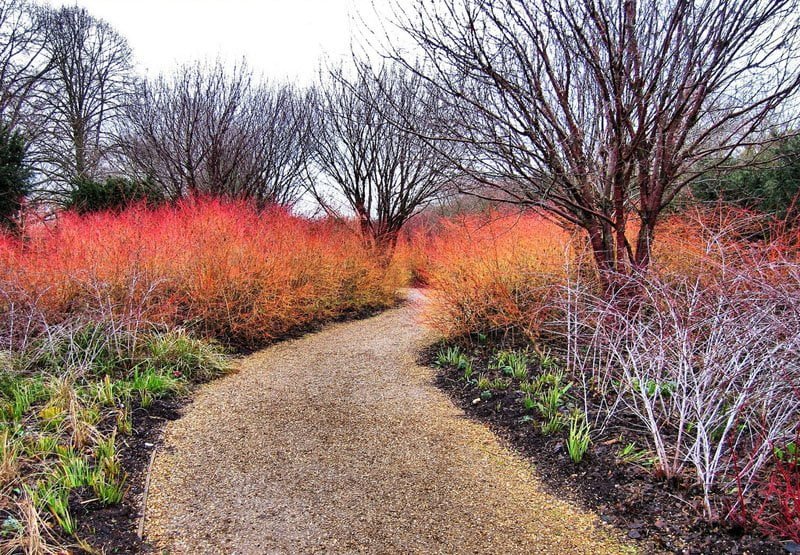
Unlike many winter gardens, this one is known for its colour and scent. There are gorgeously-coloured maple trees and acers lining the paths, long copper grass, scarlet willow, mahonia and winter honeysuckle.
You may not be able to plant on this scale, but it will certainly show you that winter gardening can be more exciting than the same old evergreens and bulbs. (But rest assured, if it’s traditional snowdrops you’re after, they have 240 varieties!)
It’s also worth checking out the review on the Guardian site which has some great photographs. Anglesey Abbey has to be considered as one of the best gardens to visit this winter.
Pay a winter visit to Stowe, Buckinghamshire
If there’s any garden on this list you’ve heard of, or seen in a coffee table book, it’s probably Stowe. It’s been described as “gardening on the grandest scale” and its classical statues, arches and fountains have been the subject of numerous poems and prose.
Because these gardens are all about landscaping and architecture, rather than plants, they’re very much an all-year-round attraction. Their various events, such as “toddler Tuesdays” and “wild Wednesdays”, also run around the calendar.
A family ticket is £30, but you can probably get a whole day out of it, given the acreage and the sheer number of garden structures.
Dunham Massey, Cheshire, for winter flowering plants
The main house shuts over the winter, but the gardens at Dunham Massey remain open year-round. It’s currently the setting for a National Trust ad campaign about family days out.
Just a stone’s throw from Manchester, Dunham Massey has a park full of fallow deer (alongside owls and woodpeckers) and a gorgeous grove full of ancient trees. Expect to find plenty of irises and cyclamen in the seven acres of winter flower plantings; or stretch your legs in the surrounding 300 acres of parkland, which are certainly dog-friendly.
Unless you’re a National Trust member, expect to pay about £9 for an adult and £4 for a child in terms of tickets, though there are family options. A café and gift shop are on-site; and if you need something stronger, there’s a craft brewery right across the road. A great garden to visit in winter, and ideal for getting some garden design inspiration.
The best gardens to visit this winter in Scotland?
Two things are essential for winter garden visits: places to warm up and a good café. Edinburgh’s famous ‘Botanics’ offers both. And it does so in abundance, with 10 glasshouses (covering 2 acres) and a choice of different cafes.
The glasshouses replicate a range of different zones, from tropical and temperate palmhouses to arid desert zones. Not all of them are heated, though, so choose a zone like the hot and humid rainforest zone if you want to be sure of a warm spot.
For the hardier, the outside gardens offer something for everyone: a Chinese hillside garden, rock gardens, a pond with ducks and swans, lots of Scottish native plants, rhododendrons, a Queen Mother’s memorial garden for the royalists. And, though winter doesn’t show it at its best, there’s the famous beech hedge, 8 metres high and 165 metres long, which takes 2 gardeners 2 weeks to cut.
You have to pay to go in the glasshouses, but entry to the rest of the gardens is free, so this could be a really good-value day out in Edinburgh. It’s open every day of the year except Christmas Day and New Year’s Day. With its warmth, variety and cafes Edinburgh Botanical Garden is right up the list of the best gardens to visit this winter.
South West London – Barnes – the London Wetland Centre
And now for something completely different – a wildlife-friendly garden. And in London, of all places. As with all of these gardens, some aspects of this may be hard to replicate at home – the daily ‘Meet the Otters’ sessions, for example. But you should get a few good ideas for using ponds, rain gardens, living roofs and wild flowers to attract dragonflies, butterflies, birds and other wildlife to your garden.
As well as otters, the London Wetland Centre is a home for various winter ducks, such as wigeon, teal, shovelers and pintails. If you’re lucky, you may also spot a bittern – nowadays pretty rare in the UK.
It’s not cheap, at about £15 for an adult ticket – blame London prices! But there are plenty of exhibitions, events, walks and talks, as well as hides for viewing wildlife. And, of course, the ‘Meet the Otter’ sessions.
However, the water and wetland-themed exhibitions and structures are features you’d struggle to find in other winter gardens – they even run dedicated wildlife sightings, and sounding “Meet the Otters” sessions. If you’re in the southeast then the London Wetland Centre is one of the best gardens to visit this winter.
Even if you’ve never picked up a spade in your life, there’s a gardening book out there for you. But the question is, which is the best gardening books for beginners? The right gardening book could inspire you with a new garden design, an idea for a water feature or garden building, or simply tell you which way up to plant a bulb.
We’ve put together a list of useful (and sometimes just funny) books about gardening which can help you if you’re just starting out or want to try something new. So without further ado, what are the best gardening books for beginners in the UK?
The best all-in-one gardening book
Monty Don is a household name in the gardening world, more or less a permanent fixture on TV schedules. His The Complete Gardener: A Practical Guide is packed with great photography and advice about – mainly – organic gardening, including fruit and veg.
First published in 2009, the fact it keeps on being reissued is a tribute to its practical and user-friendly approach, and the main reason why we’ve included it in our list of the best gardening books for beginners. There’s a dense 440 pages of advice and most shops offer a discount off its full cover price of £22.
The best gardening books for design inspiration
Has city living handed you a small garden? There’s still loads you can do with your space, even if it really is tiny, as the very handy Gardeners’ World: 101 Ideas for Small Gardens proves. It comes complete with pictures and instructions to help make your plot feel bigger and look fancier, and you should be able to pick it up for not much more than a fiver.
For a more comprehensive tome on garden design, have a look at the RHS Encyclopedia of Design. It covers everything from modernist Japanese gardens to installing proper water run-off. However, these 400-odd pages aren’t cheap, at £30, and are definitely for the more committed gardener.
The best month by month gardening books
We approve of gardening books that tell you what to do each month – they’re great for beginners and have useful reminders for experienced gardeners too.
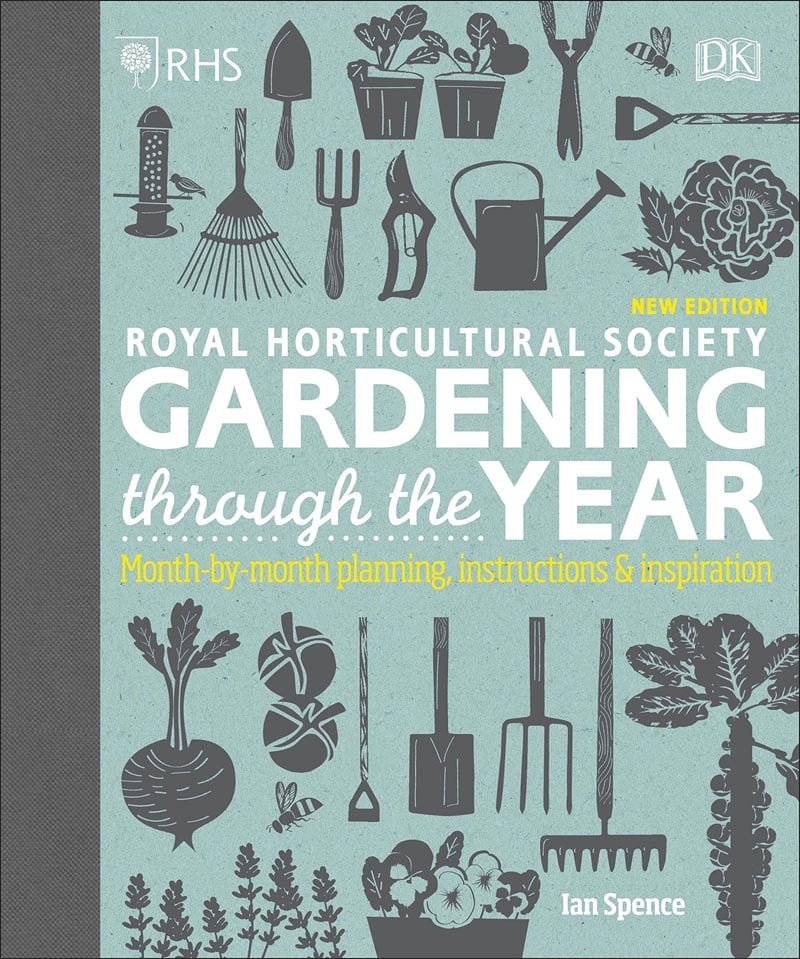
Here again, the RHS has a solution – in the form of RHS Gardening through the Year. There’s a lengthy chapter for every month in this thorough encyclopaedia – you’ll find yourself occupied year-round as it tells you what, when and how to plant about 350 species (with photographs and diagrams galore).
It’s an updated edition of what has long been a bestseller and has a particular focus on first-time gardeners; an essential for any list of the best gardening books for beginners. You’ll be set back about £20, which isn’t bad value for its 350 pages.
Another pretty comprehensive read isThe Greenhouse Gardener’s Manual, covering everything from basic fruit and veg to pest control and the basics of hydroculture. There are over 300 pages of tips on taking care of what you grow in your greenhouse, and your greenhouse itself. Heating, glazing and venting are also covered and there are plenty of photos.
If a greenhouse is not your thing and your gardening activity is confined to your sitting room or kitchen, take a look at the RHS Practical House Plant Book. This has all the information you need on nearly 200 house plants, and there are eye-catching design ideas like a ‘string garden’ or shrub vivariums.
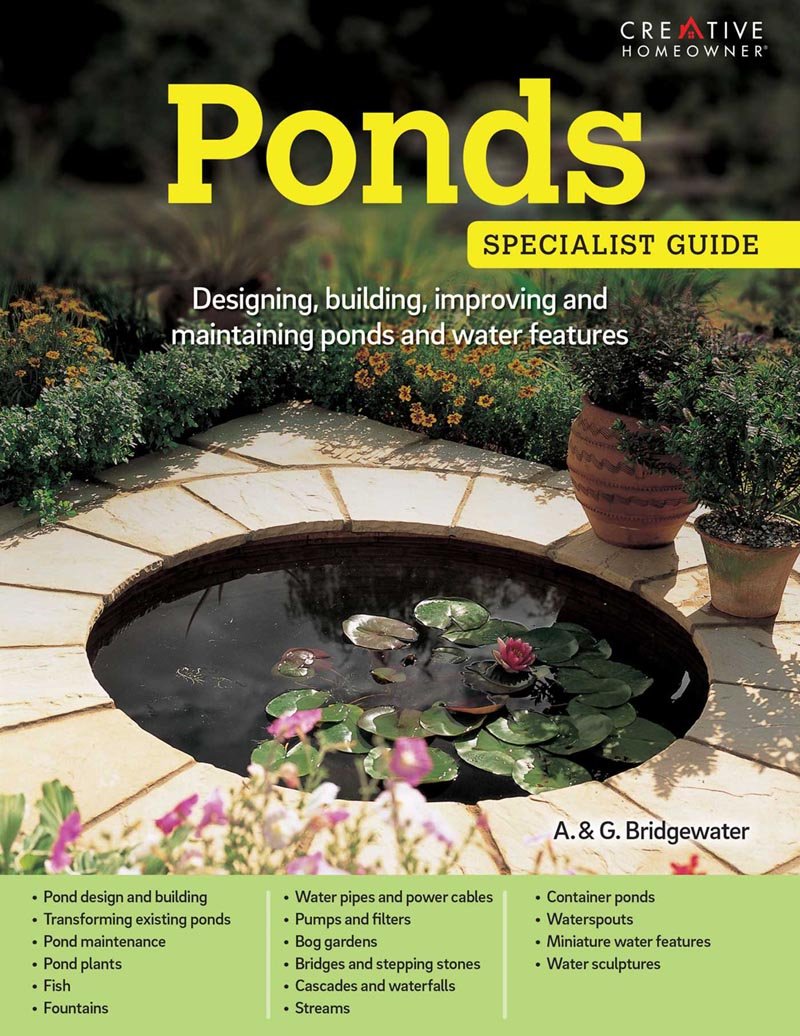
Ponds can be a tricky business – a lot of preparation is needed and unlike some aspects of gardening, a trial and error approach is not advised.
Thankfully, the straightforwardly-titled Ponds should sort you out – although it’s short, it’ll guide you through the process of building whichever you style you choose from start to finish.
We also like Ponds: Creating and Maintaining a Wildlife Pond. It’s nicely produced, and its succinct 100 pages have good, practical advice on creating a micro-ecosystem in your garden. Definitely one of the best gardening books for beginners when it comes to ponds.
The best log cabin inspiration
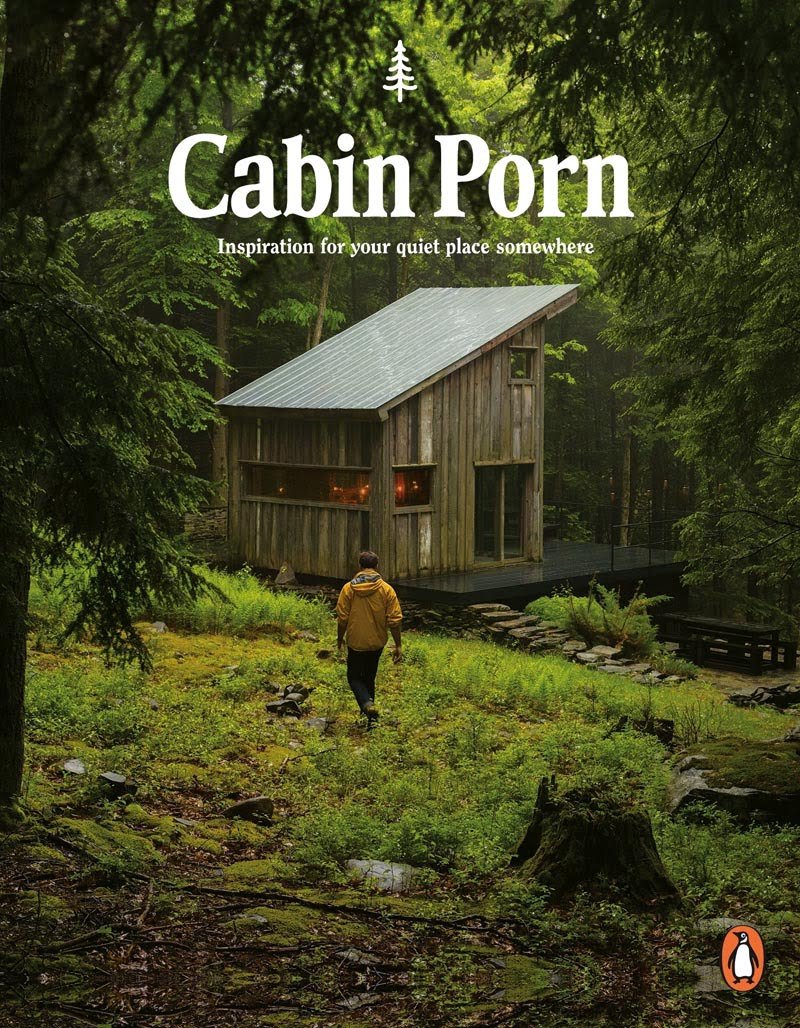
As we’re in the business of making log cabins and summer houses for gardens we had to mention a certain book. Yes, the title CabinPorn might raise an eyebrow or too, but the compilation of innovative and beautiful log cabins this book showcases is enchanting. Stemming from an online campaign where users submitted their own back garden designs, the result is scores of inspiring designs ranging from quaint DIY projects to full-blown grand residences.
The best garden shed books
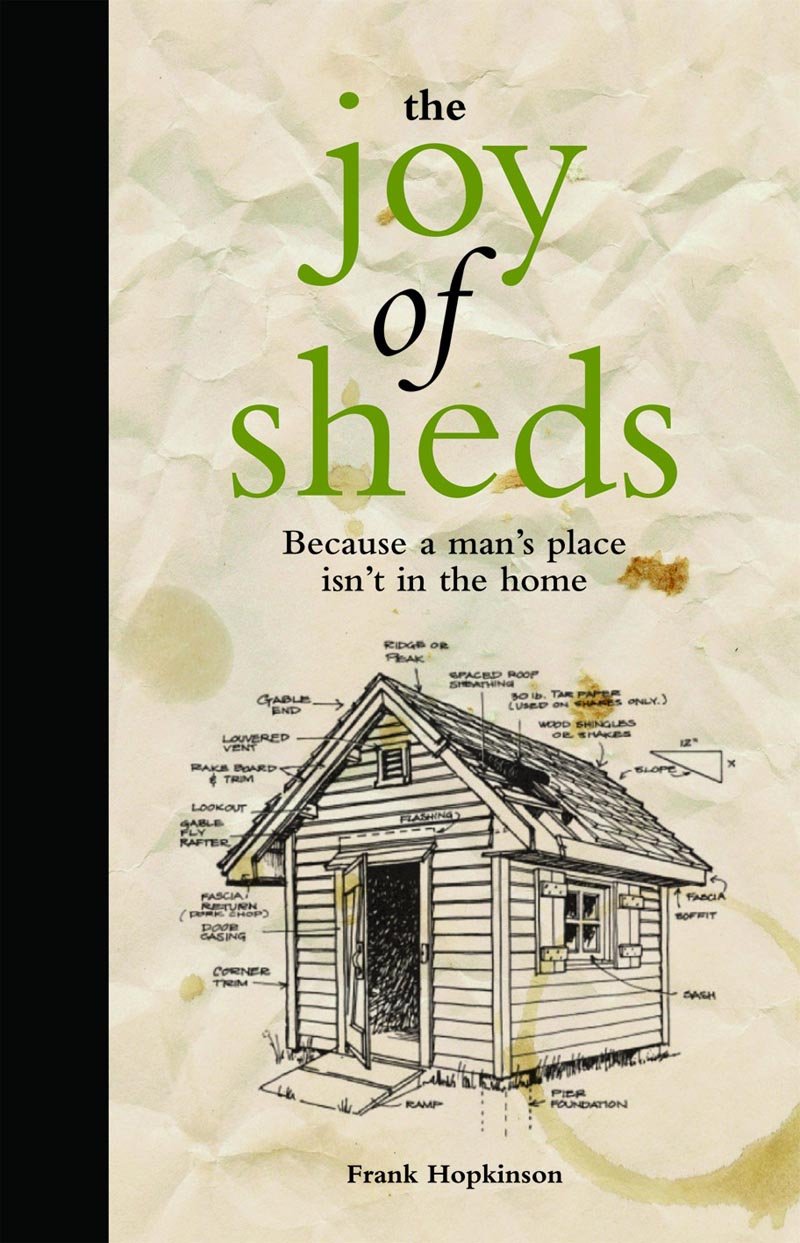
Don’t expect learned technical advice on buying, maintaining and improving your very own shed from The Joy of Sheds; but if you want a funny and idiosyncratic read about just what is so great about sheds, look no further. It’ll even tell you how to ‘pimp your shed’ (their words not ours!)
Another good stocking filler for garden shed lovers is 101 Things to Do in a Shed. It’s quirky, endearing and does what it says on the tin.
The best classic gardening books
Photogenic TV gardeners like Monty Don tend to dominate the displays of gardening books in bookstores and lists of the best gardening books for beginners, but don’t forget the classics – the writers who more or less invented the genre.
Two names always seem to come up here: Christopher Lloyd and Beth Chatto, both now dead (the latter only this year).
Christopher Lloyd was described in his Guardian obituary as ‘the best informed, liveliest and most innovative gardening writer of our times’ (the same obituary also pointed that his 80th birthday party lasted 24 hours, so he certainly does sound lively). His best-known book is The Well Tempered Garden – a classic in the best sense, full of readable, practical advice. It’s a few decades old now, but don’t let that put you off.
Beth Chatto is less of an easy read, but she was famous for her books on specific types of climate or garden. This all started when she set up a nursery and garden in a dry, windswept site in Essex – from this came her book The Dry Garden. Others followed: on damp gardens, gravel gardens, shade gardens, woodland gardens, and drought-resistant planting.
These, of course, are more relevant than ever, given the possible effects of climate change on the UK’s gardens. All are packed with detailed plans and advice and are highly recommended if you have – or want – one of these gardens.
Finally, if you want more ideas on the best gardening books for beginners, we recommend reading through the Gardenista blog. Prices are in dollars, but most of the books are British. So not only will they just right for a UK garden, they’ll also probably be more easily available and cheaper than the blog suggests.
Autumn, with its orange, red and ochre colour palette, is a sweet spot when it comes to gardens. Sandwiched between baking summer weather and winter’s short cold days, it is a beautiful season.
Many of the British Isles’ gardens, parks and stately homes look their most glorious in October and November. So, we’ve picked some of our favourite gardens around England, Scotland, Wales and Northern Ireland. Any of which is fit for a visit in the season of mellow fruitfulness.
You could go for a day out with family and friends, some garden inspiration, or to help children or pets burn off some energy. So, what are some of the best gardens to visit this autumn?
Visiting Sheffield Park and Garden in autumn
You’d be forgiven for thinking this spectacular park, complete with four ornamental lakes and dense woodland, is in Sheffield. It is however in East Sussex.
Once a WW2 camp and a deer park, it’s now a terrifically Instagram-friendly setting. Its reflections of autumnal trees in the lakes attract thousands of photo-hungry visitors every year. There are numerous glades, wooded areas, paths and tree varieties – ideal for gardeners and those who want a peaceful, rural stroll.
It’s also very family friendly (you can even arrive by the nearby steam train), and it’s open all year round. If you’re into photography, Sheffield Park is definitely one of the best gardens to visit this autumn.
Hillier Gardens are full of autumn colour
Another great autumn garden in Southern England is Hillier Gardens, in Hampshire, which really comes into its own in the autumn months. If you’re looking for inspiration, take a look at the valley of Japanese maples (‘Acer Valley’). The various plantings of shrubs and perennials are great examples of how to keep colour in your garden well into autumn and winter.
This is another child-friendly option, thanks to a butterfly park, bamboo wood chimes and an education centre. It’s open all year, and children under 5 can get in free. Dogs, on the other hand, are banned.
For those of a certain age, Castle Howard will be familiar from the 1980s TV series Brideshead Revisited (starring Jeremy Irons), which was filmed in its grounds. Scenes from the TV series Victoria and a Garfield film were also shot here.
The more active may know it for the Triathlon series held there each summer.
Near Leeds and York, its vast grounds house walled gardens, woodlands, lakes and even a temple and tree nursery. It’s open year-round, is dog-friendly and is one of the best gardens to visit this autumn.
Castle Howard is a full-scale commercial operation, so the events programme is packed. Autumn events include child-friendly Halloween bashes, followed by Twelve Days of Christmas events. Regular visits from Father Christmas start at the beginning of November too.
If you confine your visit to the garden centre, entry is free, otherwise, you need a ticket.
Hergest Croft Gardens, a Welsh autumnal treat
In the heart of the Welsh Marches, with views towards the Black Mountains, lie the Hergest gardens, home to the UK’s ‘national collection’ of maple and birch trees, among others.
The 70-odd acres of trees and shrubs are particularly attractive from October onwards. Dogs and picnics are allowed, and kids go free with adults (the common is perfect for running off some energy).
If you’re planning a visit, you’ll need to act quickly – it closes at the end of the October until March. But if buy a season ticket holder, you can visit all year.
For more information on these beautiful Herefordshire gardens visit the website.
The best gardens to visit in Scotland this autumn?
Further north, in the Scottish Borders, the Dawyck (pronounced “doyk”) gardens stay open until the end of November (before the northern chill sets in properly). They house some displays you’re unlikely to find elsewhere – a four-season moss and fungi reserve, towering trees from the sixteenth century alongside Japanese and American species in glorious orange colours, and fruits and conkers galore.
Autumn garden tours and Halloween themed walks punctuate the autumn events timetable. As part of the Royal Botanic Garden of Edinburgh (RBGE), it’s rather disapproving of leisure though – so it’s definitely not one of the best gardens to visit this autumn if you’re into dogs, throwing balls, playing games or jogging.
If you want a Botanic garden to visit in December, the Edinburgh Botanics will still be open, and there are various cafes where you can warm yourself up during your visit.
Mount Stewart in autumn, Northern Ireland
Over the Irish Sea now, to County Down, where the famous Mediterranean-style gardens apparently are based on an Italian villa landscape. Admittedly, autumn in Northern Ireland is hardly Italianate, but there’s plenty to see outside the summer months because it’s planted for all seasons.
As well as walled gardens, landscaping and lakes, Mount Stewart has its own squirrel trail, where you can spot the elusive red species.
There are also plenty of seasonal activities, like Halloween activities in late October and early November. It’s also something of a birdwatchers’ haven and it’s open pretty much year round, although the adjacent Stewart House isn’t.
Colder months and cooler temperatures call for garden winter-proofing – not just plants and shrubs, but sheds, summer houses, garden rooms, decking and fences too.
In fact, if any timber garden building goes too long without paint or wood preservatives, damp and rot can creep in all too easily. Even the densest timber and highest-quality build structure can be affected.
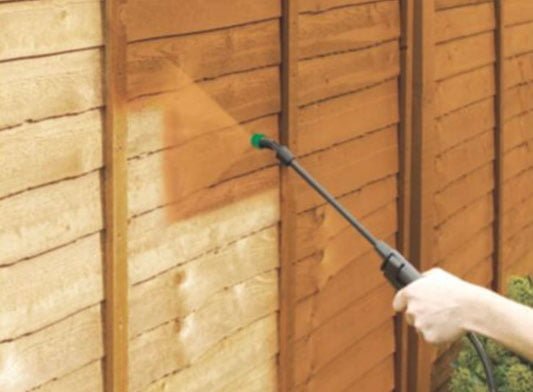
GardenLife know painting and wood-treatment is not the most exciting of tasks, but it really is worth doing. It can extend the life of a summer house, garden shed, decking or fence by years. So, to help relieve some of that workload, we’re taking a look at some mechanical help, in the form of various types of garden fence sprayer.
Why use a garden fence sprayer?
Variously called “pressure sprayers”, “paint sprayers”, “spray guns” or “pump sprayers”, these labour saving devices are made by the likes of Ronseal, Cuprinol, Wagner and B&Q.
In a nutshell, using a shed and garden fence sprayer to apply preservative or paint is far quicker than a brush. You’re also more likely to get better, more even coverage. This in turn will protect the timber more effectively. Many garden fence sprayers have adjustable spray nozzles and speed controls, so you can control how much preservative or paint is used, and easily get into tight corners or small gaps.
You do need to be aware of the need to clean your shed and garden fence sprayer, as well as health and safety precautions, but we’ll guide you through those shortly.
Different power sources for garden fence sprayers
There are three distinct categories of shed and garden fence sprayer: corded, cordless and manual. So we’re going to look at the different types, with their pros and cons, and also mention some of the popular models on the market for each type. Of course, there are many other models available too – but the examples below (and their reviews) will give you a guide to what to look out for if you’re considering other models.
Mains-powered electrical garden fence sprayers
The advantages of electrical sprayers are obvious – as with anything from vacuum cleaners to radios, there’s no faffing about with replacing or recharging batteries, and they’re efficient in terms of power consumption.
Then again, there’s also an obvious disadvantage – namely, the cable. The fact it may not reach to the end of your garden, and the impossibility of finding an extension lead when you need one.
Wagner Electric Garden Shed & Fence Sprayer
At £69.99, this one is a little pricey but it’s versatile and gets mainly 5 star reviews. It has an adjustable spray jet so you can tailor it to the size of panelling you’re working with, and the amount of paint you want to use. The tank is housed separately and can stand on the ground or be carried around with a shoulder strap; its capacity is definitely on the smaller side though at 1.4l, so bear that in mind and be prepared for regular refills
Cordless garden fence sprayers
Cordless shed and garden fence sprayer are generally designed to be versatile and easily portable. They offer the speed and coverage of electric-powered models, without the issue of having a cable dragging round behind you.
But instead you have the battery issue – some are rechargeable and can be used anywhere, but charge times can be long and running times short. Others have traditional batteries, but then you have to keep on buying batteries.
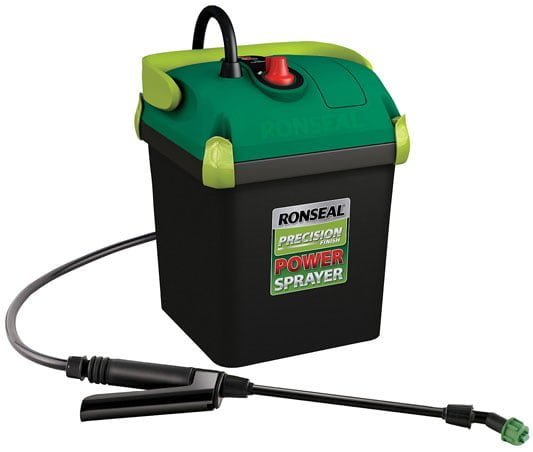
Ronseal Precision Finish Fence Paint Sprayer
At £32 this ticks the boxes on versatility – there are different power and nozzle settings for control, speed and accuracy. The tank itself is a generous 5 litres, but the cord attaching the nozzle is quite short so it’s not idea for some garden or fence layouts.
Reviews are mixed – there are plenty of 5 star reviews from users saying how it saved them hours or days compared to using a brush, but other reviews complain of clogging.
As with all products that get mixed reviews, you want to apply some common sense to what you read. For example, the reviewer who complained about spray going everywhere on a very windy day should probably blame their own choice of spraying day rather than the product!
Manual shed and garden fence sprayers
Manual sprayers come in cheap, sturdy and versatile. But since they need to be pressurised by hand, they’re not great for anything larger than a few fence panels. As you’d expect, both Ronseal and Cuprinol both have popular models, but the following Spear & Jackson sprayer is difficult to beat.
Spear & Jackson Pressure Sprayer for Wood Stain
Cheap and (thanks to its pump mechanism) reliable, it would seem it’s hard to go wrong with this one – the 3 bar pressure level will even discharge a consistent spray for a prolonged period. There’s a 5l tank, easy to clean brass fittings, and it will spray water, weedkiller and chemicals with pH values between 5 and 9 (including water-based wood stain).
With an average of 4 stars from over two thousand reviews, £22.50 represents very good value for money.
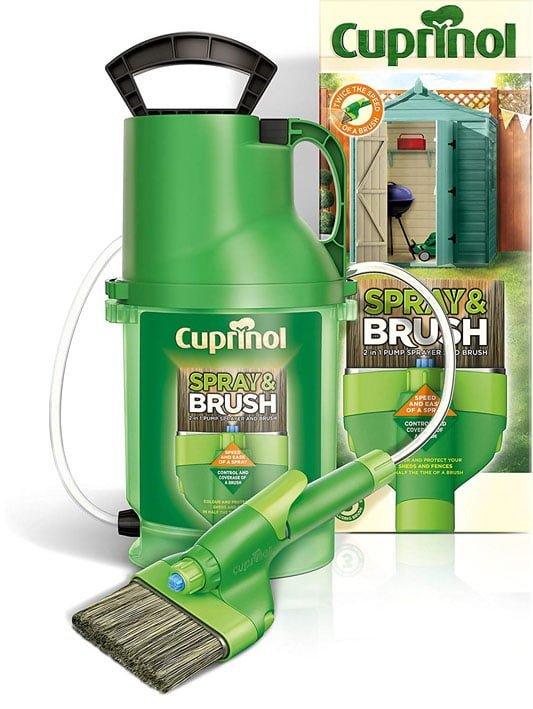
Cuprinol pump and brush garden fence sprayer MPSB
It certainly looks peculiar but this Cuprinol fence sprayer has the novel idea of combining a manually charged sprayer and a brush to add finishing touches. The tank is smaller than some others on this list, and the tank and nozzle are all in the same housing so you have to carry everything around together, but reviews are mostly very positive (and also contain some useful tips about how to get the best results) and it’s only £28.
General tips
With all types of shed and garden fence sprayer, you’ll want to think about the following:
whether they only work with specific types of preservative or paint (which may limit their use or lock you into expensive products)
whether you’ll actually be able to carry them once you’ve filled them up with your treatment product
how easy they’ll be to fill, refill and – crucially – clean
does the choice of nozzles and length of hose suit you – if you have awkward spaces to reach, are there precision nozzles or extension tubes?
if you have large expanses of timber to treat, how large is the tank and how fast is the coverage?
always wear safety gear – goggles, a respirator, gloves and overalls
Finally, even where garden fence sprayers have adjustable nozzles, they can sometimes spray erratically. So, if there are any people, pets, garden structures, windows, plants, ponds or washing lines nearby, proceed with caution (or not at all!).
This website uses cookies and gathers limited anonymous data to improve your experience. Please read our Privacy Policy and opt-out if you wish. Cookie settingsAccept
Privacy & Cookies Policy
Privacy Overview
This website uses cookies to improve your experience while you navigate through the website. Out of these cookies, the cookies that are categorized as necessary are stored on your browser as they are essential for the working of basic functionalities of the website. We also use third-party cookies that help us analyze and understand how you use this website. These cookies will be stored in your browser only with your consent. You also have the option to opt-out of these cookies. But opting out of some of these cookies may have an effect on your browsing experience.
Necessary cookies are absolutely essential for the website to function properly. This category only includes cookies that ensures basic functionalities and security features of the website. These cookies do not store any personal information.
Pin It on Pinterest
GardenLifeLogCabins.co.uk rebrands to Palmako.co.uk
Dear valued clients! For over ten years, you've known us as GardenLife, your trusted provider of Palmako's quality garden timber products in the UK.
Today, we're thrilled to embark on an exciting new chapter together as we introduce our sleek, modern online storefront and transition to Palmako.co.uk!
With over 25 years of experience, Palmako has established itself as a premier producer of quality garden timber products in the UK and Europe, including sustainably sourced Nordic spruce summer houses, log cabins, saunas and more. Our local team of experts is always ready to help you make the best choice for your garden. Learn more: https://palmako.co.uk/pages/about-palmako or call us: 01698 426444.