Whether you’re a total garden novice intending to grow some container plants, or you’re 30 years into a passion for horticulture, there are thousands of gardening websites and blogs to guide and/or inspire you. And that’s the problem – there are just too many to choose from. So, if you’re looking for growing tips for a shady vegetable patch or want the latest ideas in contemporary garden design, here are the best gardening websites to bookmark.
1. No surprises for first place
The source of all knowledge about gardening in Britain is the mighty – and very user-friendly – Royal Horticultural Society website. We could go on for pages about the different sources of advice on the site, but here are just a few pointers:
The RHS Beginners Guide really does introduce you to the basics, beginning with how to sow seeds, or advice on what containers to use. Also good for both novices and old-handers is the gardening calendar section, giving you advice about what to do each month.
Widely loved in gardening circles is the RHS Plant Finder, one of the seven wonders of the horticultural world. You fill in a few boxes about, for example, the soil type, amount of sun/shade and moisture in your garden, plus what colour and height of plants you want, and it produces instant plant recommendations. Not only that but it tells you how to grow the plants in question, and even where to buy them.
2. Going organic?
Fennel & Fern describe themselves as “a big happy team of organic gardeners who love the soil under our fingernails and munching on our own homegrown veg” and it’s one of the best blogs that GardenLife Log Cabins have come across; beautifully curated, but definitely practical. The main blog is updated each day with new posts; and you can follow the progress of their ‘dream garden’. There are guides for growing vegetables, regular recipes, and beginners’ tutorials.
Also worth looking at is their Garden Grab site which showcases gardening blogs from around the world. This could also be a channel for promoting your own gardening blog if you have one.
In short, Fennel & Fern are a class act who avoid the common pitfalls of many gardening websites: being too intimidating, too focused on selling, or too home-made.
3. Archived but not forgotten
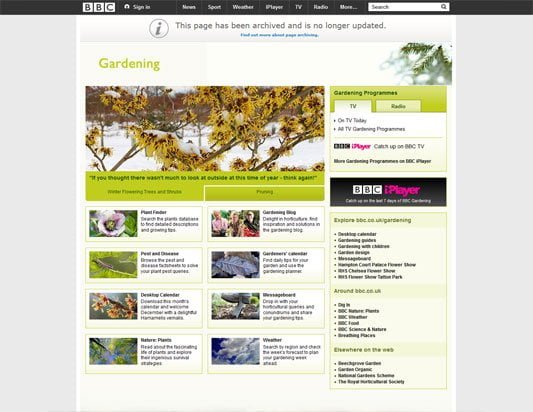
The BBC gardening website will already be familiar to many, but it’s popular for a reason. It has similar features to the RHS site – plant finders, guides on what to do each month, tutorials, and a slightly intimidating series of factsheets on pests and diseases (by the time you’ve looked at a couple of these, you’ll wonder how any plant ever manages to grow).
Although the site has been scaled back in recent years, and blogs and message boards are no longer updated, they are still archived on the site, so there is plentiful material. This includes a great guide to gardening with children with some good activity ideas such as building a wormery, making an indoor cactus garden, or growing a child’s initial on the lawn. Although archived, the BBC gardening website has to be included in anyone’s list of best gardening websites.
4. One-stop-shop for anything you might ever want in a garden
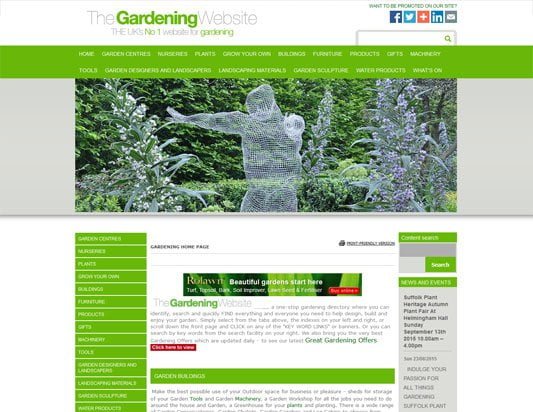
The Gardening Website is a selling website, rather than a how-to website like the BBC and RHS. Some people aren’t taken with its scale and design, but it’s certainly comprehensive. If you’re looking for a specialised dandelion spade, a wide selection of rotavators, or a directory of landscapers or garden designers in your area, this site will take you to where you can find one.
5. One for the indoor gardener
No, not the person who has a house full of container plans, but the person who wants to sit comfortably inside fantasising about their dream garden.
Garden Design is a gardening magazine with copious ideas for, and photos of, gardens around the world, especially the US. It’s the stuff of daydreams, but not hopelessly impractical. Alongside tips on gardening fashion, there are good ideas for small or cramped gardens, and suggestions for achieving Luxe for Less.
Garden Design is certainly not the only website with good inspirational photos – we frequently recommend Pinterest and Houzz.com on this website.
6. An antidote to designer gardening
The Real Men Sow blog is far from comprehensive but very likeable, and that’s why we’ve included it in our list of best gardening websites. It’s written by a Norwich City supporter called Jono, who had an allotment in Burnham-on-Crouch for five years and is now creating ‘A Patch from Scratch’ in an overgrown back garden.
Jono started out as a complete novice, and was reliant on advice from his mum Jan (about whom there are a couple of lovely blog posts).
A few years later, Jono clearly knows quite a lot about gardening, but he’s kept the cheery, amateur tone of voice. It’s a great place for real-world advice, such as tips on how to dig, or where to get free seeds, and there’s an Excel spreadsheet on how much money Jono saved by growing his own fruit and veg.
7. And now it’s time to get outdoors
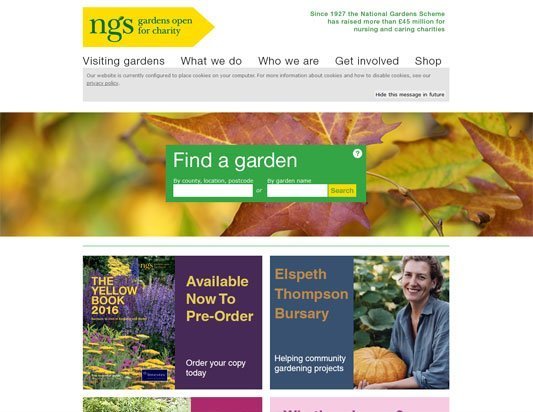
Finally, what better way to generate some gardening inspiration than to get up off the sofa and visit some real-life beautiful gardens? The National Garden Scheme opens gardens – many of them privately-owned – for charity, and it has donated over £45 million to nursing and caring charities since it was founded in the 1920s.
The website is quick and simple to use: you put in your location, and whether you want to visit a garden today, this weekend, within the next 7 or 28 days or on a specific date, and it will tell you which gardens are open to the public. A great way to get gardening ideas and do some good at the same time.
Hopefully this run down of GardenLife Log Cabin‘s seven best gardening websites will arm you with everything you need to enjoy each aspect of your own garden throughout the year.
The 21st-century trend for using our gardens as extra living spaces has illuminated people’s interest in garden lighting. Traditionally outdoor lighting was simple and practical: security lights and lighting for paths. Now the choice is endless: eco lights, uplighters, downlighters, wall lights, ground lights, free-standing lights, decking lights, table lights, parasol lights, lanterns, party lights and Christmas lights. There’s a choice of rechargeable solar powered, traditional battery operated and mains connected, as well as low wattage LEDs (light-emitting diodes), energy-efficient bulbs and high wattage halogen bulbs.
Some of this is self-explanatory, but with all the options and considerations, what are the best options available when it comes to garden lighting?
Alternative garden wall lights
Outdoor wall lights can take different forms. There are ornamental lamps, ranging from olde-worlde lanterns that look like they come from an old coaching inn, to steel industrial-chic lights. We’ve had a good look around the web and considered some quaint decorative lights, but our favourite outdoor wall light is this industrial lamp made from galvanised steel – it would look great on a stone or brick wall, or even a contemporary timber garden building.
Outdoor downlighting versus uplighting
When it comes to downlighting versus uplighting the location dictates the choice. Wall-mounted downlighters can be used to spotlight specific areas of your garden or cast light over a wider area, similar to what you would see in a kitchen or bathroom. Uplighters can also be used to highlight a particular feature, from a statue to a tree. They can be recessed and permanently mounted, or freestanding: spike lights are moveable lights that can be ‘planted’ in a flowerbed to highlight a specific plant. An alternative to highlighting the plant itself is to use lighting to throw a shadow onto a wall behind it. Clearly, this works better if the plant has an interesting silhouette.
Our choice of garden wall light is this minimalist light that works as both an uplighter and a downligher, offering the best of both worlds.
Unusual decorative garden lights
Once you start to think about highlighting particular plants or features you enter the realm of decorative garden lighting design, and there are some highly unusual options. As well as using lights to create focal points in a garden, you can use it to create even more visual interest. For example, many websites now sell underwater lighting – using it to provide mirror, colour or refraction effects around a pond, fountain or swimming pool, or to uplight plants or walls from underwater (which can cast upward shadows of ripples). If you have a pond and you really want a unique lighting experience in your garden, then you must try this efficient LED underwater light.
Coloured ornamental garden lighting
The possibilities for adding night-time colour to your garden have also burgeoned. How about a decorative hanging crystal ball light that turns on automatically at dusk and changes colour through purple, violet, blue, turquoise, green, orange, red and pink? Our favourite is more ethereal, a ‘Murano glass garden globe’ which is available in different colours. It’s a striking design and stands on a thin steel post that you stick in a flower bed (in the dark it appears to hang in the air).
Playing around with shaped outdoor lights
If you have a spare £800 to spend on just one light, how about pine-tree inspired garden lights which can sit on grass, concrete or any other garden surface and stand an imposing 80 or 150cm tall? They would make a dramatic difference to any garden border, path or driveway (as well as your bank balance). In this category we’ve opted for a slightly more affordable design from John Lewis. We really like this cube light, which is seat by day, and red/green/white/blue glowing cube by night.
Solar powered garden lighting
Regardless of light design or type, you need to decide on wired, solar or battery-operated (the latter is probably only suitable if you’re planning one-off or occasional lighting displays). Solar panels can be integrated into the actual light, or located on a separate panel that is joined to the light by a cable. The former are more flexible in terms of positioning and moving them around; the latter may provide more hours of light.
One question to ask yourself fairly early on with solar-powered lights is whether you will want to use them in winter – a couple of hours of January sunlight will likely mean the ornamental solar night lights you bought are drained by only five o’clock in the evening. Rather than selecting a favourite design of solar powered garden lights, we’ve instead picked out The Solar Centre as the best option, as they sell a range of lights specifically designed to work in winter as well as summer.
When browsing the web and considering the endless possibilities for your very own garden lighting design you might want to consider a few practicalities:
Don’t use decorative ornamental indoor lights outdoors, however weatherproof they may appear (and “splash proof” doesn’t mean “watertight”).
Look for durable weatherproof fittings – among the top-of-the-range makes widely recommended by garden designers are Hunza lights (though they aren’t the cheapest they are designed to last).
Although LED lights are long-lasting and durable, they still don’t last for ever outdoors. Many garden lights on the market don’t have replaceable bulbs, so once the bulb goes dark, so does your lighting.
Following on from the above, always check that rechargeable batteries are actually changeable. Rechargeable batteries can lose the ability to recharge and sometimes need to be replaced – if you buy solar powered lights make sure you can get into the battery compartment (unfortunately some lights have impenetrable innards).
LED lights are small, convenient, energy-efficient and long-lasting but they mostly provide directional light, rather than 360-degree illumination. This makes them more suitable for decorative lighting or spotlighting rather than security coverage. If you do want outdoor LED security lights, you might want to increase the number of lights you buy to ensure your property is effectively lit up.
Complaints about the weather are an essential part of the British summer, and in August the post-mortems begin – too much rain, not enough rain, too much wind, and so on. But if your main complaint is wind blighting your summer, spare a thought for your garden. It probably suffered far more from than the wind than you did.
As well as wreaking physical damage, wind causes moisture loss from plants; carries salt from the sea; kills buds and blossom; delays germination and growth and that’s just the start. Given all this – not just the garden damage but also the windswept summer lunches, the blown-over patio pots – it may be a good idea to create a windbreak in your garden. So when it comes to creating a garden windbreak, here are our top tips:
1. Natural wind breaks versus artificial wind breaks
Natural windbreaks include hedges, shrubs or trees, planted in single rows or in three or four staggered rows (for which you will clearly need a bigger space). Artificial versions include fences, walls and the like. The advantage of natural garden windbreaks is that they look more attractive and can be more effective (see point 2 below). The advantage of artificial ones is that you don’t have to wait for them to grow.
2. Let some air through to your garden
Counter-intuitively, the best windbreaks do not try to block wind completely: a semi-permeable windbreak can be more effective than a solid wall or fence. Basically, a solid wall can create eddies of wind and turbulence on its leeward side or even intensify the strength of wind at the wall ends. If you don’t want to look at a wall, and planting a hedge is too much long-term hassle, you could consider trellis with a mix of climbing plants such as ivy, virginia creeper or honeysuckle (of which there are evergreen varieties). The trellis honeysuckle combination is not only a good windbreak, it allows some air into your garden, and in summer your garden will be filled with the most beautiful scent from the flowers.
3. How much wind does a windbreak break?
According to the Royal Horticultural Society, a windbreak can reduce wind on its leeward side for a distance of ten times its height (though there are some more conservative estimates of about eight times height). This should help you plan how tall a windbreak you need, and where it should go.
4. Deciduous or evergreen windbreak?
There’s no right or wrong answer here. Evergreen garden plants are often fast-growing, and can provide wind cover all year around (and privacy, as they don’t drop their leaves). However, some garden experts warn they can become too dense, reducing their effectiveness (because they don’t let enough air through) and also restricting your light or views. A more useful approach is to consider both types, possibly mixing evergreen and deciduous plants together, or go for a mix of native hedging plants to help local wildlife (see point 5).
And what about native hedging plants? If you want to encourage wildlife, birds and other animals to pay a visit to your garden a native windbreak hedge should consist of a mix of the following:
Hawthorn
Crab apple
Field maple
Hazel
Beech
Bird cherry
Alder
Holly
Yew
6. Research your hedge choice carefully
The RHS lists are useful, but a little more investigation is necessary, based on your individual goals and garden. For example, hawthorn windbreaks support many insects and birds, making them wonderful for wildlife gardening. However, they can also harbour a disease called fireblight, which afflicts apple and pear trees – making them not so wonderful for an orchard.
If you do have apple and pear trees needing breeze protection, or even an entire orchard, alder may be your best solution. If you’ve got young kids, you might want to avoid Yew as all parts of it (except the flesh of the berries) are poisonous. It’s these little details about foliage or pests that can make all the difference between the perfect windbreak and the not-so-perfect version.
7. How to get your hedge started
A major drawback of growing a natural windbreak is the difficulties of getting started, especially since the wind will likely batter your young windbreak plants. One garden writer in Ireland talks of using two or three tiers of old tyres to protect her rugosa roses, and then old pallets, as they grew taller. Not pretty at the time, but it worked out well in the end.
Another suggestion is to have a temporary artificial windbreak while the plants grow – perhaps netting or willow hurdles.
8. Consider a fedge or living willow windbreak
A fedge is somewhere between a fence and a hedge, created using two rows of living willow stems. Willow whips (the short willow stems) can be bought online in autumn and planted out straight away. When the willow whips arrive they just look like dead sticks, but there’s no need to worry, all you need to do is stick the end of each whip into the ground and nature will take its course (you don’t even need any compost or rooting powered to help stimulate root growth, they simply grow wherever you plant them). If you already have your own willow tree you don’t even need to buy willow whips – simply cut the most recent growth from the tree in late autumn and poke the cuttings into the ground where you want your fedge to grow (but please note, this technique does not work with weeping varieties).
Whether bought or cut from a tree, the whips can be tied together or, ideally, woven together to provide extra strength. To weave the whips place them roughly 10cm apart and plant them at 45 degrees to each other – for best results plant two rows. You can then effectively create your own living trellis by intertwining the whips along the length of the fedge. If you want a more robust fedge simply plant more rows of willow – they are very malleable so you can create all sorts of shapes, including archways and shelters.
Lastly, the other thing to consider, of course, is that a windbreak can also make your garden look better. Not just because your plants grow better, but because windbreaks can screen the ugly and add structure and interest to a garden design. All in all, they’re much to be recommended, as a way to improve both your garden and your summer lunches al fresco. Why not get one started in time for next summer?
Rocks in a garden used to mean an old-fashioned rockery, with a few mossy stones and Alpines used to disguise a ‘difficult’ patch of sloping garden. For most of us they seemed as old-fashioned a garden design as you could get. But don’t dismiss rocks as something better left to your grandparents’ generation; they’re much more twenty-first century than that. Our six point guide explains how to use rocks to make your garden design more interesting:
1. Add colour or create texture using pebbles, gravel or slabs
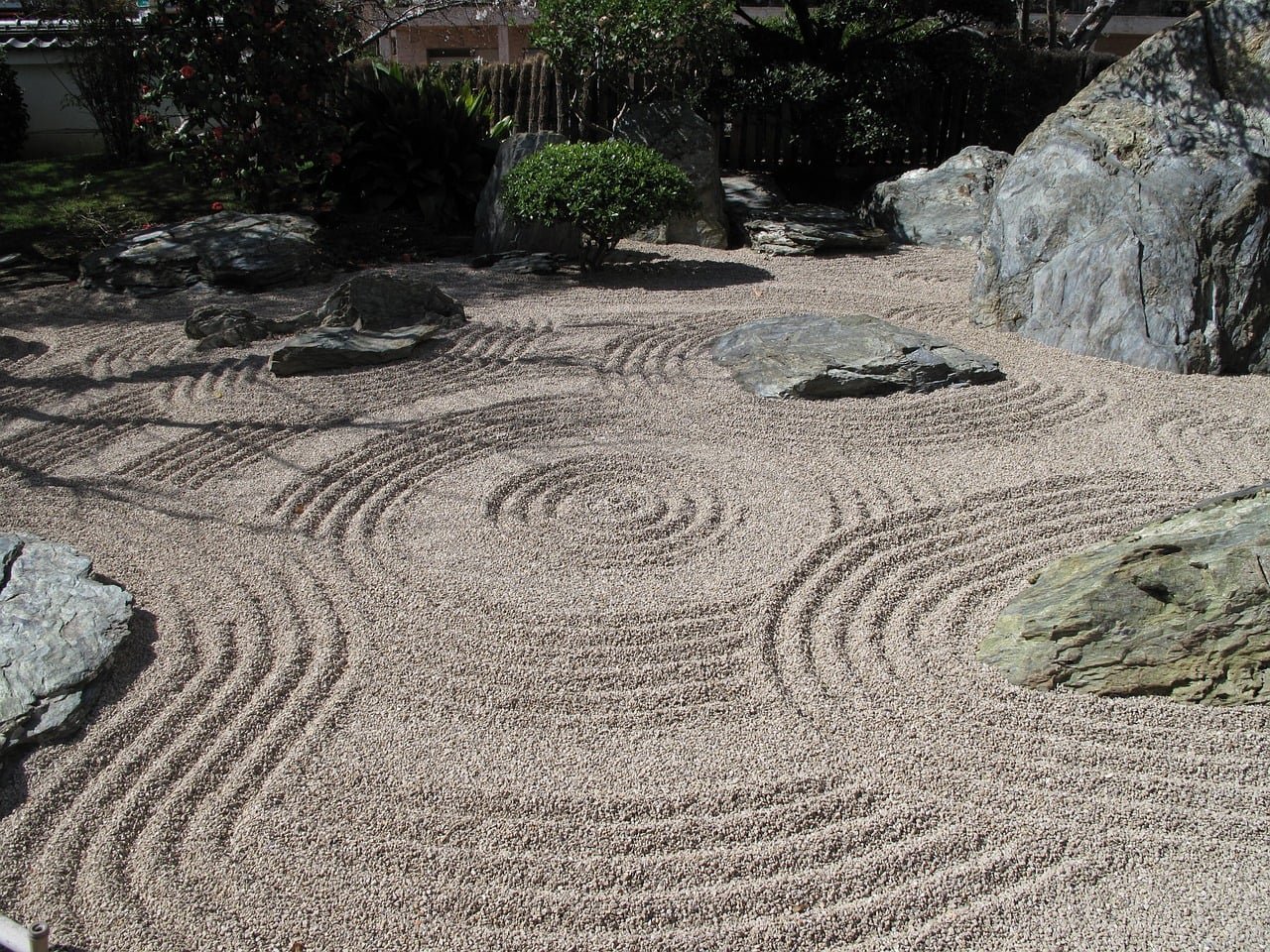
Since the 1990s, Zen-influenced gardens (featured in point 2 below) have done a great deal to popularise the use of pebbles and stones – introducing the British eye to new concepts of colour, shape, simplicity and subtlety that can work equally well in urban or rural settings. And though they’re hardly cutting-edge these days, slabs, rocks, stones and pebbles can still transform a small, rectangular plot. You can use pebbles to transition from a lawn to a bed (which isn’t as harsh as a straight border), add year round colour using bright coloured gravels, or add a touch of fun (such as the stepping stone path below).
Websites such as homedit.com and decoist.com have excellent ideas for using these materials in your own back garden. Even if you don’t want to follow the ideas slavishly, they can introduce you to some useful design elements:
the use of different colours or sizes of stones to create texture and contrast
the use of raking to create calming patterns in gravel or pebbles
how stone and rocks can create borders or paths
ways to focus or lead the eye to a particular plant or garden zone
2. Created a focal point with a feature stone or boulder
Japanese-style gardens are now fairly run of the mill, and often associated with people who just want an excuse not to weed or cut grass. But as well as introducing low-maintenance garden-design, they popularised the use of single stones (or ‘feature stones’) as a focal point in a garden. For some wonderful images of zen gardens using artfully placed rocks, take a look at: bestchoiceschools.com
3. Think even bigger; add a monolith to your garden
An alternative to the smaller garden boulder is the monolith – usually a much heavier rock that’s often finger-shaped or in a slab. Monoliths mean different things to different people (for example, geologists, archaeologists and garden designers). But for the purposes of gardens, they usually mean single natural stones, which are used as a focal point.
They can be simply decorative, or employed in a wide range of uses, such as water features, wall ends or next to seating (as above). They can also provide somewhere to sit or play, for example being used in play areas as somewhere for children to sit or chat.
Whether you go for a water feature, a ‘play’ stone, or a decorative single rock, the idea is to use the natural colouration, texture, weathering and details of the rock to provide much of the visual appeal.
4. Bitesize geology; understanding different types of rock
There are plenty of monoliths available to buy on-line nowadays but before you do so, you might want to do a quick revision of the school geography lessons where you learned about types of rock.
The most popular types of monolith in British gardens seem to be:
slate: this is a ‘metamorphic’ rock, meaning they’ve been changed from one type of rock to another, as a result of heat and/or pressure. Slate originates from clay, and is resistant to weathering and erosion (which is good if you don’t want the appearance of your monolith to change over time).
sandstone: a ‘sedimentary’ rock, formed from sediments compressed over millions of years. Examples of sedimentary rock are limestone, chalk and clay, all of them subject to weathering. Sandstone monoliths ‘story’ in the sense of showing the effects of weather in their colour and texture. This makes them very attractive in a garden, but less hard-wearing than other types of rock (although you’d have to live a pretty long time to see a sandstone monolith weather away to the size of a pebble)!
5. Landscape a garden to match a specific environment
As well as creating a focal point in a garden, monoliths can be used to replicate or refer to a particular landscape that you like. For example, if you love the mountains of Wales, the Yorkshire Dales or the peaks of the Lake District, you can now find monolith suppliers online that can source stones from quarries in those specific locations. It doesn’t matter where you live these days, it’s always possible to recreate a favourite vista, peak, pond or water fall in your own back garden, with matching geology and plants.
And of course, the fact that monolith means ‘a single stone’ doesn’t mean you are limited to one of them. You could have your very own stone circle, avenue of standing stones, or even create a steps using slabs or boulders from a favoured destination (and if you’re not sure what type of bedrock you saw when you were on holiday, you can check on the British Geological Survey website).
6. Designing and planting a more manageable rockery
And finally if monoliths, boulders and raked pebbles are not for you, and you would prefer to create a good, old-fashioned rockery, then here are a few tips on how to start.
Hopefully these tips on how to use rocks to make your garden design more interesting will be of some use when considering your new garden layout.
There were newspaper reports this month lamenting the tidal wave of grey sweeping Britain’s front gardens. They were based on a report from the Royal Horticultural Society stating that 3 million front gardens had been paved over in the past 10 years, and that 5 million front gardens in Britain have no plants.
We hope that this is just a front garden trend, and that Britain’s back gardens continue to be verdant and leafy. For one of the ill-effects of paving over Britain’s gardens is to damage biodiversity – for without grass, plants, trees and shrubs, there are few habitats for wildlife.
Some of Britain’s best-loved species – from ladybirds to hedgehogs – face losing their homes. But there are plenty of easy ways to create wildlife-friendly places in your garden.
Add flowering and fruiting plants
You may already know that butterflies like buddleia and bees like lavender, but the Royal Horticultural Society has other useful planting tips, such as choosing a mix of native and non-native plants that provide pollen and nectar for as long a season as possible – for example, snow drops, wild garlic, blue bells, crocuses and mahonia in spring right through to Michaelmas daisies and ivy in autumn (ivy provides a sheltered home for insects and spiders too, but be careful to ensure that it doesn’t grow out of control).
Many seed companies also have easy advice on their websites about which plants can attract birds and insects to your garden, and garden centres often have areas dedicated to native flowering species. Consider planting edible shrubs too (cherries, raspberries, blackberries, gooseberries and blueberries) as well as fruit trees that will provide height and shelter, as well as pollen and food. Plum, apple and pear trees all produce lovely blossoms, and you can always keep some of your fruit crop for yourself.
Make a mess and get wild
If mention of the Royal Horticultural Society puts you in fear that their advice will involve you devoting many hours a week to tending your borders, take heart from one of their tips: “Don’t be too tidy: leave some areas undisturbed”.
Apparently, the uncut leaves of perennials can shelter hibernating insects; piles of stones in a corner can be hibernating spaces for reptiles and amphibians; and uncollected leaves and twigs provide food and shelter for many species. Something as simple as a bucket of water with a ramp (made from a pile of rotting logs) can help amphibians, insects and birds, or if you have the space, a pond is a great way to attract wildlife.
You can also add a log pile in a sheltered corner, or leave a strip of lawn uncut during the summer months (and whilst it might be tempting, don’t kill off any weeds that grow as they produce flowers and pollen that are beneficial to insects and butterflies).
The site also includes interesting information on all the insects, mammals, amphibians and birds you are likely to see in your garden, with pictures and information for each species on what it eats, when you will see it and where you will see it.
The RSPB online shop has a variety of bird feeders, nesting boxes, boxes for ladybirds or bats, hedgehog homes, frog and toad shelters, seeds for wildlife-attracting pants, and hedgehog food.
The National Trust is a well-known advocate of supporting biodiversity, and has a variety of schemes in place to promote it. You can read through the National Trust wildlife-garden advice or watch their video on how to attract wildlife into your own garden:
Bats are often forgotten about as they are nocturnal and difficult to see – a lot of the time you can only tell they are around by listening for their high pitched calls. You can give bats a helping hand too by installing a bat box, and the Bat Conservation Trust has some helpful advice on the type and placement of bat boxes.
Gardens for the old and the young
One reason to attract wildlife to your garden is encouraging biodiversity and sustainability, but self-interest also comes into it: wildlife makes a garden more interesting, especially for children or older people who have plenty of time to fill.
So it’s not surprising that various websites aimed at the very young and the very old have some good advice on attracting wildlife. AgeUK has some good wildlife tips, and at the other end of the age range, Wildlife Gardener has sections on garden wildlife activities and wildlife equipment for kids, alongside general advice on anything from dealing with foxes to attracting frogs to your garden pond.
The Gardening with Children blog has good tips for getting children interested in all things garden-related, and there was a nice blog post in May on encouraging hedgehogs in your garden.
If you’re still wondering how to design and make a wildlife-friendly garden check out our top ten list and helpful online resources:
Our check-list for a wildlife-friendly garden
Install a bird box, or a number of different bird boxes suited to different species
Add a bird feeder, or if possible, a range of seeds and nuts in varying locations
Install a bat box that meets the Bat Conservation Trust guidelines
Consider a bird bath, water trough or pond with at least one sloping side (for ease of access)
Plant native flowers and edible shrubs, especially those that flower throughout the year
Leave some of your lawn long during the summer (and don’t kill the weeds that grow there)
Make a couple of holes in the bottom of your fence to let critters in
Create some shelter by planting ivy, creating a log pile or planting native trees.
Start a compost bin to recycle your waste, feed the soil and house worms, woodlice, fungi and spiders
Always check before strimming and lighting bonfires