In these times of austerity it can be hard to get a foot on the property ladder. However, if you’ve been lucky enough to save up a house deposit, have a mortgage deal agreed, and worked through the often stressful purchase of your first home with solicitors, then you can look forward to putting your own mark on your new house and garden.
If you’re on a tight budget then you may have to do things on the cheap, but even with a small back garden and next to no money to spend, with a bit of effort and patience you can still create a beautiful and affordable garden to enjoy throughout the year. So here are six essential tips to help you create a stunning garden on a tight budget (or even for free):
First of all, if you’re going to be gardening (even low maintenance gardening with very few plants) you’ll still need compost to enrich your soil and help maintain healthy plants. Many councils offer free or subsidised composting bins to encourage home composting. Get online or ring your local council and ask about free or discounted compost bins.
If that option isn’t available there are lots of cheap and even free ways to build your own compost bin. Believe it or not, there are blogs and entire websites that dedicated themselves to the subject, and as a result there are lots of different suggestions on how to build your own compost bin (often without requiring power tools or new materials).
Once you’ve built your compost bin you can add grass clippings, vegetable peelings, leaves – anything that naturally biodegrades (with the exception of meet, as that will smell terrible and encourage flies and vermin). If your compost is looking a little dry just pour some water on to help it along. It will take a while to get going, but after a year you can give your compost bin a stir and you should find you have your very own free supply of high quality compost – you can use this fertile soil in plant pots, to plant out herbs, enrich flower beds, top up hanging baskets or even rake it over your lawn to help give it a free feed.
There are also a couple of other ways to fertilise your beds for free. One is to carefully grab a handful of nettles, put them in a breathable bag or sack, and immerse them in a watering can. Leave them for a few days and you will then have nitrogen-rich water to pour over your pots and plants (it smells a bit, but it’s free plant fertiliser)!
If you have an area of the garden that has poor quality soil, or a section of vegetable patch that will be left vacant over the winter, try to get your hands on some vetch seeds. A member of the legume family, vetch actually puts nitrogen back into the soil, making it more fertile for other plants (and once it’s done its job, you can just dig it into the ground as extra mulch).
2. Salvage and reuse – recycling is free
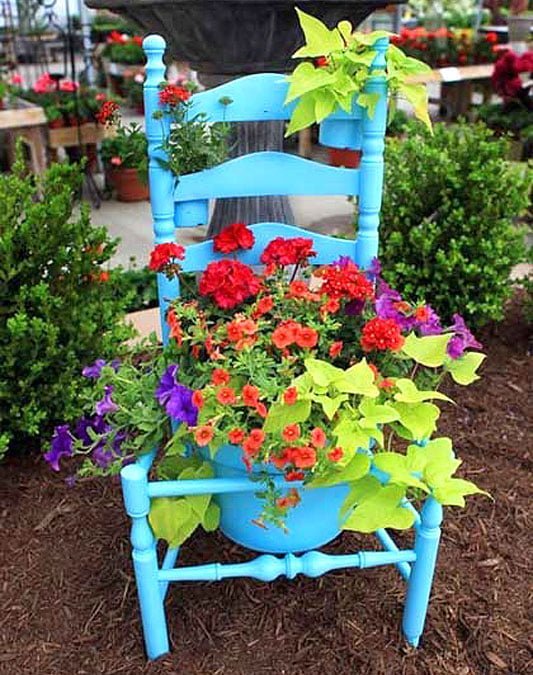
Whilst the bugs in your compost bin are silently doing their thing, you can consider how to reuse some everyday items to liven up your new budget garden. If you have a spare pallet available you can turn it into a vertical planter to rest against a wall, use the wood to make a small raised pond, or reuse the timbers to build a raised bed or vegetable patch.
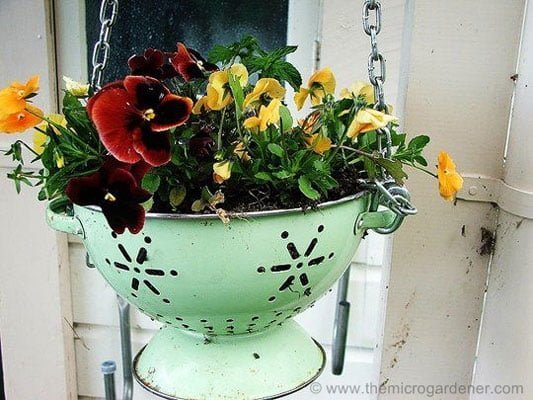
You can also use old kitchen bowls, bottles, wellies, jam jars or colanders as hanging baskets or plant pots – when planted out they really add rustic charm to a garden (and don’t worry if they look too ‘new’ when you first add them to the garden, they’ll soon weather and blend in).
And what about an old kitchen sink? If it’s a container and you can put drainage holes in, then you can plant in it!
3. Nature’s bounty is free – collecting free seeds
When it comes to planting out an affordable garden on a tight budget a quick trip to the local nursery or garden centre can send a shiver up the spine. Even small plants can cost a fortune and a few packets of seeds or bulbs won’t leave much change from a ten pound note. There are however plants growing all around us, and nature doesn’t cost anything.
According to a recent study “more than 700 species of wild plants – almost half of the native flora of the British Isles – are found on road verges”. If you can get out for a walk in the countryside in late summer (or even stop in a lay-by with a verge) you could carefully pick a few seed heads from some of the more common native flowering plants, such as poppy, plantain, red campion, oxeye daisy, teasel and burdock for your own garden meadow or flower bed (but please check the varieties first, be careful not to trample on flowers or take seeds from endangered species). Whilst you’re out and about you can also collect acorns, conkers and other native tree seeds – it’s slow growing from seed, but it’s also heartening knowing that you’re responsible for planting what some day may be a great oak or horse chestnut tree.
If neighbours have gardens you can check to see if they have any plants in seed, or if they have any plants to spare (many plants are happy to be split in two – more about this little trick below). If the neighbours can’t help, check to see if there are any allotments in the local area and get in touch with them, they may well be able to provide some free or discount seeds to help you get growing.
If you want to plant fruit and veg in your garden you can always start by taking the seeds from the items you regularly buy in your super market shop (such as cucumber, tomato, pepper, hazel nuts, berries and cherries, however don’t plant apple seeds as they don’t breed true).
4. Can’t see the wood for the trees – finding trees and plants for free
Trees for free? If you are able to get into the countryside in spring look for fresh green grown on elderflowers – if you snip off a few cuttings and pop them into some compost you’ll have your own free elderflower saplings the following year (a native to the UK, the tree attracts bees and butterflies, and you can make your own elderflower cordial or wine).
Likewise, in winter you can snip off the youngest branches from willow trees and simply stick them into your garden where you would like your free willow tree to grow – it’s really that simple (although don’t place them too close to the house as they need room to grow and have quite aggressive roots, also, upright varieties such as goat, crack and golden willow work best).
In built up areas you often see plants and even saplings growing out of gutters and cracks in the pavement. A common site in towns and cities is also buddleia (or butterfly bush). In late summer the plant can get quite bushy and will be covered in large highly-scented lowers which are like magnets to butterflies and other nectar seeking insects.
5. Two for the price of one – multiplying plants for free
Another really important budget gardening tip (touched upon above) is to be on the lookout for plants that you can divide. If you can get hold of some of these plants for free that’s great, but if you do find that you have to buy plants the following represent brilliant value for money (and they are more affordable too):
Hosta – an easy to grow flowering plant with large green leaves that likes light to medium shade. It’s great for covering bear patches of soil and you can literally slice the plant in two in the autumn and double the amount you have year on year!
Iris – another easy to grow flowering plant that is evergreen and has upright tapering leaves. As it gets bigger it can be dug up and the stems and bulbs can be separated and planted out – another way to increase how many plants you have for free.
Bergenia – an evergreen plant with large waxy green leaves and pink flowers on rhubarb-like stalks. It’s perfect for ground cover and as with the iris, you can dig it up in autumn and break it into more plants, which is great if you’re working with a shoestring budget.
Bamboo – a beautiful evergreen that’s great for hedging, borders or as a backdrop. There are two types of bamboo: 1. Spreading – these plants send out runners that grow into new plants which can be dug up and planted elsewhere in the garden. 2. Clump-forming – the new clumps of bamboo that grow close to the base of the original plant can be dug up and moved. If you opt for the spreading variety in a bed it’s best to plant the bamboo in a large pot, then place the pot in the bed (just to stop it from spreading too much).
Foxgloves – a tall flowering plant with pink and white bell-shaped flowers that’s easy to grow. Foxgloves can’t be split but they produce copious amounts of seeds that will allow you to spread the plants throughout your garden (definitely a friend of budget garden design).
Ferns – as with foxgloves these can’t be split, but fern spores get everywhere, which means that even without trying you will likely find fern plants freely populating your garden every year.
If you need some advice on planting, or some ideas to help with inspiration don’t forget to check out some of the professional gardens in your area (you can’t get enough tips from the pros)!
6. Always be on the look out – one persons trash is another’s treasure
Lastly, when you’re out and about keep an eye out for materials you can use or reuse for free. Designing a garden isn’t just about plants – ornaments, drift wood, rocks, boulders, old furniture, rope and many other items that are chucked out or overlooked can be used to add colour, texture, shape or a focal point to your budget garden design.
Farmers don’t want large rocks or boulders damaging their plough, so you can often find lovely boulders along field boundaries (the type of thing a garden centre would charge over a £100 for). Likewise a trip to the beach can result in a collection of different coloured rope and pebbles for a birdbath or small pond (and don’t forget, seaweed is a brilliant fertiliser, so grab some whilst you’re there to top up your compost bin).
So with a bit of creativity, patience, a few recycled materials, free seeds and trees, plus plants that multiply year on year – you should be well on your way to planting out your beautiful new garden even on the tightest of budgets. And if you manage to save a few pennies as a result of your budget garden planning, you can always put them towards a discount garden building!
If you’re considering revamping a section of your back garden, wondering about how to integrate a new garden building such as a summer house, or you have a blank canvas and a new plot to play with, you can’t go wrong taking inspiration from some of the UKs amazing gardens. Whether they are exquisitely manicured Victorian estates, compact walled gardens full of fruit trees and vegetables, or more modern gardens with minimalist design and unique water features, the wealth and depth of gardens in this country is both spectacular and awe-inspiring.
When it comes to planning garden planting, or even considering a completely new garden design, it’s best to get planting ideas from gardens that are near to you – that way you know that the plants that you see in the professional gardens should grow in your garden.
So here are some top gardens to consider visiting by country to help with your garden design ideas:
Scotland
You can check out ScotlandsGardens.org to find local gardens to visit, and here are some of our favourites:
Langwell Gardens, Caithness
Surrounded by deer-filled woods, this is a superb old walled garden with beautiful borders full of flowers, a really good guide to what will grow in the local climate
Floors Castle, Kelso
A small formal walled garden with children’s play area, shop, cafe and peaceful walks through stunning countryside; find inspiration and take in the site
Tillypronie, Tarland
A lovely mix of formal terraces and borders (typical of the Victorian period) and spectacular views over the local hills
Treborth Botanic Garden, Bangor
Renowned for its glass houses that contain amazing plants, this is a great garden for inspiration with an array of plants local to the area.
Cowbridge Physic Garden, Vale of Glamorgan
A relatively small but beautifully kept walled garden known for its healing plants, looked after by locals who are happy to answer questions.
Bodnant Garden, Conwy
With Snowdonia as its backdrop, this truly stunning garden features towering trees, striking terraces, flowers, arches and more.
England
With a diverse topography and climate there are a lot of gardens in England, and here are some of our picks:
Great Dixter, Rye
Victorian formality, a walled garden, meadows, moats, orchards and ponds, this garden has something very every gardening enthusiast.
Stone House Cottage, Kidderminister
In comparison to Victorian estates this is a lovely compact garden with a splendor of different planting types, borders and trees.
Buscot Park, Faringdon An extensive estate with a huge choice of gardens to choose from, including one of the finest water gardens in the UK, a brilliant location for amassing great garden design ideas.
Kew Gardens, London And of course, when it comes to design inspiration for gardeners you simply have to visit Kew Gardens in West London. Kew Gardens is a place that has been one of the largest London attractions for two and a half centuries and provides the perfect opportunity for anyone looking for peace and quiet in the bustling metropolis at any point in time. However, more than a place of interest for tourists and day trippers, Kew Gardens is also a place of large interest for serious gardeners who wish to learn a thing or two about gardening from professionals, using their newfound skills in their own gardens at home.
Kew Gardens and its curators have been the leading experts in the field of gardening for centuries and it is not a surprise that the garden is regarded among the most important botanical gardens in the world due to the high excellence in gardening that is on display. Designing a garden requires a certain degree of expertise that can either be honed over a long period of time or else one can learn from the very best in the business. Buying a day ticket to Kew Gardens is quite possibly the best option for anyone who is interested in getting to know the secrets of garden design. One of the best options for anyone looking for an intimate understanding of the science or rather the art of professional gardening is a guided tour of Kew Gardens in which the visitors are taken on a tour of all the different gardens by guides who are highly knowledgeable about their craft and would be able to answer any questions that the visitors have.
The guided tours are a walking tour since it is possible for visitors and the guides to take their own time in going from one garden to another while spending the right amount of time at each in order to learn about the intricacies of gardening. On the other hand, a visitor can also choose to go on the bus, known as the Discovery Bus, or even board a tour on the Kew Explorer train. The latter options are particularly helpful for those who have special interests in specific gardens since it is the sort of tour which would allocate a particular amount of time to each garden. There are very few botanical gardens in the world which provide such wonderful guided tours throughout its gardens to its visitors so that they can learn a thing or two about gardening whilst enjoying the facilities at the garden like different eateries, spice bakeries, bars as well as live music events on some days. As one can imagine, it can be a rewarding experience in more ways than one; tourists and serious gardeners have been visiting Kew Gardens in large numbers for many years for this exact reason.
Last but not the least, it is important to point out that the authorities at Kew Gardens also arrange for special events that take the joy of learning about gardening to an entirely new level. For instance in 2015 there was a ‘Meet Kew’s Experts’ event which is hosted three times in a week and it is an event at which people can learn from the experts about the certain tricks and experiments in gardening that they would normally not find in books about gardening – a unique experience that’s perfect for getting some innovative garden design ideas.
Ultimately, if you’re struggling with design inspiration for your own garden, you’re sure get your creative juices flowing with a visit to a nearby garden.
In the UK, the greatest enemies of a timber garden building are moisture, rot and wind. And in winter, of course, the nation’s garden rooms, summer houses and sheds are subjected to more wind and rain and than ever. If you want a garden building to look just as good the following spring as it did the previous September, you need to do some winter-proofing.
Most jobs on the winter-proofing list are simple common-sense rather than anything technical. First, there are some one-off jobs to do – maybe once a year; then there are a few things to check regularly throughout the winter. Without further ado, here’s our seven point plan on how to protect your summer house in winter:
1. Renew wood treatments
All timber garden buildings need to be treated against rot, moisture and insects, using wood preservative treatments. If you buy a cabin from GardenLife, we advise you to do this as soon as you construct it. Depending on what product you use, you will then probably need to top up the treatment every 3-4 years – but we recommend that you lightly sand and treat your garden room or summer house at least every second year (ideally once a year for ultimate protection). Most wood treatments need to be applied in dry weather, so ideally you will do this before the rain sets in for the winter.
2. Provide ventilation space
One way to protect your garden buildings from damp and decay is to let air circulate freely around them, so that the wood can dry out and ventilate. If you have shrubs and trees close to a summer room, cabin or shed (especially if they are evergreens), cut them back before winter so that they’re not growing right up against it – allow a good foot of ventilation space. Also cut back any trees or branches that could pose a risk to roofs or windows – strong winds could easily cause branches to rip your roof felt or crash through the roof.
3. Check window seals
If you have an older shed or summer house, check for gaps around the windows, where water could seep in. It could damage the contents of the building, as well as lead to damp problems in the timber, so fill the gaps with silicone, wood filler or timber beading before any damage occurs. Strong wind can sometimes force water between the glass and the timber, so if you spot water pooling (or dry water marks) at the foot of a window pane it would be advisable to silicone around each pane for added protection.
4. Check the roof
Roofing felt and shingles don’t last forever, and depending on how exposed the site is they may need replacing every few years . Check them annually, and fix any problems before water gets through. Also, regularly check the roof after storms or winds – they may have loosened or damaged the felt. Look for signs of water inside the building as well as just looking at the outside of the roof. If your garden building is in an exposed area and subjected to strong winds that regularly damage the roof, consider adding a layer of waterproof roof membrane before replying shingles or roofing felt – this will help keep the building watertight even if shingles or felt is ripped off by strong winds.
5. Check the drainage
If the base of your cabin is slightly uneven or doesn’t allow water to drain properly, rainwater may pool around the base of the walls. This can lead to wet rot in the timber, and cause subsidence and warping. As well as having decayed timber, you will find that doors and windows no longer close properly. Before the worst of the weather sets in, try to sort out any drainage issues and look at ways to prevent water pooling. Consider replacing paving slabs with gravel, or chiselling groves into concrete.
6. Clear out the gutters
One source of water around the base may be the roof. If your shed has gutters, make sure they are clear of leaves, so that rainwater can flow where it is meant to. Clear them regularly throughout the autumn and early winter – it only takes a few damp leaves to block gutters and cause overflows in the wrong places. And on the subject of leaves, clear away the ones around the base of the shed too. Piles of wet leaves will stop water draining, and if leaf litter is left to build up against timber walls and doors it reduces air circulation under the building and can increase the chances of rot setting in.
7. Snow clearing
Finally, if there are snowfalls this winter, clear the snow off the roof of any garden buildings. If your roof is steeply pitched, the snow will probably slide off anyway, but you could give it a helping hand. Flatter roofs may take some more work, but it is time well spent – neither the weight of the snow nor its wetness will be good for your roof.
As we said, there’s no rocket science involved in how to protect your summer house in winter; it’s just a matter of simple checks. At our end, we do as much as possible to weatherproof our cabins by using dense timber and pressure-treated foundation joists, but however good and well designed your summer house, some additional winter-proofing each year is certainly worthwhile.
‘Flat pack’, ‘self build’, ‘DIY kits’ and ‘self assembly’ are all-encompassing terms. They cover extremes such as a simple piece of flat pack furniture bought from the local DIY store, or an entire kit-house that you are expected to build from the foundations up.
The same vagueness applies when we talk about self build in the context of garden buildings, such as sheds, summer rooms or a garden office. It could refer to a self assembly DIY kit (complete with detailed instructions and pre-assembled parts), or, at the other end of the spectrum, to something you design and completely construct yourself (without any assistance or technical support).
We’ve seen some beautiful examples of the latter – from rustic log cabins in Estonia and the US, to miniature Gothic follies in British back gardens, but complicated self build projects take time, patience, and pretty advanced woodworking expertise. But because of the DIY skills required for self-build-from-scratch, we’ve also seen a few disasters too – from self-designed bike sheds that crumple at the first sign of high winds, to draughty self-built summer houses with warped doorframes and leaking roofs.
For most people, therefore, ‘self assembly’ is probably the most practical approach to building your own garden summer house. You’re more likely to end up with the garden building you daydreamed about, without the problems that can emanate from selecting the wrong timber, fittings, joints or design.
How do self assembly garden buildings vary?
There’s a huge choice of self assembly garden buildings nowadays – including summer houses, pavilions, garages, and gazebo DIY kits. They come in flat pack form, for ease of transportation and delivery, and are designed to be assembled by people with an unremarkable level of DIY experience.
The contents of these kits vary from supplier to supplier however, so it’s important to check what you actually get, the level of DIY experience that you need, as well as the tools for the job. And different designs may require different levels of expertise and manpower – assembling a timber carport DIY kit is a different kettle of fish from erecting a multi-room holiday cabin, where several people may be required for the job.
It’s unwise to generalise across all self-build kits for garden buildings, but to take the example of a typical self assembly garden room design from GardenLife, the kit would include:
foundation joists, pressure-treated to protect from moisture and decay, and roof purlins
wall logs, roof and floor boards, all pre-cut to the correct size
door and window frames, again cut to the correct size, as well as windows and doors with hinges already fitted
all fittings necessary for the assembly, including fixing materials, locks and keys, door handles
easy-to-understand instructions for the build
Depending on the design of the garden room, the DIY kit may also include other elements such as storm braces, roof shingles, metal door sills and metal water gutters. This means that there’s no need to worry when you see the terms ‘self assembly’, ‘DIY kit’, ‘flat pack’ or ‘self build’ on one of our products; they really are designed to be built by people with basic DIY skills and tools.
What’s not included in a GardenLife self assembly DIY kit?
Another way to look at self assembly is to ask about what’s not included. A GardenLife self-assembly log cabin takes care of most of the difficult thinking such as: how to design a building that will survive British wind, rain and damp for year after year; what’s the best type of timber, screw or door hinge; or how to construct a timber roof when you’ve never built a shed before. But there are still some things you need in place already:
depending on the roof type, possibly some Soudal roof sealant (normally under £5 from any good DIY store)
someone to help you erect the cabin, since we usually recommend that two people are needed for the construction
And if you don’t have those things, or are not sure about any of these elements? The answer at GardenLife is to talk to us. We can advise on foundations, wood treatments, which self build design would probably suit your needs best, and any other questions and issues.
We also offer our own construction service, if you want to omit the self-assembly element. Our team can do all the graft of assembling your summer house or garden office kit, and can even in some cases customise elements such as wood thickness, doors or windows. All you need to do is get in touch.
GardenLife have been involved in the design, manufacture, delivery and installation of summer houses, timber offices, log cabins, pavilions and other garden buildings for many years, and when it comes to delivery, we’ve always been able to ship our products to the desired location. Tight turnings, narrow driveways, tall hedges and trees, limited access to gardens – these issues have never stopped us from delivering a garden building as close as possible to the build site.
It’s understandable however, that investing in such a substantial structure can lead to concerns about packaging, shipping and the delivery day itself. For that reason, GardenLife filmed the delivery of one of our biggest garden rooms, to show how straightforward deliveries are (even those involving large garden buildings, such as the Laggan, measuring 6.4m x 3.5m).
Secure packaging
One question commonly asked, is how are garden buildings packaged? As you can see in the video above, all GardenLife buildings are delivered flat pack, and before they leave the factory, all the parts are carefully positioned on timber carrying frames and shrink wrapped in water proof plastic. The carrying frame helps ensure that timbers remain completely flat during the shipping process, and the plastic wrapping helps keep all the wood dry (which means you don’t have to worry about building the summer house the second it arrives). Smaller buildings often fit in one package, but the larger timber buildings (such as the Laggan) come in three carefully wrapped parcels.
Careful delivery
GardenLife always contact customers to arrange a convenient day for delivery, and we ensure that our buildings are only ever dispatched using a Hiab truck with a front-mounted crane. This allows the delivery driver to get close to the delivery site, but even when obstacles stand in the path of the truck, the extending crane allows the driver to lift each package over hedges and fences, or around trees and buildings. You can see in the video above, the experienced driver is able to lift large sections of the building over hedges (whilst keeping the crane below overhanging wires) and then carefully position the timbers in a confined area not much bigger than the package itself.
GardenLife take care of wrapping up your garden building, keeping it dry and flat. We always ensure we deliver at a convenient time, with advanced notification of the delivery date, and our experienced drivers and crane operators ensure that your new garden building is delivered safely to your chosen construction site. If you have questions or concerns about delivery please don’t hesitate to get in touch or give us a call on 0131 660 6333.
Desperate to get your kids away from the TV this half term? Here are some holiday tips
Children of the 1970s and 1980s may remember being forced to watch a TV show called Why Don’t You Just Switch Off Your Television Set and Go Out and Do Something Less Boring Instead? Various precocious children (including Ant and Dec) would suggest alternatives such as craft and magic tricks. Their ideas never seemed that interesting.
The 2010s version would probably involve switching off Snapchat or the PlayStation, but otherwise the parental agenda remains similar: enticing the kids away from the screen and into the great outdoors during school half term. GardenLife have therefore pulled together some holiday ideas that parents (and their children) have recommended; hopefully they will be of use this half term, and during future school holidays. So without further ado, here are some ideas on how to keep kids entertained during school holidays:
Best holiday activities for under-sevens
If you want to drag a younger child away from CBeebies, create them their own garden playhouse – some garden canes and a big bed sheet will work a treat, or if the budget allows, how about a wooden playhouse for more prolonged enjoyment? Paint it in the bright colours that bedeck children’s TV programmes, and theme it according to the child’s current obsession – whether that’s pirates or Peppa Pig.
The other attraction of a playhouse is that children can spread out their toys without colonising your sitting room, and spillages won’t ruin your sofa. Kids love tree houses too, but not all of us have trees big enough to support one (or the DIY skills to build one). The perfect solution is a playhouse on stilts!
Best way for kids to burn off energy outdoors
Opinions vary about trampolines. Children tend to be enthusiastic, but adults worry about safety. Most accidents happen when more than one person is on the trampoline, so set some basic rules about how it is used. One thing that isn’t debatable however, is that using a trampoline is great exercise!
Best garden entertainment (other than a trampoline)
If you don’t like the noise from a trampoline, how about a kids timber play frame? They’re safer than a trampoline, but more interesting and sociable than a single slide or swing. Adding an element such as a tower or a ladder greatly increases the possibilities for pretend games, and if installed on a lawn or rubber play mat then they are extra safe. Be on the lookout for play equipment built to European safety standards EN71-1 and EN71-8, and if you’re environmentally conscious, check for the FSC symbol. All GardenLife play equipment meets such safety standards and is FSC certified, being built from sustainably managed timber.
Best for a break from taking selfies
Parents tend to like the idea of projects, and children will buy into them as long as they don’t sound too worthy. As nearly all kids have mobile phones with cameras, a photography project can be as quick or protracted as you like, with ideas such as:
a photo safari in the country, the local park or just the garden
a challenge to take photos of 10-20 different types of insects, birds, flowers or anything else
a family photo competition for the best nature/wildlife photos
a competition to take the most unusual photo (such as textures or unusual views)
Best ideas for a change of scene
Camping holidays are great, but vulnerable to weather. And many of the best camp sites are booked weeks in advance. Far easier is some spontaneous backyard camping (or glamping). Children can sleep out alone, without parents getting in the way, and there’s no need for them to struggle with camping stoves or carrying their own food. They simply turn up in the kitchen for breakfast.
If you want to push the boat out, you could always invest in a barbecue hut. The kids would love something like this come rain or shine, plus adults can take over in the evening and use the hut for BBQs and parties.
Best way to sell the idea of a walk
Most children find walks boring unless there’s a purpose or some entertainment. Team up with friends who have a dog, and that’s the entertainment taken care of, especially if it likes fetching balls. Older children may even be may able to earn a few pounds by doing some occasional dog walking for friends – an even better way to persuade them to go outside. Alternatively combine the photography project mentioned above with a hike outdoors.
There may be too many property programmes on TV, but the annual Shed of the Year competition, just finished on Channel 4, is worth watching. It’s feel-good TV, a tribute to British eccentricity and resourcefulness. It’s also a tribute to the joy of the ‘project’– whether it’s a mosaic of 50,000 shells in an air raid shelter, building a pub in your garden, or pursuing a dream of building the perfect birdbox.
How do you build a Shed of the year?
Many of the buildings in Shed of the Year are self-built, using salvaged materials. But not all of them. The winner of the 2014 Summerhouse/Cabin category was a flatpack cabin, turned into a beautiful ‘Caribbean retreat’ through paint colours, fabrics, plants and holiday mementoes. So a cabin from our website could be a great starting point for a future Shed of the Year entry.
It could also be a great starting point for a new job, hobby or way of life. As Sid, a shed graffiti artist who won the Workshop category in Shed of the Year 2014, said, ‘A shed has given our family a whole lot of freedom … it’s a nice lifestyle we’ve got’. Sid also said, ‘Sheddiness is all about being different, individual and quirky’. And even if you don’t have the time, tools or skills to build your own Gothic folly, a flatpack garden cabin can still be unique and personal.
Start with flat pack or self assembly
How about building your very own perfect garden bar, for cocktails, home-brew, or family barbecues?
The Cumber flat pack garden bar, with its fold-down counter, can be customised in various styles from beachcomber to 1950s Americana, and our Lochy self build garden pub also has a large serving hatch at the front, and is popular as a garden drinks bar. And one of our customers is using the Lovat summerhouse as an elegant drop-in Pimms Bar at a holiday park.
Or perhaps you have just retired and finally have time to devote more time to a hobby? Take a look at Tweed Extra with windows on eight sides and 360-degree views – it would make a wonderful hide for watching birds and other wildlife in comfort, or an observatory for amateur astronomers. Or Grace, with a large covered area where a shed graffiti artist like Sid could use spray paints without fumes building up, but without having to worry about rain.
Customise an existing garden building
Adding further scope for individualism is the fact that at GardenLife we can customise many of our designs. This includes adding windows, increasing window sizes, or increasing wall thicknesses. We even have a full bespoke design service if you want to personalise further.
So think of the designs on our website as just the start of a process. Just because a design is labelled as a summer house, it doesn’t mean you have to use it as one. And if you see a cabin that is almost what you’re looking for, but not quite, then ask us about customising it.
And most of all, let your imagination run free. When you see a garden building on a website, it’s sometimes hard to visualise how you could personalise and decorate it. So use events like Shed of the Year or the GardenLife Pinterest page for inspiration – whether you prefer the ease and convenience of a flat pack design or want to search in a skip for materials to upcycle, you’ll find some amazing ideas.
If you’re looking to start a new business from home, or if your current home business is in desperate need of additional storage or meeting space, you could consider a timber garden office as an alternative to a portakabin, a costly house extension or renting office premises at another location. Renting office space and extending the house are expensive ventures, and a portakabin isn’t the most attractive location to run a business from. However, a timber garden office can prove highly cost effective; a low purchase cost (when compared to extending and renting), quick self assembly and minimal ongoing maintenance.
Portakabins and house extensions require planning permission, and although this might still apply with the siting of a timber framed office in your back garden, if you can position your garden office a couple of metres away from the boundary, and buy a design that’s 2.5m in height (or less), you may be able to avoid the hassle of obtaining planning permission altogether.
GardenLife Log Cabins specialise in a whole range of different timber framed building styles, all of which are designed for self assembly (even for those who aren’t great at DIY). Despite this, GardenLife also stock a number of modern timber garden rooms and offices that feature a modular Quick Fit design, which is perfect if you’re not that confident with DIY, but still want the pleasure (and reduced cost) of a self build project.
The self assembly timber garden office video above showcases what is involved in constructing the Fiona contemporary garden office. The self build Quick Fit kit for this garden office is delivered with the bulk of the elements already pre-assembled; walls are provided as modular wood framed panels that simply slot together, and the windows and doors are already built, as are the roof frames and apexes (the only separate parts are the foundation joists, floor boards and roof boards). As you’ll see in the video, the tools that are required are a hammer, screwdriver, drill, saw, spirit level and staple gun (although you can use tacks on the roofing felt if you don’t have a gun).
The self assembly video shows two professional installers completing the installation process in about six hours (with a couple of hours for unpacking and organising the parts). So if you’re not a DIY regular, a day in the garden should be all you need to self build your own timber garden office; far less stress, hassle and cost than an extension. If you’re still not sure about undertaking the task, don’t fear, GardenLife can arrange installation for you, just get in touch to find out more.
The vast majority of GardenLife’s buildings come with a pressure treated timber base, but one of the fundamental rules for any garden building is that you need firm, level foundations onto which you can secure your base. If the ground beneath the summer house or log cabin is uneven, the screw holes on the walls may not meet up properly, and the walls may distort, with individual timbers opening up or bowing outwards.
Uneven or unstable foundations can store up future problems too. Subsidence may cause timber walls to warp, making doors and windows fall off square. You may also experience problems with leaks and damp.
So, preparation is everything when it comes to choosing the best foundations for a summer house or log cabin, and there are various options available, the main ones being:
concrete
paving slabs
timber decking
Unfortunately each option has its own advantages and disadvantages, so there is no single right answer, and some foundations suit different garden building types and sizes.
Concrete foundations for a summer house?
The usual advice for concrete is to put a 7-10 cm layer of concrete above 7 cm of compacted hardcore. Having the foundations raised slightly above the ground level encourages water to run off rather than pooling around the base of the summer house. If you’re planning on buying a smaller summer house, concrete foundations may be a little excessive as you may be able to use paving slabs or decking instead. Concrete foundations are however suitable for larger, heavier timber garden buildings such as log cabins and more sizable garden offices.
Pros: Concrete foundations are permanent, stable and non-shifting – this is especially important for larger buildings. It also allows for very sturdy anchor points to which you can secure the timber base. The concrete can also provide the floor for workshops, storage sheds and garages (which can make the purchase of a garden building cheaper, as there’s no need for a timber floor).
Cons: Concrete is not an eco-friendly option as its production causes a significant release of carbon dioxide (a greenhouse gas). Other disadvantages include the fact it is relatively expensive compared to other bases (especially if you have it laid professionally). And finally, it does not allow water to drain away, so the timber at the base of the cabin may suffer damp problems. Nevertheless, despite the problems, concrete foundations are a popular and low-maintenance option for log cabins, and the potential problems with damp timber can be avoided with careful maintenance of the building and sensible treatment of the timber.
Paving slab foundations for a summer house?
Paving slabs can be laid on a base of sand and cement, with anchor points at the corners. The slabs should be evenly laid, and firmly butted together. Having them raised slightly above ground level will help water to run off. Paving slabs are best suited to smaller garden buildings and are not recommended as a foundation option for large log cabins.
Pros: A foundation of paving slabs is relatively easy to lay, and they can make an attractive patio area in front of a summer house or log cabin. Like concrete, they are low-maintenance, and stable, however, they are easier to remove than concrete if you want to redesign the garden.
Cons: Like concrete, paving slabs don’t allow water to drain away, so there can be problems with damp if rain pools around the building. However, using wood preservation treatments on your summer house can protect against damp and rot. If the ground below the paving slabs is not stable (if they’re placed directly onto grass, gravel or soft soil), they may subside, causing problems with warping.
Timber decking foundations for a summer house?
It’s possible to build your cabin on foundations made of secure, level timber decking, with a weed-proof membrane between the ground and the timber. The timber must be pressure-treated to withstand damp. Concrete anchor points at the corners can be used to secure the building, or the pressure treated timber base can be screwed directly into the decking foundations. Timber decking is attractive and works well with summer houses and log cabins of most sizes.
Pros: The decking can be used to create a verandah area, so it can look highly attractive. Ridged decking allows water to run off, helping prevent damp problems around the walls of the building. The space underneath the decking allows air to circulate and prevents damp from rising.
Cons: Timber decking may not be suitable for larger cabins. A small area of decking in front of a summer house may not cost much, but to extend decking under an entire garden building (where it will be completely hidden) can push the price up. Even with pressure-treated timber, regular maintenance and wood treatment will be necessary, with an annual wash a treatment with decking oil necessary.
Client Brief: GardenLife Log Cabins were tasked to provide a unique version of our 70mm Laggan timber garden room for use as a private office and studio all year round. The client requested 88mm laminated logs for extra insulation, living house quality windows and doors, as well as a slightly narrower design to fit within the parameters of garden. Thinner logs and wall timbers can be used for garden offices, but if you want to ensure warmth in the middle of winter, and also keep heating bills down, 88mm laminated wall timbers are the best option (and also incredibly strong and robust).
Technical Specifications: Whilst some customers require a completely unique garden office design, in other circumstances we can modify existing office designs to suit budgets and/or time constraints. In this instance, a customized Laggan garden room (with 88mm laminated timber walls and living house quality windows and doors) was the ideal solution.
Completion time: For this particular projected all we needed was 8 weeks from confirmed order to completed, watertight building.
Concluding notes: The client has been very happy with the contemporary design – it provides a lot of light and is a great space to live and work in (and the office is used for both work and play)!
This website uses cookies and gathers limited anonymous data to improve your experience. Please read our Privacy Policy and opt-out if you wish. Cookie settingsAccept
Privacy & Cookies Policy
Privacy Overview
This website uses cookies to improve your experience while you navigate through the website. Out of these cookies, the cookies that are categorized as necessary are stored on your browser as they are essential for the working of basic functionalities of the website. We also use third-party cookies that help us analyze and understand how you use this website. These cookies will be stored in your browser only with your consent. You also have the option to opt-out of these cookies. But opting out of some of these cookies may have an effect on your browsing experience.
Necessary cookies are absolutely essential for the website to function properly. This category only includes cookies that ensures basic functionalities and security features of the website. These cookies do not store any personal information.
Pin It on Pinterest
GardenLifeLogCabins.co.uk rebrands to Palmako.co.uk
Dear valued clients! For over ten years, you've known us as GardenLife, your trusted provider of Palmako's quality garden timber products in the UK.
Today, we're thrilled to embark on an exciting new chapter together as we introduce our sleek, modern online storefront and transition to Palmako.co.uk!
With over 25 years of experience, Palmako has established itself as a premier producer of quality garden timber products in the UK and Europe, including sustainably sourced Nordic spruce summer houses, log cabins, saunas and more. Our local team of experts is always ready to help you make the best choice for your garden. Learn more: https://palmako.co.uk/pages/about-palmako or call us: 01698 426444.